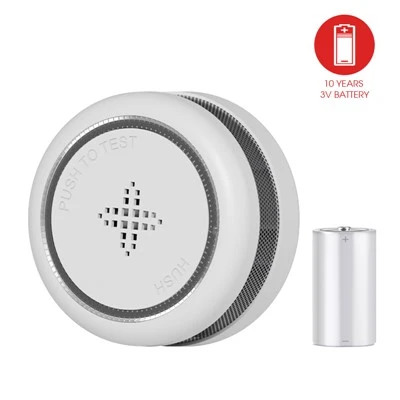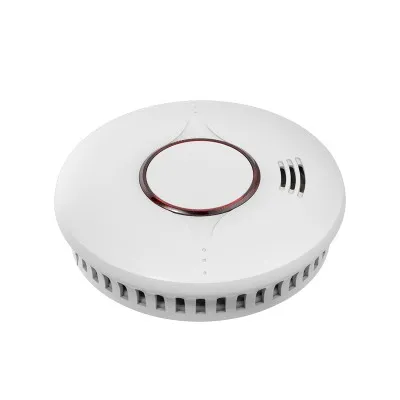


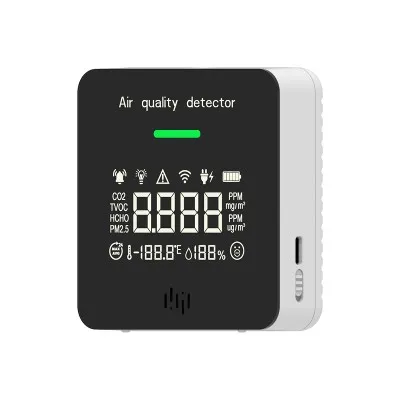


Heat Detector Manufacturer

Advanced Equipment
We have invested in top-of-the-line technology, such as the world's most advanced German LORENZ smoke testing case and British AWT smoke testing case. This allows us to ensure the highest standards in the research, development, and production of fire protection and safety electronic products, reinforcing our position as a leader in the market.

Professional Team
Leveraging a highly skilled and dedicated team of professionals, we ensure a seamless synergy of expertise in the development, production, and sales of our fire protection and safety electronic products. Our commitment to excellence is driven by the proficiency of our professional team, assuring top-notch quality and innovation in every aspect of our offerings.

Custom Service: Accept ODM/OEM Service
We pride ourselves on providing custom solutions tailored to meet the unique needs of our clients. With a commitment to exceptional service, we readily accept ODM and OEM projects, ensuring flexibility and personalized offerings that align perfectly with your requirements. Your satisfaction is at the core of our customizable approach.

One-Stop Solution
We offer a comprehensive and seamless one-stop solution for all your needs. From cutting-edge fire detection alarms to intelligent wireless alarm systems and a range of home security electronic products, our diverse portfolio ensures that you can find everything you require for fire protection and safety in one place. Streamline your safety efforts with our integrated solutions.
-
![Wireless Heat Detector]() Wireless Heat DetectorModel Number: THS898A-HIR. Hardwired heat detector. Mains power 220-240V power supply with 9V battery backup. With EN5446-2:2003 BSI certificate quality assurance. With RF 433MHz wireless module.
Wireless Heat DetectorModel Number: THS898A-HIR. Hardwired heat detector. Mains power 220-240V power supply with 9V battery backup. With EN5446-2:2003 BSI certificate quality assurance. With RF 433MHz wireless module. -
![Wireless Heat Alarms With 10 Years Battery]() Wireless Heat Alarms With 10 Years BatteryModule: THS385D-HR. Function: RF Heat Detector. MOQ: 500 Pieces. Customization: Customized Logo/Customized Packaging.
Wireless Heat Alarms With 10 Years BatteryModule: THS385D-HR. Function: RF Heat Detector. MOQ: 500 Pieces. Customization: Customized Logo/Customized Packaging. -
![Mains Heat Alarm]() Mains Heat AlarmModel Number: THS893A-HI. Hardwired Heat Alarm. Mains power 220-240V with 9V battery backup. With BS5446 BSI certificate quality assurance. Accept customized logo/customized packaging.
Mains Heat AlarmModel Number: THS893A-HI. Hardwired Heat Alarm. Mains power 220-240V with 9V battery backup. With BS5446 BSI certificate quality assurance. Accept customized logo/customized packaging. -
![Heat Alarm For Kitchen]() Heat Alarm For KitchenModel Number: THS892A-HI. Hardwired Heat Alarm. Mains power 220-240V with 9V battery backup. With BS5446 BSI certificate quality assurance. Accept customized logo/customized packaging.
Heat Alarm For KitchenModel Number: THS892A-HI. Hardwired Heat Alarm. Mains power 220-240V with 9V battery backup. With BS5446 BSI certificate quality assurance. Accept customized logo/customized packaging. -
![Wireless Heat Alarm]() Wireless Heat AlarmModel number: THS892A-HI. Dimensions (L x W x H): Φ140mm * 58.8mm. Work voltage: AC 220V-240V 50Hz, with DC 9V alkaline battery back up. Product lifetime: 10 years. Warranty time: 3 years. MOQ:
Wireless Heat AlarmModel number: THS892A-HI. Dimensions (L x W x H): Φ140mm * 58.8mm. Work voltage: AC 220V-240V 50Hz, with DC 9V alkaline battery back up. Product lifetime: 10 years. Warranty time: 3 years. MOQ: -
![Battery Operated Heat Alarm]() Battery Operated Heat AlarmModel number: THS916A-HI. Dimensions (L x W x H): Φ101mm * 36mm. Work voltage: DC 9V replaceable battery. Product lifetime: 10 years. Warranty time: 3 years. MOQ: Negotiable.
Battery Operated Heat AlarmModel number: THS916A-HI. Dimensions (L x W x H): Φ101mm * 36mm. Work voltage: DC 9V replaceable battery. Product lifetime: 10 years. Warranty time: 3 years. MOQ: Negotiable. -
![Interlinked Heat Alarm]() Interlinked Heat AlarmModel number: THS892A-HI. Dimensions (L x W x H): Φ140mm * 58.8mm. Work voltage: AC 220V-240V 50Hz, with DC 9V alkaline battery back up. Product lifetime: 10 years. Warranty time: 3 years. MOQ:
Interlinked Heat AlarmModel number: THS892A-HI. Dimensions (L x W x H): Φ140mm * 58.8mm. Work voltage: AC 220V-240V 50Hz, with DC 9V alkaline battery back up. Product lifetime: 10 years. Warranty time: 3 years. MOQ: -
![Mains Heat Alarm]() Mains Heat AlarmModel number: THS892A-HI. Dimensions (L x W x H): Φ140mm * 58.8mm. Work voltage: AC 220V-240V 50Hz, with DC 9V alkaline battery back up. Product lifetime: 10 years. Warranty time: 3 years. MOQ:
Mains Heat AlarmModel number: THS892A-HI. Dimensions (L x W x H): Φ140mm * 58.8mm. Work voltage: AC 220V-240V 50Hz, with DC 9V alkaline battery back up. Product lifetime: 10 years. Warranty time: 3 years. MOQ: -
![Smart Heat Detector For Garage]() Smart Heat Detector For GarageModel: THS898A/B-HI. Power supply: AC 220V-240V 50Hz, with DC 9V alkaline battery back up. Conform to BS5446-2:2003. Alarm volume: ≥85dB at 3m. Big test button for easily weekly testing. Silence
Smart Heat Detector For GarageModel: THS898A/B-HI. Power supply: AC 220V-240V 50Hz, with DC 9V alkaline battery back up. Conform to BS5446-2:2003. Alarm volume: ≥85dB at 3m. Big test button for easily weekly testing. Silence -
![Ac Powered Smoke Detector]() Ac Powered Smoke DetectorModel: THS893A/B-HI. Power supply: AC 220V-240V 50Hz, with DC 9V alkaline battery back up. Conform to BS5446-2:2003. Alarm volume: ≥85dB at 3m. Big test button for easily weekly testing. Silence
Ac Powered Smoke DetectorModel: THS893A/B-HI. Power supply: AC 220V-240V 50Hz, with DC 9V alkaline battery back up. Conform to BS5446-2:2003. Alarm volume: ≥85dB at 3m. Big test button for easily weekly testing. Silence -
![AC/DC Heat Detector Alarm Manufacturer]() AC/DC Heat Detector Alarm ManufacturerModel: THS892A/B-HI. Power supply: AC 220V-240V 50Hz, with DC 9V alkaline battery back up. Conform to BS5446-2:2003. Alarm volume: ≥85dB at 3m. Big test button for easily weekly testing. Silence
AC/DC Heat Detector Alarm ManufacturerModel: THS892A/B-HI. Power supply: AC 220V-240V 50Hz, with DC 9V alkaline battery back up. Conform to BS5446-2:2003. Alarm volume: ≥85dB at 3m. Big test button for easily weekly testing. Silence -
![BSI Wireless Heat Alarm]() BSI Wireless Heat AlarmModel number:THS892A-HIR. Heat detector with AC power and replaceable battery back up.. Rapidly detect heat alarm. Conform to BS5446-2:2003.. Long life time, suitable for residential area.. Accept
BSI Wireless Heat AlarmModel number:THS892A-HIR. Heat detector with AC power and replaceable battery back up.. Rapidly detect heat alarm. Conform to BS5446-2:2003.. Long life time, suitable for residential area.. Accept -
![BSI Wireless Heat Detector]() BSI Wireless Heat DetectorModel number:THS892A-HIR. Heat detector with AC power and replaceable battery back up.. Rapidly detect heat alarm. Conform to BS5446-2:2003.. Long life time, suitable for residential area.. Accept
BSI Wireless Heat DetectorModel number:THS892A-HIR. Heat detector with AC power and replaceable battery back up.. Rapidly detect heat alarm. Conform to BS5446-2:2003.. Long life time, suitable for residential area.. Accept -
![Heat Fire Detector]() Heat Fire DetectorModel number: THS892A-HI. Dimensions (L x W x H): Size: Φ140mm * 58.8mm. Work voltage: AC 220V-240V 50Hz, with DC 9V alkaline battery back up. Product lifetime: 10 years. Warranty time: 3 years. MOQ:
Heat Fire DetectorModel number: THS892A-HI. Dimensions (L x W x H): Size: Φ140mm * 58.8mm. Work voltage: AC 220V-240V 50Hz, with DC 9V alkaline battery back up. Product lifetime: 10 years. Warranty time: 3 years. MOQ: -
![Heat Fire Alarm]() Heat Fire AlarmModel number: THS898A-HI. Dimensions (L x W x H): Size: Φ140mm * 58.8mm. Work voltage: AC 220V-240V 50Hz, with DC 9V alkaline battery back up. Product lifetime: 10 years. Warranty time: 3 years. MOQ:
Heat Fire AlarmModel number: THS898A-HI. Dimensions (L x W x H): Size: Φ140mm * 58.8mm. Work voltage: AC 220V-240V 50Hz, with DC 9V alkaline battery back up. Product lifetime: 10 years. Warranty time: 3 years. MOQ: -
![Mains Power Heat Detector With Battery]() Mains Power Heat Detector With BatteryModel number: THS892A-HI. Dimensions (L x W x H): Size: Φ140mm * 58.8mm. Work voltage: AC 220V-240V 50Hz, with DC 9V alkaline battery back up. Product lifetime: 10 years. Warranty time: 3 years. MOQ:
Mains Power Heat Detector With BatteryModel number: THS892A-HI. Dimensions (L x W x H): Size: Φ140mm * 58.8mm. Work voltage: AC 220V-240V 50Hz, with DC 9V alkaline battery back up. Product lifetime: 10 years. Warranty time: 3 years. MOQ: -
![Wired Heat Detector]() Wired Heat DetectorModel number: THS892A-HI. Dimensions (L x W x H): Size: Φ140mm * 58.8mm. Work voltage: AC 220V-240V 50Hz, with DC 9V alkaline battery back up. Product lifetime: 10 years. Warranty time: 3 years. MOQ:
Wired Heat DetectorModel number: THS892A-HI. Dimensions (L x W x H): Size: Φ140mm * 58.8mm. Work voltage: AC 220V-240V 50Hz, with DC 9V alkaline battery back up. Product lifetime: 10 years. Warranty time: 3 years. MOQ: -
![Thermal Fire Detector]() Thermal Fire DetectorModel number:THS893A-HIR. AC power hardwired heat detector.. With RF 433MHz module inside.. With replaceable 9V battery back up.. With BSI BS5446-2:2003 certificate quality assurance.. Accept
Thermal Fire DetectorModel number:THS893A-HIR. AC power hardwired heat detector.. With RF 433MHz module inside.. With replaceable 9V battery back up.. With BSI BS5446-2:2003 certificate quality assurance.. Accept


Every day, in the United States, 1,500 houses burn. Often, these fires are preventable, common house fires that were noticed too late. Fires only take a couple of minutes before they become uncontrollable, with flames reaching over 1,000 degrees Fahrenheit. House fires are dangerous, killing 6,500 and injuring 280,000 people every year.
The good news about fires is that, if they are caught before the flames escalate, the fire is easy to handle and easy to put out. Heat detectors and fire detectors save thousands of lives every year. Here’s how a heat detector can save your home.
What Is a Heat Detector?
A heat detector is a device that can sense heat in a room. Its purpose is to alert homeowners and business owners that there is a fire before the fire becomes irreversible. The device responds to convected thermal energy radiated from a fire. There are two main types of heat detectors on the market: rate-of-rise heat detectors and fixed temperature detectors.
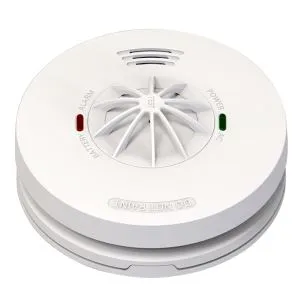
Rate-of-Rise Heat Detector
Rate-of-rise heat detectors sense the heat in the room. The detectors register 70 degrees as a baseline; when the heat in the room rises rapidly above 70 degrees, the alarm is activated. This type of sensor is triggered by the “rate of change” rather than the temperature itself. Usually, the alarm is triggered when the rate of change is a 15 degree increase in less than a minute. When a house fire starts, the temperature in the room will rise rapidly—in some cases, the temperature will rise 30 degrees in 45 seconds.
Fixed Temperature Detector
The fixed temperature detector focuses on the actual heat in the room, rather than the rate of change. When the temperature in the room surpasses a preset number, the alarm is activated. Typically, the preset temperature that triggers the alarm is around 135 degrees. High temperatures are a good indicator of fire (unless you have your heater set to 135 degrees).
Both the rate-of-rise detectors and the fixed temperature detectors are great for sensing fires. However, heat detectors have drawbacks. Although they are great at heat detection, they won’t be able to detect a smoldering fire quickly. They are best for detecting high-heat fires.

Types of Fires for Heat Detection
Low-Energy Fire
There are two main types of fire: low-energy fires and high-heat fires. A low-energy fire smolders; it consumes fuel slowly and gives off a lot of smoke. However, this type of fire emits very little heat. Because this fire gives off more smoke than heat, thermal detection may fall short and take too long to detect this fire. By the time the heat sensor is activated, the fire will have caused severe damage to the home.
High-Heat Fire
The second type of fire is a high-heat fire. A high-heat fire consumes fuel quickly. As the fire eats, the flames grow higher and higher. These types of fires can be caused by an explosion or combustion. These fires feed off of easy-to-burn material such as paper, hay, or dry wood. This fire will trigger a heat detector fairly quickly. Heat Detectors are optimal for sensing this type of fire.
Heat Detectors vs Smoke Detectors: What's The Difference?
In a nutshell, here’s the difference between heat detectors and smoke detectors:
Heat detectors are intended to minimize property damage by reacting to the change in temperature caused by a fire.
Smoke detectors are intended to protect people and property by generating an alarm earlier in the development of a fire. People need time to react, and every second is critical during an actual fire event.
When it comes to protecting people, it is critical to warn building occupants before smoke accumulates. Some types of fires “smolder,” or burn very slowly without flames. Burning slowly causes incomplete combustion, which in turn generates more smoke, carbon monoxide, and other poisonous gases. Smoldering fires also generate very little heat, making them difficult to detect with heat detectors. When people are harmed during a fire, the culprit is almost always smoke and poisonous gases like CO: not the heat or flames.
If smoke detectors are the ideal solution for protecting lives, why do we still see heat detectors being installed instead of smoke detectors?
When property protection is the primary objective, heat detectors can be a reliable and virtually trouble-free solution. In some cases, heat detectors are chosen because of their low cost and greater immunity to contaminants and environmental extremes. In other cases, the heat detectors are used to trigger fire sprinklers or other types of fire suppression systems.
Today’s multi-criteria spot detectors and aspirating smoke detectors are designed to tolerate higher levels of airborne contaminants and broader temperature ranges. Although these solutions are generally more costly than heat detectors, they respond much earlier. In addition to giving building occupants more time to react, advanced smoke detectors often allow first responders to address the fire hazard before serious property damage occurs. Our application guides can help you determine if either multi-criteria spot detectors or aspirating smoke detectors are the right solution for your application.
When smoke detection is not practical, choosing a faster-acting heat detector can provide a quicker response time.
Standard, fixed-temperature heat detectors respond as expected in a majority of fires, but they suffer from thermal lag when fires build quickly. “Thermal lag” occurs when rapid temperature increases cause the heat detector to alarm at a temperature higher than its set point. Adding rate-of-rise capability can speed up reaction times to fast-building fires, but they can also lead to false alarms if the installation environment naturally sees rapid changes to the ambient temperature. Rate-of-rise compensated fixed-temperature detectors can help to prevent both thermal lag and false alarms due to rapid temperature changes. These detectors respond like a standard, fixed-temperature heat detector with slowly developing fires. When fires build quickly, the rate-of-rise compensation prevents thermal lag, allowing these detectors to respond when their set point is reached.
Areas of application of the heat detectors
Areas of application are especially rooms where a smoke alarm is not suitable due to frequent smoke, dust or steam development. In this way, frequent false alarms caused by disturbance variables can be avoided.
These include production plants, logistics centres, workshops or kitchens. However, the maximum permissible room height for the heat maximum and heat differential detectors (6 m to 7.5 m) must be observed.
Important: Heat detectors are not a complete alternative for smoke detectors, but only a supplement. They are also primarily suitable for property protection, as they react more slowly than smoke detectors. Our experts will be happy to advise you on the best fire detectors for your building.
Step-by-Step Guide to Using Heat Detectors for Fire Safety:
Zhejiang Jiaboer electronic technology co., ltd. is mainly engaged in the research and development, production and sales of various fire protection and safety electronic products.
Our main products include various types of fire detection alarms, CO alarms, household gas alarms, heat alarms, intelligent wireless alarm systems, home security electronic products, low-voltage electrical products including wall switches, sockets, plugs, lampholders, junction boxes, which are mainly sold to European and Australian markets.
Determine the Appropriate Type of Heat Detector
There are two main types of heat detectors: fixed temperature detectors and rate-of-rise detectors. Fixed temperature detectors activate when the temperature reaches a predetermined level, while rate-of-rise detectors activate when the temperature rises rapidly over a short period of time. It’s important to choose the appropriate type of heat detector based on the setting in which it will be used.
01
Choose the Location for the Heat Detector
Heat detectors should be placed in areas where a fire is most likely to occur, such as near kitchens or in areas with electrical equipment. It’s also important to place heat detectors in areas where smoke detectors may not be effective, such as in dusty or humid environments.
02
Install the Heat Detector
Once you’ve determined the appropriate type of heat detector and the location for the detector, it’s time to install the detector. Follow the manufacturer’s instructions for installation, and make sure that the detector is properly wired and connected to the building’s fire alarm system.
03
Test the Heat Detector
After installation, it’s important to test the heat detector to ensure that it’s working properly. Follow the manufacturer’s instructions for testing, and make sure that the detector is properly calibrated and connected to the building’s fire alarm system.
04
Regular Maintenance
Heat detectors should be regularly maintained to ensure that they are working properly. This includes cleaning the detector, testing it regularly, and replacing the detector if it is damaged or no longer working properly.
05
FAQ
Q: How to get product quotation from you?
Q: Are you manufacture or trading company?
Q: How long is the lead time?
Q: How do you treat the customer complaints?
Q: How long i can get the feedback after we sent the enquiry?
Q: Is There a Battery Operated Heat-Only Detector?
Q: What is a Heat Detector?
Q: Where Should I Install a Heat Detector?
Q: What does a fire detector heat alarm do?
Q: How long does a fire detector heat alarm last?
Q: Where can you use a fire detector heat alarm?
Q: What fire alarm maintenance is required?
Q: How can I test my detector?
Q: How to choose proper heat detection?
Q: How important is it to clean my detector?
Q: Are there battery-operated heat-only detectors?
Q: When Should I Change The Batteries?
Q: What is the maximum distance between heat detectors?
Q: Why must I disconnect AC power before changing batteries?
Q: What is the limit on a heat detector?
As one of the most professional heat detector manufacturers and suppliers in China for over 15 years, we're featured by quality products and good service. Please rest assured to buy heat detector from our factory.
Popular Products