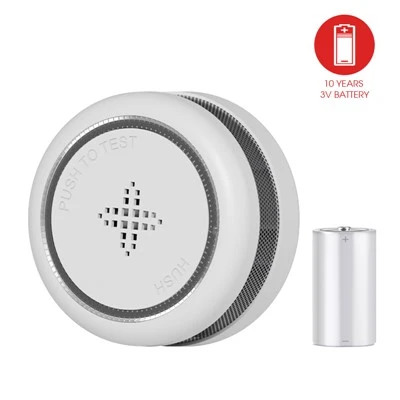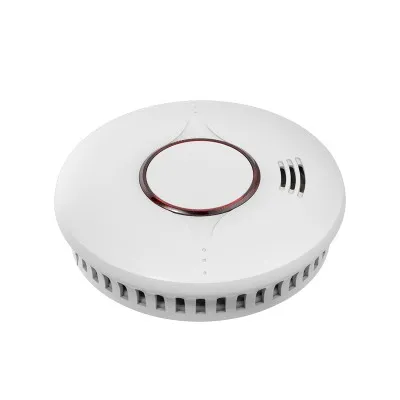


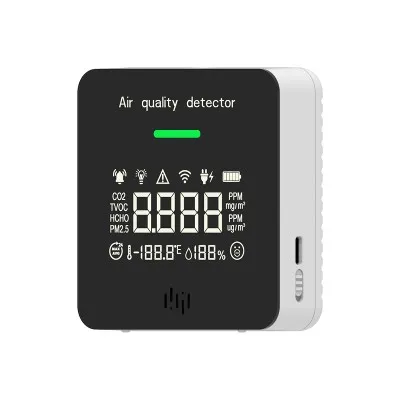


Why choose us
Zhejiang Jiaboer electronic technology co., ltd. is mainly engaged in the research and development, production and sales of various fire protection and safety electronic products. Our main products include various types of fire detection alarms, CO alarms, household gas alarms, heat alarms, intelligent wireless alarm systems, home security electronic products, low-voltage electrical products including wall switches, sockets, plugs, lampholders, junction boxes, which are mainly sold to European and Australian markets.
High Quality
Renowned for its commitment to excellence, our company stands out with a reputation for delivering high-quality products, ensuring unparalleled satisfaction among our valued customers.
Advanced Equipment
We have invested in top-of-the-line technology, such as the world's most advanced German LORENZ smoke testing case and British AWT smoke testing case. This allows us to ensure the highest standards in the research, development, and production of fire protection and safety electronic products, reinforcing our position as a leader in the market.
Professional Team
Leveraging a highly skilled and dedicated team of professionals, we ensure a seamless synergy of expertise in the development, production, and sales of our fire protection and safety electronic products. Our commitment to excellence is driven by the proficiency of our professional team, assuring top-notch quality and innovation in every aspect of our offerings.
Custom Service: Accept ODM/OEM service
We pride ourselves on providing custom solutions tailored to meet the unique needs of our clients. With a commitment to exceptional service, we readily accept ODM and OEM projects, ensuring flexibility and personalized offerings that align perfectly with your requirements. Your satisfaction is at the core of our customizable approach.
One-stop Solution
We offer a comprehensive and seamless one-stop solution for all your needs. From cutting-edge fire detection alarms to intelligent wireless alarm systems and a range of home security electronic products, our diverse portfolio ensures that you can find everything you require for fire protection and safety in one place. Streamline your safety efforts with our integrated solutions.
Competitive Price
Our commitment to providing high-quality fire protection and safety electronic products extends to offering competitive prices. We believe that ensuring safety should be accessible to everyone, and our pricing reflects this dedication to affordability without compromising on quality.
-
![Wireless Co Alarm]() Wireless Co AlarmModel: TCS0101RPower: 2*AA replaceable batteriesSize: 93*93*30mmMOQ: 1000Pcs
Wireless Co AlarmModel: TCS0101RPower: 2*AA replaceable batteriesSize: 93*93*30mmMOQ: 1000Pcs -
![Wireless Co Detector]() Wireless Co DetectorReliable Carbon Monoxide Protection for Residential & Commercial Safety. Your Trusted OEM Partner for European Markets.
Wireless Co DetectorReliable Carbon Monoxide Protection for Residential & Commercial Safety. Your Trusted OEM Partner for European Markets. -
![Wireless Carbon Monoxide Detector]() Wireless Carbon Monoxide DetectorProducts Description Wireless Carbon Monoxide Alarm Power supply: Non-replaceable 10 years lithium battery Conform to EN50291-1: 2018 Sensor type: Electrochemical Alarm volume: ≥85dB at 3m Silence
Wireless Carbon Monoxide DetectorProducts Description Wireless Carbon Monoxide Alarm Power supply: Non-replaceable 10 years lithium battery Conform to EN50291-1: 2018 Sensor type: Electrochemical Alarm volume: ≥85dB at 3m Silence -
![Wireless Carbon Monoxide Alarm]() Wireless Carbon Monoxide AlarmProducts Description Wireless Carbon Monoxide Alarm Power supply: Non-replaceable 10 years lithium battery Conform to EN50291-1: 2018 Sensor type: Electrochemical Alarm volume: ≥85dB at 3m Silence
Wireless Carbon Monoxide AlarmProducts Description Wireless Carbon Monoxide Alarm Power supply: Non-replaceable 10 years lithium battery Conform to EN50291-1: 2018 Sensor type: Electrochemical Alarm volume: ≥85dB at 3m Silence -
![Carbon Monoxide Alarm]() Carbon Monoxide AlarmModel Number: TCS301A-H. Carbon monoxide alarm. Built-in 10 years lithium battery. With EN50291-1:2018 BSI certificate quality assurance. Accept customized logo/customized packaging.
Carbon Monoxide AlarmModel Number: TCS301A-H. Carbon monoxide alarm. Built-in 10 years lithium battery. With EN50291-1:2018 BSI certificate quality assurance. Accept customized logo/customized packaging. -
![Carbon Monoxide Detector En50291]() Carbon Monoxide Detector En50291Model Number: TCS302A-H. Carbon monoxide alarm. Built-in 10 years lithium battery. With EN50291-1:2018 BSI certificate quality assurance. Accept customized logo/customized packaging.
Carbon Monoxide Detector En50291Model Number: TCS302A-H. Carbon monoxide alarm. Built-in 10 years lithium battery. With EN50291-1:2018 BSI certificate quality assurance. Accept customized logo/customized packaging. -
![Carbon Monoxide Sensor]() Carbon Monoxide SensorModel Number: TCS311A-H. Carbon monoxide alarm. Built-in 10 years lithium battery. With EN50291-1:2018 BSI certificate quality assurance. Accept customized logo/customized packaging.
Carbon Monoxide SensorModel Number: TCS311A-H. Carbon monoxide alarm. Built-in 10 years lithium battery. With EN50291-1:2018 BSI certificate quality assurance. Accept customized logo/customized packaging. -
![Carbon Monoxide Detectors]() Carbon Monoxide DetectorsModel Number: TCS302A-H. Carbon monoxide alarm. Built-in 10 years lithium battery. With EN50291-1:2018 BSI certificate quality assurance. Accept customized logo/customized packaging.
Carbon Monoxide DetectorsModel Number: TCS302A-H. Carbon monoxide alarm. Built-in 10 years lithium battery. With EN50291-1:2018 BSI certificate quality assurance. Accept customized logo/customized packaging. -
![Smart Co Detector]() Smart Co DetectorModel Number: TCS302A-H. Carbon monoxide alarm. Built-in 10 years lithium battery. With EN50291-1:2018 BSI certificate quality assurance. Accept customized logo/customized packaging.
Smart Co DetectorModel Number: TCS302A-H. Carbon monoxide alarm. Built-in 10 years lithium battery. With EN50291-1:2018 BSI certificate quality assurance. Accept customized logo/customized packaging. -
![Detector Carbon Monoxide]() Detector Carbon MonoxideModel Number: TCS311A-H. Carbon monoxide alarm. Built-in 10 years lithium battery. With EN50291-1:2018 BSI certificate quality assurance. Accept customized logo/customized packaging.
Detector Carbon MonoxideModel Number: TCS311A-H. Carbon monoxide alarm. Built-in 10 years lithium battery. With EN50291-1:2018 BSI certificate quality assurance. Accept customized logo/customized packaging. -
![Top Rated Carbon Monoxide Detector]() Top Rated Carbon Monoxide DetectorModel Number: TCS310A-H. Carbon monoxide alarm. Built-in 10 years lithium battery. With EN50291-1:2018 BSI certificate quality assurance. Accept customized logo/customized packaging.
Top Rated Carbon Monoxide DetectorModel Number: TCS310A-H. Carbon monoxide alarm. Built-in 10 years lithium battery. With EN50291-1:2018 BSI certificate quality assurance. Accept customized logo/customized packaging. -
![Ceiling Carbon Monoxide Detector]() Ceiling Carbon Monoxide DetectorModel Number: TCS311A-H. Carbon monoxide alarm. Built-in 10 years lithium battery. With EN50291-1:2018 BSI certificate quality assurance. Accept customized logo/customized packaging.
Ceiling Carbon Monoxide DetectorModel Number: TCS311A-H. Carbon monoxide alarm. Built-in 10 years lithium battery. With EN50291-1:2018 BSI certificate quality assurance. Accept customized logo/customized packaging. -
![Portable Carbon Monoxide Detector]() Portable Carbon Monoxide DetectorModel Number: TCS302A-H. Carbon monoxide alarm. Built-in 10 years lithium battery. With EN50291-1:2018 BSI certificate quality assurance. Accept customized logo/customized packaging.
Portable Carbon Monoxide DetectorModel Number: TCS302A-H. Carbon monoxide alarm. Built-in 10 years lithium battery. With EN50291-1:2018 BSI certificate quality assurance. Accept customized logo/customized packaging. -
![Built-in Lithium Battery CO Alarm]() Built-in Lithium Battery CO AlarmModel Number: TCS301A-HCarbon monoxide alarm. Built-in 10 years lithium battery. With EN50291-1:2018 BSI certificate quality assurance. Accept customized logo/customized packaging.
Built-in Lithium Battery CO AlarmModel Number: TCS301A-HCarbon monoxide alarm. Built-in 10 years lithium battery. With EN50291-1:2018 BSI certificate quality assurance. Accept customized logo/customized packaging. -
![EN50291 Desk Stand Carbon Monoxide Detector]() EN50291 Desk Stand Carbon Monoxide DetectorModel Number: TCS310A-H. Carbon monoxide alarm. Built-in 10 years lithium battery. With EN50291-1:2018 BSI certificate quality assurance. Accept customized logo/customized packaging.
EN50291 Desk Stand Carbon Monoxide DetectorModel Number: TCS310A-H. Carbon monoxide alarm. Built-in 10 years lithium battery. With EN50291-1:2018 BSI certificate quality assurance. Accept customized logo/customized packaging. -
![Digital Carbon Monoxide Detector]() Digital Carbon Monoxide DetectorModel Number: TCS301A-HCarbon monoxide alarm. Built-in 10 years lithium battery. With EN50291-1:2018 BSI certificate quality assurance. Accept customized logo/customized packaging.
Digital Carbon Monoxide DetectorModel Number: TCS301A-HCarbon monoxide alarm. Built-in 10 years lithium battery. With EN50291-1:2018 BSI certificate quality assurance. Accept customized logo/customized packaging. -
![Co Fire Alarm]() Co Fire AlarmModel Number: TCS302A-H. Carbon monoxide alarm. Built-in 10 years lithium battery. With EN50291-1:2018 BSI certificate quality assurance. Accept customized logo/customized packaging.
Co Fire AlarmModel Number: TCS302A-H. Carbon monoxide alarm. Built-in 10 years lithium battery. With EN50291-1:2018 BSI certificate quality assurance. Accept customized logo/customized packaging. -
![Round Carbon Monoxide Detector]() Round Carbon Monoxide DetectorModel Number: TCS301A-H. Carbon monoxide alarm. Built-in 10 years lithium battery. With EN50291-1:2018 BSI certificate quality assurance. Accept customized logo/customized packaging.
Round Carbon Monoxide DetectorModel Number: TCS301A-H. Carbon monoxide alarm. Built-in 10 years lithium battery. With EN50291-1:2018 BSI certificate quality assurance. Accept customized logo/customized packaging.


CO is a colorless, tasteless, and odorless gas produced by incomplete combustion of carbon-containing materials. It is often referred to as the "silent killer" because it is virtually undetectable by humans. In a study by Underwriters Laboratories, "Sixty percent of Americans could not identify any potential signs of a CO leak in the home".[2] Elevated levels of CO can be dangerous to humans depending on the amount present and length of exposure. Smaller concentrations can be harmful over longer periods while increasing concentrations require diminishing exposure times to be harmful.
CO detectors are designed to measure CO levels over time and sound an alarm before dangerous levels of CO accumulate in an environment, giving people adequate warning to safely ventilate the area or evacuate. Some system-connected detectors also alert a monitoring service that can dispatch emergency services if necessary.
A carbon monoxide detector or CO detector is a device that detects the presence of the carbon monoxide (CO) gas to prevent carbon monoxide poisoning. In the late 1990s Underwriters Laboratories changed the definition of a single station CO detector with a sound device to carbon monoxide (CO) alarm. This applies to all CO safety alarms that meet UL 2034 standard;[1] however for passive indicators and system devices that meet UL 2075, UL refers to these as carbon monoxide detectors. Most CO detectors use a sensor with a defined, limited lifespan, and will not work indefinitely.
The devices can either be battery-operated or AC-powered (with or without a battery backup). Battery-powered devices advertise a battery lifetime of up to 10 years. The gas sensors in CO alarms have a limited life span, typically two to five years.[6] Newer models are designed to signal a need to be replaced after a set period. CO detectors all have "test" buttons like smoke detectors, but the test buttons only test the battery, electronic circuit, and buzzer, not the alarm’s ability to sense gas.
CO detectors should be installed in each sleeping area in a dwelling, and each detector should be located "on the wall, ceiling or other location as specified in the installation instructions that accompany the unit".
The primary purpose of CO detectors is to sound an alarm to warn occupants of an enclosed space of a dangerous level of carbon monoxide. The alarm should normally sound after 40 to 165 minutes if the concentration rises to 100ppm, and in 4 to 15 minutes at 400ppm. The alarm should not sound too quickly, as brief false alarms may prompt users to disable the alarm, leaving them unprotected.[9] Alarm devices may display the CO level. There are also measuring instruments designed to display CO concentrations down to low, non-dangerous levels, rather than detect and warn of dangerous levels.
Types of Fires for Heat Detection
CO detectors are available as stand-alone models, or system-connected devices which can be monitored remotely.
Types of sensors
Early designs used a chemical detector consisting of a white pad that faded to a brownish or blackish color in the presence of carbon monoxide. Such detectors are cheap but only give a visual warning. As carbon monoxide-related deaths increased during the 1990s, audible alarms became standard.
The alarm points on carbon monoxide detectors are not a simple alarm level (as in smoke detectors) but are a concentration-time function. At lower concentrations, e.g. 100 parts per million (PPM), the detector does not sound an alarm for many tens of minutes. At 400 PPM, the alarm sounds within a few minutes. This concentration-time function is intended to mimic the uptake of carbon monoxide in the body while also preventing false alarms due to brief bursts of carbon monoxide from relatively common sources such as cigarette smoke.
Four types of sensors are available, varying in cost, accuracy, and speed of response.Most detectors do not have replaceable sensors.
01
Opto-chemical type
The detector consists of a pad of a colored chemical which changes color upon reaction with carbon monoxide. They only provide a qualitative warning of the gas, however. The main advantage of these detectors is that they are the lowest cost, but the downside is that they also offer the lowest level of protection.
One reaction used for carbon monoxide detection is potassium disulfitopalladate (II) catalytic oxidation:
CO + K2Pd(SO3)2 -> Pd + CO2 + SO2 + K2SO3
As the reaction progresses, atomic palladium release causes the color to change from yellow to brown to black.
02
Biomimetic type
A biomimetic sensor works in a fashion similar to hemoglobin which darkens in the presence of CO proportional to the amount of carbon monoxide in the surrounding environment. It uses cyclodextrins, a chromophore, and a number of metal salts. This can either be seen directly or connected to an infrared source of photons such as an IR LED and then monitored using a photodiode. Battery lifespan is usually two to three years with conventional alkaline, but a lithium battery will last the life of the product. The biotechnology-based sensors have a useful operational life of six years. These products were the first to enter the mass market, but because they cost more than other sensors they are mostly used in higher-end areas and RVs. The technology has been improved and is the most reliable technology, according to a report from Lawrence Berkeley National Laboratory.
03
Electrochemical type
Electrochemical Carbon Monoxide sensors. Both sensors and alarms are from different companies.
The metal cylinder with yellow tape on it.
The brown cylinder with text on it.
The electrochemical detector uses the principle of a fuel cell to generate an electrical current when the gas to be detected undergoes a chemical reaction. The generated current is precisely related to the amount of carbon monoxide in the immediate environment close to the sensor. Essentially, the electrochemical cell consists of a container, two electrodes, connection wires, and an electrolyte, typically sulfuric acid. Carbon monoxide is oxidized at one electrode to carbon dioxide while oxygen is consumed at the other electrode. For carbon monoxide detection, the electrochemical cell has advantages over other technologies in that it has a highly accurate and linear output to carbon monoxide concentration, requires minimal power as it is operated at room temperature, and has a long lifetime, which typically is five years to ten years. This technology has become the dominant technology in the United States and Europe.[citation needed] Test buttons only indicate the operational effectiveness of the battery, circuit, and buzzer. The only way to fully test the operation of a CO alarm using an electrochemical cell is with a known source of calibrated test gas delivered in a shroud to maintain the concentration level for the test period.
04
Semiconductor type
Thin wires of the semiconductor tin dioxide on an insulating ceramic base provide a sensor monitored by an integrated circuit. This sensing element must be heated to approximately 400 °C for operation. Oxygen increases the resistance of the tin dioxide while carbon monoxide reduces it. The integrated circuit monitors the resistance of the sensing element. Lifespans are approximately five years and alarms need testing on installation and at least annually with a test gas.
Due to the large power demand of this sensor, it is usually powered from the mains. A battery-powered, pulsed sensor is available with a lifetime of months.
This technology is widely used in Japan and elsewhere in the Far East, with some market penetration in the USA. However, the superior performance of electrochemical cell technology is beginning to displace this technology.
05
Why is carbon monoxide dangerous?
Carbon monoxide is deadly because it binds with your red blood cells and starves your body of oxygen after passing into your lungs.
These are the early symptoms of carbon monoxide poisoning:
·Headache
·Nausea
·Vomiting
·Dizziness
·Shortness of breath
·Fatigue
Perhaps most troubling is the similarity to cold or flu-like symptoms that are easy to ignore—shortness of breath, nausea, and mild headaches. Disorientation and unconsciousness can occur when levels of carbon monoxide reach 150 parts per million (ppm).2 Eventually, the symptoms turn lethal without treatment.
FAQ
Q: 1. What does a carbon monoxide detector do?
Q: 2. What are the main sources of carbon monoxide in a home?
Q: 3. Where should you install carbon monoxide detectors?
Q: 4. Where should you place carbon monoxide detectors in each room?
Q: 5. Why is my carbon monoxide detector beeping?
Q: 6. How to test your carbon monoxide detectors to ensure they are working properly?
Q: 7. How often should carbon monoxide detectors be replaced?
Q: 8.What would cause carbon monoxide in a house?
How can carbon monoxide build up in a home? The most common causes of carbon monoxide building up are incorrectly installed or poorly maintained or ventilated appliances – like stoves and hot water heaters. Poorly ventilated fireplaces and other gas- or wood-burning appliances can also pose danger.
Q: 9.What causes a carbon monoxide alarm to go off?
Q: 10.What is carbon monoxide detector vs smoke detector?
Q: 11.How do I know if there's carbon monoxide in my house?
Q: 12.How do you stop carbon monoxide in your house?
Don't burn anything in a stove or fireplace that isn't vented. Don't heat your house with a gas oven. Don't use a generator, pressure washer, or any gasoline-powered engine less than 20 feet from any window, door, or vent. Use an extension cord that is more than 20 feet long to keep the generator at a safe distance.
Q: 13.What does carbon monoxide smell like?
Q: 14.Who needs a carbon monoxide detector?
Q: 15.How do I know if my alarm detects carbon monoxide?
Q: 16.Does cigarette contain carbon monoxide?
Q: 17.How far away from bedroom should carbon monoxide be?
Q: 18.What are the effects of Carbon Monoxide (CO) exposure?
Common Medium Exposure - Throbbing headache, drowsiness, confusion, fast heart rate.
Common Extreme Exposure - Convulsions, unconsciousness, brain damage, heart and lung failure followed by death.
If you experience even mild CO poisoning symptoms, immediately consult a physician!
Q: 19.Are there any steps I can take to prevent Carbon Monoxide (CO) poisoning?
Every year have the heating system, vents, chimney and flue inspected by a qualified technician.
Regularly examine vents and chimneys for improper connections, visible rust and stains.
Install and operate appliances according to the manufacturer's instructions.
Only purchase appliances that have been approved by a nationally recognized testing laboratory.
Never use a gas range/stove to heat the home.
Never leave your car idling in a closed garage or use fuel-powered appliances or tools in enclosed, attached areas such as garages or porches. Carbon monoxide can seep into your home through vents and doors.
Q: 20.Should my Carbon Monoxide (CO) alarm have a digital display? What does the peak level function do?
Peak Level Memory stores the highest recorded reading prior to being reset. This feature enables you to know if there was a reading while you were away from home, and also can help emergency responders determine the best treatment.
As one of the most professional carbon monoxide detector manufacturers and suppliers in China for over 15 years, we're featured by quality products and good service. Please rest assured to buy carbon monoxide detector from our factory.
apartment security device, early warning gas detector, bedroom security devicePopular Products