

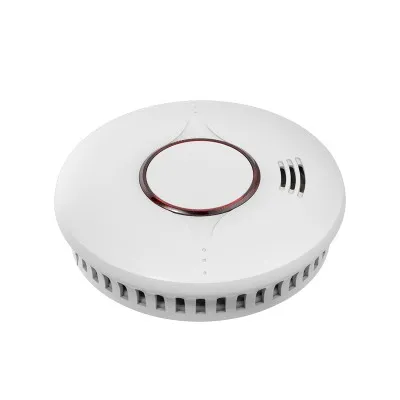


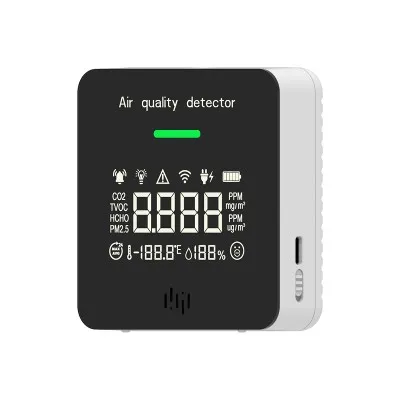


In the realm of home safety, both smoke detectors and gas leak detectors play crucial roles. However, a common question that arises is whether a smoke detector can detect a gas leak. To understand this, we need to delve into the working principles of both devices.
How Smoke Detectors Work
Smoke detectors are designed to sense the presence of smoke particles in the air. There are two main types of smoke detectors: ionization and photoelectric.
Ionization Smoke Detectors
Ionization smoke detectors contain a small amount of radioactive material that ionizes the air inside the detector's chamber. This creates a flow of electrical current. When smoke enters the chamber, it disrupts the flow of ions, and the detector senses the change in current, triggering an alarm. These detectors are particularly sensitive to fast - flaming fires that produce small smoke particles.
Photoelectric Smoke Detectors
Photoelectric smoke detectors use a light source and a light sensor. In normal conditions, the light from the source does not reach the sensor. When smoke enters the chamber, the smoke particles scatter the light, and some of it reaches the sensor. Once the sensor detects a sufficient amount of scattered light, the alarm is activated. Photoelectric detectors are more effective at detecting smoldering fires that produce larger smoke particles.
How Gas Leak Detectors Work
Gas leak detectors are specialized devices designed to detect the presence of specific gases, such as natural gas, propane, or carbon monoxide.
Detection of Combustible Gases
For combustible gases like natural gas and propane, many detectors use a catalytic bead sensor. This sensor contains a catalyst that causes the combustible gas to burn at a low temperature. The heat generated by the combustion changes the electrical resistance of the sensor, and this change is detected and used to trigger an alarm.
Detection of Carbon Monoxide
Carbon monoxide detectors typically use an electrochemical sensor. When carbon monoxide comes into contact with the sensor, a chemical reaction occurs that generates an electrical current. The magnitude of the current is proportional to the concentration of carbon monoxide in the air. Once the concentration reaches a dangerous level, the detector sounds an alarm.
Can Smoke Detectors Detect Gas Leaks?
In general, traditional smoke detectors are not designed to detect gas leaks. Their sensors are calibrated to respond to smoke particles, not to the molecules of gases.
False Alarms
However, in some rare cases, a gas leak could potentially cause a false alarm in a smoke detector. For example, if a gas leak leads to a fire or a significant amount of incomplete combustion, the resulting smoke could trigger the smoke detector. But this is an indirect effect and not a reliable way of detecting a gas leak.
Limitations
Smoke detectors lack the specific sensors and technology required to accurately detect the presence of gases. They cannot distinguish between smoke and gas molecules, and their sensitivity is focused on the physical properties of smoke, such as particle size and light - scattering ability.
Importance of Separate Gas Leak Detectors
Given the limitations of smoke detectors in detecting gas leaks, it is essential to have separate gas leak detectors in your home. Gas leaks can pose serious risks, including explosions, fires, and carbon monoxide poisoning. A dedicated gas leak detector can provide early warning of a gas leak, allowing you to take appropriate action, such as evacuating the premises and contacting the gas company.
In conclusion, while smoke detectors are vital for detecting fires, they are not capable of reliably detecting gas leaks. To ensure comprehensive home safety, it is necessary to install both smoke detectors and gas leak detectors in your living space.
Can Smoke Detector Detect Gas Leak?
Popular Products

Stand Alone Smoke Detector
Model Number: TSS915A. Photoelectric smoke detector. 9V replaceable battery. With EN14604 BSI certificate quality

Hardwired Smoke Detector
Model Number: TSS890A-HI. Photoelectric smoke detector. Mains power 220-240V with 9V battery backup. With EN14604 BSI

Domestic Fire Alarm
Model number:TSS380A-H. Photoelectric smoke detector. Built-in 10 years lithium battery. With EN14604 Q-label,NF

Wireless Heat Detector
Model Number: THS898A-HIR. Hardwired heat detector. Mains power 220-240V power supply with 9V battery backup. With

Wireless Heat Alarms With 10 Years Battery
Module: THS385D-HR. Function: RF Heat Detector. MOQ: 500 Pieces. Customization: Customized Logo/Customized Packaging.
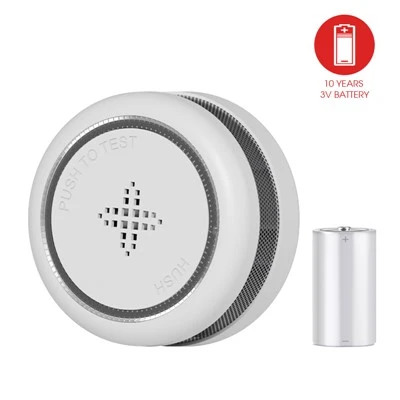
Built-in 3V Lithium Battery Mini Smoke Alarm
Module: TSS303R. Function: Wireless Smoke Detector. MOQ: 500 Pieces. Customization: Customized Logo/Customized

WiFi Plug
* Model: TOO0102W* Operating voltage: AC 100-240V* APP remote control* Timer function* Power Memory* Overload

WiFi Carbon Monoxide Alarm
Model: TCS0102WPower: 2*AA replaceable batteriesSize: 93*93*30mmMOQ: 1000Pcs