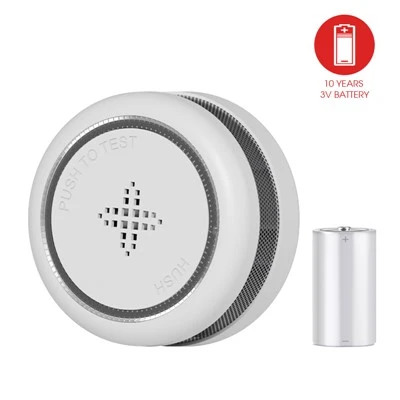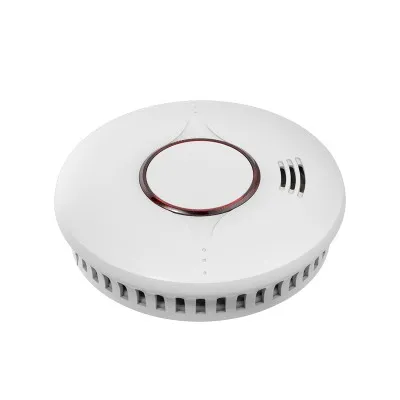




For distributors, retailers, and OEM partners in the safety industry, understanding the core technology of your products is crucial. It builds confidence in your offerings and allows you to communicate value effectively to your end-users. Today, we demystify one of the most critical life-saving devices: the smoke detector.
About Zhejiang Jiaboer Electronic Technology Co., Ltd.
We are a leading manufacturer dedicated to the R&D, production, and sales of high-quality fire protection and safety electronic products. Our portfolio includes fire detection alarms, CO alarms, gas alarms, and intelligent wireless alarm systems, primarily exported to European and Australian markets. Equipped with world-class testing equipment like the German LORENZ and British AWT smoke testing chambers, we are committed to providing our global B2B partners with reliable, superior-quality safety solutions.
E - Explanation: The Core Principle
At its heart, a standard photoelectric smoke detector operates on a simple principle: light scattering. Inside the detection chamber, a light beam is projected in a way that, under normal conditions, it does not hit a sensor. When smoke particles enter the chamber, they disrupt this light beam, causing light to scatter in all directions-a phenomenon known as Tyndall scattering. Some of this scattered light hits a photosensor, triggering the alarm.
E - Evidence: The Step-by-Step Process
Let's break down this process into a detailed, sequential workflow.
Step 1: The Standby State
The detector is powered, either by a main electrical circuit with a battery backup or a long-life battery. The internal microchip is in a low-power monitoring mode. The LED indicator light may pulse slowly, indicating it is active and conducting self-checks.
Step 2: Smoke Entry
When a fire begins to smolder, visible smoke particles enter the detector through the external vents. These particles make their way into the inner smoke detection chamber, a labyrinth designed to prevent light from external sources or insects from causing false alarms.
Step 3: Light Scattering
Inside the darkened chamber, an LED light source emits a beam of light. In the absence of smoke, this beam travels straight across the chamber without hitting the photosensor (a light-sensitive component like a photodiode). When smoke particles enter, they collide with the light beam, causing the light to scatter and reflect onto the photosensor.
Step 4: Signal Detection & Amplification
The photosensor detects the scattered light and converts this optical signal into a tiny, weak electrical current. This minute current is then sent to the detector's main circuitry, where it is significantly amplified to a level that the processing chip can analyze.
Step 5: Alarm Triggering
The microchip continuously monitors the signal from the photosensor. Once the amplified signal surpasses a pre-defined threshold (indicating a certain density of smoke), the chip immediately activates the alarm sequence. This sends a full power signal to the loud, 85-decibel piezoelectric horn, producing the unmistakable, piercing sound.
Step 6: Interconnection (For System Units)
In interconnected systems (a standard in many commercial and residential buildings), when one detector alarms, it simultaneously sends a signal to all other compatible detectors on the same circuit. This ensures the entire premises is alerted, even if the fire is isolated to one room.
T - Teaching: Why This Technology Matters for Your Business
Understanding this step-by-step process is more than technical knowledge-it's a sales and trust-building tool.
Selling the "Why": You can explain to your customers why photoelectric detectors are superior at detecting slow, smoldering fires (common from electrical faults or overheated wiring), which produce a lot of visible smoke before bursting into flames.
Quality Assurance: The complexity of the detection chamber and the sensitivity of the components are where manufacturer quality shines. Our use of advanced German and British testing equipment ensures that every Jiaboer detector responds with precision and reliability, a key point of differentiation for our partners.
Troubleshooting Support: This knowledge helps you understand common issues, such as nuisance alarms from steam (which can also scatter light) or dust, allowing you to provide better customer support.
A - Application: The Jiaboer Advantage for B2B Partners
At Jiaboer, we don't just build smoke detectors; we engineer reliability. Our application of this core technology is what sets us apart as a strategic manufacturing partner.
Precision Engineering: Our advanced LORENZ and AWT testing chambers allow us to calibrate the light source and photosensor with extreme accuracy, minimizing false alarms while maximizing sensitivity to real fire threats.
Rigorous Quality Control: Every component, from the microchip to the design of the smoke chamber, is sourced and produced under strict quality protocols. This ensures consistent performance that meets the high standards of the European and Australian markets.
Comprehensive Solutions: We integrate this smoke detection technology into a wider ecosystem, including CO alarms and intelligent wireless alarm systems, allowing our partners to offer complete safety solutions to their customers.
The humble smoke detector is a masterpiece of practical physics and electronic engineering. By choosing Zhejiang Jiaboer as your manufacturing partner, you are not just sourcing a product; you are investing in a device built with a deep understanding of the science that keeps people safe.
Partner with us to deliver proven, quality-engineered safety to your market.