



The sensitivity of a smoke detector refers to its response to smoke. The higher the sensitivity, the earlier the detector can detect smoke and sound an alarm. In order to ensure the effectiveness of smoke detectors, it is very important to regularly test their sensitivity. The following are several common smoke detector sensitivity detection methods.
Using a test button
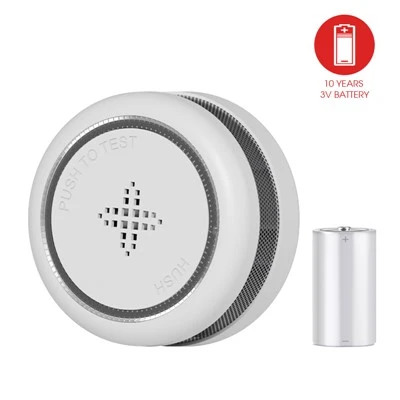
Some smoke detectors are equipped with a test button. Pressing the button can simulate smoke conditions and test the alarm function of the detector. This is a simple and quick method, but it does not fully reflect the actual sensitivity of the detector.
Using a smoke generator
Light paraffin water
According to the search results, light paraffin water can be used as the material of the smoke generator, and its particle size distribution is between 5um~1.0um. This smoke generator can generate stable smoke for testing the sensitivity of smoke detectors.
Optical smoke density meter
Use an optical smoke density meter to measure smoke concentration. The wavelength of transmitted light is between 880nm~950nm, and the range is 0~2dB/m. By adjusting different wind speeds and smoke rising rates, various smoke environments can be simulated to test the sensitivity of smoke detectors.
Laboratory testing
Fire laboratory
In the fire laboratory, specialized equipment and methods can be used to simulate the smoke environment at the fire scene. By controlling the smoke concentration and distribution, the sensitivity of the smoke detector can be accurately tested.
Data recording and analysis
Use specialized software to record the smoke concentration and the response time of the detector and analyze the sensitivity and performance of the detector. This method can provide detailed test data to help evaluate the actual performance of the detector.
Actual environment testing
Field testing
In the actual environment, smoke bombs or other smoke generating devices can be used to generate smoke to test the sensitivity of the detector. This method can reflect the performance of the detector in actual use, but safety issues need to be paid attention to to avoid causing fires.
Environmental considerations
In the actual environment, the sensitivity of the smoke detector may be affected by factors such as airflow, temperature, and humidity. Therefore, these factors need to be considered during testing to ensure the accuracy of the test results.
Maintenance and calibration
Regular calibration
In order to ensure the sensitivity of the smoke detector, it needs to be calibrated regularly. Calibration can use professional equipment and methods to ensure that the sensitivity of the detector meets the standard requirements.
Maintenance records
After each maintenance and calibration, relevant conditions should be recorded, including test methods, test results, maintenance content, etc. These records can help track the performance changes of the detector and promptly discover and solve problems.
Through the above methods, the sensitivity of the smoke detector can be effectively tested to ensure that it can issue an alarm in time when a fire occurs, ensuring the safety of personnel and property.