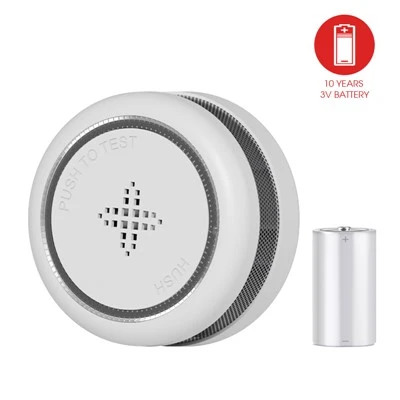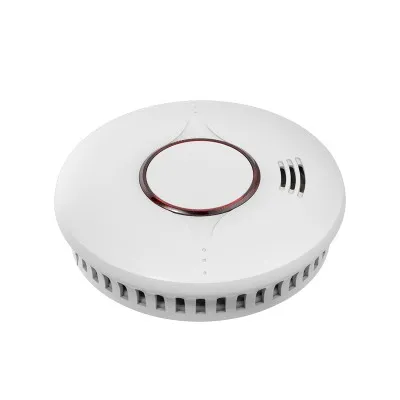


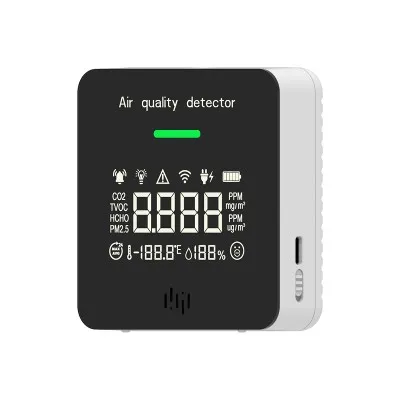


Smoke detectors play an important role in our daily lives. They can help us detect fires in time at the early stage of a fire, thereby protecting people's lives and property. However, sometimes smoke detectors may give false alarms, which not only causes unnecessary panic, but may also lead to the neglect of real fires. The following are some common reasons for smoke detector false alarms.
False alarms caused by cooking in the kitchen
The fumes produced during cooking are a common cause of false alarms in smoke detectors. This phenomenon is especially common in homes that use ionization smoke detectors. This is because the particle size of cooking fumes is small, and ionization smoke detectors are very sensitive to such small particles. If the detector is close to the source of the fumes, such as less than 1.7 meters, the possibility of false alarms will increase.
The influence of water vapor and moisture
Water vapor in bathrooms or other humid areas can also cause smoke detectors to falsely alarm. Water vapor condenses on the sensors and circuit boards of the detectors. If there is too much condensation, it may trigger an alarm.
Smoke from smoking
The particle spectrum characteristics of smoke from cigarettes and fire smoke are very close, and traditional smoke detectors are difficult to distinguish, which may lead to false alarms. In China, this situation is relatively rare because domestic smoke detectors are generally less sensitive to reduce the occurrence of false alarms.
Power supply problems
When the battery is low, some alarms will sound a warning sound, which may be mistaken for a false alarm. In addition, unstable power supply may also cause the detector to falsely alarm.
Dust accumulation
Detectors that have not been cleaned for a long time may accumulate a lot of dust, which may also lead to false alarms. Dust affects the normal operation of the detector and makes it overly sensitive to normal environmental changes.
Electromagnetic interference
The impact of the electromagnetic environment on smoke detectors is also a factor that cannot be ignored. Air electromagnetic wave interference, narrow pulse groups on power supply and other input and output lines, and human body static electricity may affect the normal operation of the detector.
Component aging
In systems with a service life of more than 10 years, the tendency of false alarms caused by component aging will increase. Therefore, there is a view that the life of the detector should be set at 10 years.
In summary, there are many reasons for smoke detector false alarms, including environmental factors, quality problems of the equipment itself, and the user's usage and maintenance habits. Understanding these reasons will help us take corresponding preventive measures to reduce the occurrence of false alarms and ensure that the detector can play its due role at critical moments.