





Can heat detectors prevent all fires in fire proof buildings?
As a supplier of heat detector fire proof solutions, I often encounter this question from clients, architects, and safety experts. The short answer is no, heat detectors cannot prevent all fires in fire - proof buildings. However, they play a crucial and multi - faceted role in fire safety, and understanding their capabilities and limitations is essential for comprehensive fire protection.
How Heat Detectors Work
Heat detectors are devices designed to sense changes in temperature. There are two main types: fixed - temperature heat detectors and rate - of - rise heat detectors. Fixed - temperature heat detectors are set to activate at a specific temperature, for example, 57°C (135°F) or 70°C (158°F). When the ambient temperature reaches this pre - set level, the detector triggers an alarm. Rate - of - rise heat detectors, on the other hand, monitor the speed at which the temperature is increasing. If the temperature rises rapidly, say more than 12 - 20°F (6.7 - 11.1°C) per minute, the detector will also sound an alarm.
The Role of Heat Detectors in Fire - Proof Buildings
Fire - proof buildings are constructed with materials and systems that are designed to resist the spread of fire. These buildings often have fire - rated walls, floors, and ceilings, as well as fire doors and dampers. Heat detectors complement these structural features by providing an early warning system.
In a fire - proof building, heat detectors can detect a fire in its early stages, even before visible flames or smoke are present. This early detection is crucial as it allows occupants to evacuate the building safely and gives the fire department more time to respond. For instance, in a large industrial warehouse, a heat detector can sense a smoldering fire in a storage area. The alarm can be sent to a central monitoring station, and the appropriate actions can be taken immediately.
Limitations of Heat Detectors
Despite their importance, heat detectors have several limitations that prevent them from preventing all fires.
Slow - Burning Fires
Some fires start slowly and produce very little heat in the initial stages. For example, a small electrical fire in a wall cavity may smolder for hours or even days before it grows into a larger, more dangerous fire. Heat detectors may not be able to detect these slow - burning fires until a significant amount of heat has built up, which could be too late.
Hidden Fires
Fires that occur in hidden spaces, such as inside ductwork or behind false ceilings, may not be detected by heat detectors. The heat may be contained within these spaces, and the detectors installed in the open areas may not sense the temperature increase.


Environmental Factors
Environmental factors can also affect the performance of heat detectors. High ambient temperatures in some industrial processes or hot climates can cause false alarms. On the other hand, if the heat detector is installed in an area with poor air circulation, the heat from a fire may not reach the detector quickly enough for it to activate.
Complementary Fire Detection Systems
To overcome the limitations of heat detectors, other fire detection systems should be used in conjunction with them.
Smoke Detectors
Smoke detectors are very effective at detecting fires that produce smoke. They can detect a fire much earlier than heat detectors in many cases, especially those that start with smoldering materials. By installing both smoke and heat detectors in a fire - proof building, the chances of detecting a fire at an early stage are significantly increased.
Flame Detectors
Flame detectors are designed to detect the presence of flames. They are particularly useful in areas where fires can spread quickly, such as in industrial kitchens or chemical storage areas. Flame detectors can provide an additional layer of protection and can be used in combination with heat detectors to enhance fire safety.
Our Heat Detector Products
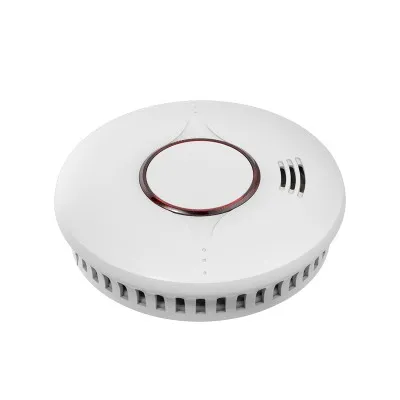
As a supplier, we offer a range of high - quality heat detectors to meet the diverse needs of our customers. Our Intelligent Heat Detector uses advanced technology to provide accurate and reliable temperature sensing. It can be integrated with other building management systems, allowing for seamless monitoring and control.
Our Hard Wired Heat Alarms are designed for permanent installation in commercial and residential buildings. They are hard - wired into the building's electrical system, ensuring continuous power supply and reliable operation.
We also offer the Mains Power Heat Detector With Battery. This detector combines the reliability of mains power with the backup of a battery. In case of a power outage, the battery ensures that the detector continues to function, providing uninterrupted fire protection.
Conclusion
While heat detectors are an important part of the fire safety system in fire - proof buildings, they cannot prevent all fires. However, when used in combination with other fire detection systems and the structural fire - proofing features of a building, they can significantly enhance the overall fire safety.
If you are looking for reliable heat detectors for your fire - proof building, we are here to help. Our team of experts can provide you with the best solutions tailored to your specific needs. Contact us to start a discussion about your fire safety requirements and explore how our products can contribute to a safer environment.
References
- National Fire Protection Association (NFPA). NFPA 72: National Fire Alarm and Signaling Code.
- International Building Code (IBC). Fire - Resistive Construction Requirements.
- Underwriters Laboratories (UL). Standards for Safety for Heat Detectors.


