

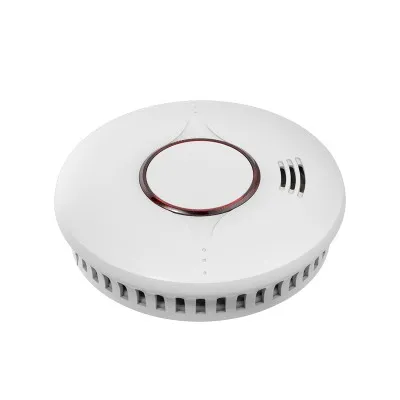




Yo! I'm a supplier of Wireless Heat Detectors, and I often get asked how these nifty devices perform in high - altitude areas. So, I thought I'd dive into this topic and share what I've learned and what the science says.


First off, let's talk about what makes a Wireless Heat Detector tick. These bad boys are designed to sense changes in temperature and send an alert when things get too hot. They're super convenient because you don't have to deal with all those pesky wires. You can place them just about anywhere you need to monitor for heat, like in warehouses, offices, or even in some industrial settings. And if you're interested in other types of heat detectors, you can check out Hard Wired Heat Alarms or Intelligent Heat Detector on our website. But for now, we're focusing on the wireless ones.
Now, high - altitude areas are a whole different ballgame. The air up there is thinner, which means there are fewer air molecules. This has a couple of big impacts on how heat detectors work.
One of the main things is the way heat is transferred. In normal conditions, heat can move through the air by convection, conduction, and radiation. Convection is when hot air rises and cooler air moves in to replace it. But in high - altitude areas, the thinner air makes convection less efficient. This means that heat might not spread as quickly as it would at lower altitudes. So, if there's a small heat source, it might take longer for the Wireless Heat Detector to pick up on the change in temperature.
Another factor is the impact on the detector's electronics. High - altitude areas often have lower air pressure. Some of the components in a Wireless Heat Detector, like the sensors and the radio transmitters, can be affected by this change in pressure. For example, the radio waves that the detector uses to send signals might behave differently. The lower air density can cause the radio waves to travel slightly differently, which could potentially affect the range and reliability of the wireless connection.
But don't worry, we've done a lot of testing to make sure our Wireless Heat Detectors can handle these challenges. Our Wireless Heat Detector is designed with high - altitude performance in mind. We've used special materials and components that are more resistant to the effects of low air pressure and thin air.
The sensors in our detectors are calibrated to be more sensitive. They can pick up on even the slightest changes in temperature, which helps to compensate for the slower heat transfer in high - altitude areas. And we've optimized the radio transmitters to work better in lower air density conditions. This means that the detector can still send accurate alerts, even if you're in a remote mountain cabin or a high - altitude industrial site.
Let's also talk about battery life. In high - altitude areas, the cold temperatures can take a toll on batteries. Lower temperatures can cause the chemical reactions inside the battery to slow down, which reduces the battery's capacity. But our Wireless Heat Detectors come with high - performance batteries that are designed to work well in colder conditions. We've also incorporated power - saving features into the design of the detector. For example, the detector can go into a low - power mode when it's not actively detecting a significant change in temperature. This helps to extend the battery life, so you don't have to worry about constantly replacing the batteries.
In addition to the technical aspects, there are some practical considerations when using Wireless Heat Detectors in high - altitude areas. Installation is a bit different. You need to make sure that the detector is placed in a location where it can effectively sense heat. Since heat transfer is different in high - altitude areas, you might need to place the detector closer to potential heat sources than you would at lower altitudes.
Maintenance is also important. You should regularly check the detector to make sure that it's working properly. This includes checking the battery level, the wireless connection, and the sensor's accuracy. And if you notice any issues, you can reach out to us for support.
Overall, our Wireless Heat Detectors can perform really well in high - altitude areas. We've taken all the factors into account and designed a product that can handle the challenges. Whether you're running a business in the mountains or just want to keep your vacation home safe, our detectors are a great choice.
If you're interested in learning more about our Wireless Heat Detectors or are thinking about making a purchase, don't hesitate to get in touch. We're happy to answer any questions you might have and help you find the right solution for your needs.
References:
- Industry research on heat detector performance in extreme conditions
- In - house testing reports on high - altitude performance of Wireless Heat Detectors


