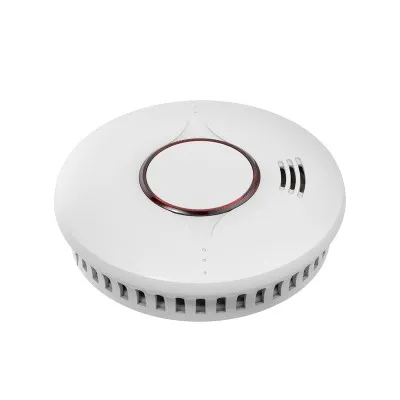


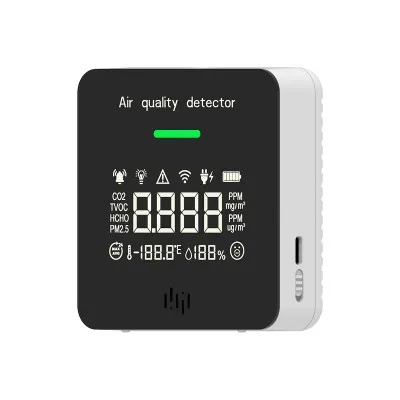


From the structure of the fire detector and its working principle, we can easily determine which parts of the fire detector are susceptible to external interference, and these external interference factors are the sources of interference. We believe that fire detectors are most susceptible to interference in the following parts:
1, Sensing element:
The sensor element is the "eye" of the fire detector, but its "sight" is limited. For example: when a substance with similar characteristics to smoke (such as dust, water mist) is "seen" by it, it will be regarded as smoke and a false alarm will be generated. On the other hand, since the sensing element is generally exposed to the outside world, it is more susceptible to the influence of external dust and moisture, resulting in reduced sensitivity.
2, detection circuit:
The detection circuit is a group of circuits including sensor elements. The main function is to convert the "information" transmitted by the sensor elements into the voltage or current signals we need. When subjected to external electromagnetic interference, it will produce false alarms or not alarms, and even damage the equipment.
3. Communication circuit and communication line:
The communication circuit and the communication line are responsible for transmitting the detected "information" to the fire alarm controller, but in this process, it is likely to cause false alarms due to interference. For example: The information transmitted by the detection circuit is converted into a digital signal through A/D conversion, and then sent to the fire alarm controller through the communication circuit and communication line, but the "0" signal may be changed to a "1" signal due to interference Or change the low level to high level, so that the fire alarm controller receives false information and generates false alarms.