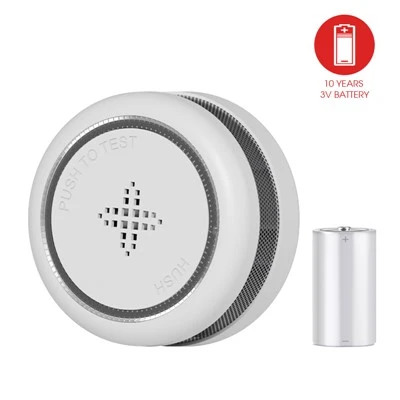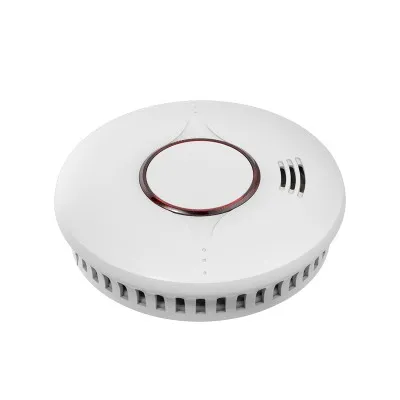




Do you have a smoke detector that beeps at you all the time, even with new batteries? It may be time to replace it. Most manufacturers recommend replacing smoke detectors if they're 10 years or older because the sensors become unreliable. In this article, we'll walk you through a step-by-step process to help you replace your smoke detector.
Turn Off the Power
First, navigate to your home's breaker panel and locate the specific breaker that controls the smoke detectors. Flip this breaker to the off position to ensure that the power is fully disconnected from the smoke detectors throughout your home. This is a crucial step to prevent any electrical hazards during maintenance or installation of new detectors.
After switching off the breaker, go back to one of the smoke detectors and use an electrical tester to verify that the power is indeed off. Touch the tester to each wire connected to the smoke detector. If the tester lights up or makes a noise, it indicates that there is still power in the wires. You must repeat this testing process until the tester remains silent, confirming that there is no longer any power flowing to the smoke detector wires. Only then can you safely proceed with your intended work on the detectors.
Remove the Smoke Detector
The typical smoke detector is designed with a simple yet effective twist-and-lock mechanism that secures it to its mounting bracket on the ceiling or wall. To remove the smoke detector, you'll need to grip it firmly with both hands. Apply a steady and gentle force as you twist the detector counterclockwise. As you do this, you should notice the detector starting to loosen from the bracket. This method ensures a secure fit but also allows for easy removal when necessary.
Once you have twisted the detector sufficiently, you will feel it release from the mounting bracket. At this point, the smoke detector will be dangling from the ceiling or wall, held in place only by the wiring harness that connects it to the home's electrical system. Be cautious not to pull on the wires too roughly, as this could damage them or the detector itself. Now that the detector is loose, you can proceed with disconnecting the wires to completely remove it from its mounting position.
Connect the Wiring Harness from the Smoke Detector
The process of disconnecting the wiring harness from your smoke detector can vary depending on the specific style and model of your device. In some cases, the harness is designed to simply slip on and off with minimal effort. You may find that by gently pulling or pushing the harness, it will easily disengage from the detector, allowing you to separate it from the electrical connections without much hassle.
However, other smoke detectors may feature a more secure attachment method, which includes a tab that needs to be pressed in order to release the harness. To disconnect the wiring in this scenario, you will need to locate the tab on the harness connector. Apply steady pressure to the tab until it clicks or moves, indicating that it has been successfully activated. Once the tab is pressed, the harness should then be able to slide off the detector's terminals, completing the disconnection process.
Remove the Old Baseplate
Next, you'll remove the old baseplate. Sometimes these can be painted over when a homeowner paints walls or ceilings. If that's the case, use a razor knife and score around the paint, this will help prevent any peeling.
The base plate is usually held on by 2 screws. Sometimes you can just loosen the screws and just twist the plate off, other times you will need to remove the screws all the way to get it off.
Connect Wiring Harness to the Wires
The new smoke detector wiring harness should have the same colors as the old smoke detector. You should have a black wire (which is the hot wire), a white (which is your neutral), and a red one (this is a communication wire for interconnected smoke detectors). It's important to connect all of them correctly so they go off together and protect you no matter where you are and where the fire is.
Attach the New Base Plates
After removing the old smoke detector, you'll proceed to install the new base plate, which is an essential component for securing the new detector. It's important to note that the new base plate might have a different arrangement of holes compared to the one you've just removed. Despite this difference, you might find that the new base plate is designed to be versatile and can accommodate various mounting configurations.
To install the new base plate, carefully align it with the existing screws in the ceiling or wall. You should be able to slip it over the screws without needing to remove them. Once the base plate is in position, gently turn it until it locks securely into place. This twist-and-lock action ensures a stable fit. After the base plate is properly aligned and locked, you can then proceed to tighten the screws to secure the base plate firmly in place, providing a stable foundation for the new smoke detector to be mounted on.
Install the New Smoke Detector
Next, you're going to snap the wiring harness into the matching port at the back of the smoke detector. Direct the dangling wires back into the opening so they don't get pinched between the detector and the base plate. Then twist the smoke detector into place..
Remove the Battery Spacer
Turn the Power Back On and Test
The last step is to turn the power back on and test the smoke detectors by pressing the test/hush button for the number of seconds designated on the back of the detector. Then all interconnected, battery-backed-up alarms should respond.
So, that's how you replace a smoke detector. As you can see, with a little bit of information and instruction this is something you can do yourself. But, if you ever feel like you have gotten in over your head, call an electrician you trust for some help.