




Placement of Carbon Monoxide Alarms
What is carbon monoxide? How can carbon monoxide poisoning be prevented? Protecting yourself is simple.
Sure, safeguarding your home and family from a threat that you can't see, smell or taste may sound like a tall order. But if you know the risks and choose the right products, it's actually pretty easy. That's where Kidde comes in. Take a look around for information, helpful tips and solutions – everything you need to arm yourself against a silent killer.
Buying Guide: Choose the Right Safety Products for Your Home
Click on the product hotspots below to learn more about the safety products that industry experts recommend for the home.

Placement of Carbon Monoxide Alarms
We recommend choosing carbon monoxide alarms that have the most accurate sensing technology available. Carbon monoxide poisoning is the leading cause of accidental poisoning deaths in America (Centers for Disease Control). At a minimum, industry experts recommend a CO alarm be installed on each level of the home -- ideally on any level with fuel burning appliances and outside of sleeping areas. Additional CO alarms are recommended 5-20 feet from sources of CO such as a furnace, water heater or fireplace. Alarms can alert you to a problems only after smoke or carbon monoxide reach their sensors. Choose locations free of obstructions, where the alarm will stay clean and protected from adverse environmental conditions. Do not place the unit in dead air spaces or next to a window or door.
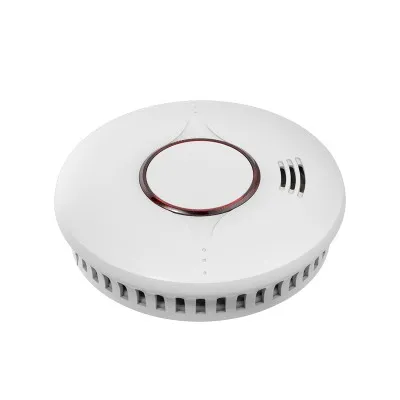
Combination Smoke/CO Alarms
A combination smoke/CO alarm makes it easy to provide both types of protection throughout the home. The Kidde Intelligent Alarm combines the detection capabilities of an ionization smoke sensor – which is more likely to detect smaller, less visible fire particles, like those produced by flaming fires – with that of an electrochemical sensor, which is used to detect CO. Since carbon monoxide is present in all fires, having both detection chambers work together in one alarm is a breakthrough in the fire safety industry. When either sensor notices a potential hazard, it will communicate with the other. Depending on what is detected, the alarm will adjust its smoke sensitivity in order to better discriminate between a real hazard and a false one. This constant communication enhances the alarm's overall performance in all fires, and significantly reduces the potential for a nuisance alarm.