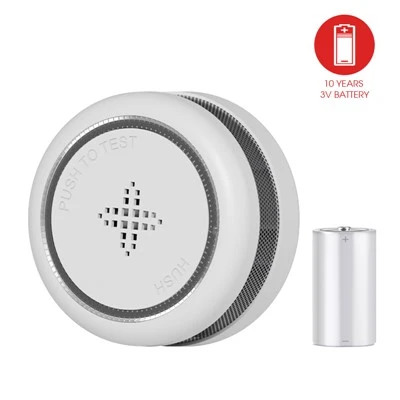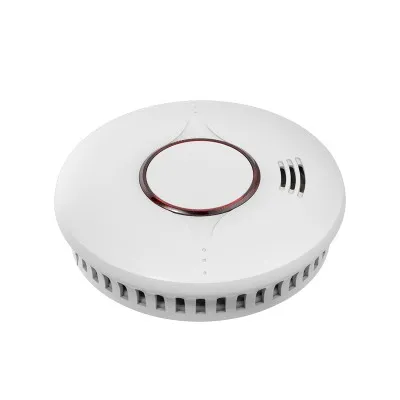


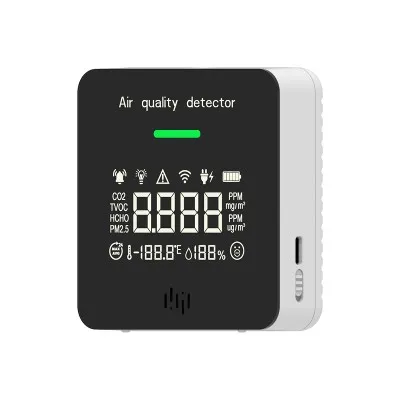


When a fire occurs, smoke will cause hypoxia in the human body and other gases. When the smoke reaches a certain concentration, the human body and other gases will have difficulty breathing due to lack of oxygen. When smoke enters the human lungs, the binding ability of oxygen and carbon dioxide is weakened, causing the human body to suffocate and die. When smoke enters the body through the respiratory system, it will cause people to pay attention to respiratory diseases, and smoke detectors are named after this. Smoke detectors can not only detect the presence of smoke in a timely manner, but also send smoke alarm information to the fire control center for processing or take other measures to control the spread of smoke indoors.
1. Automatically identify smoke
Smoke will produce a large amount of chemical smoke when burning. Therefore, when the fire source is close to the fire area, if the smoke emitted by the combustion is detected, the smoke detector will immediately convert it into an audible and visual alarm signal to notify the firefighters to deal with it in a timely manner. . If the smoke detector does not receive the alarm signal in time, firefighters will not respond to the smoke incident in time. Because smoke detectors can generate alarms for substances that produce smoke, smoke detectors have high detection accuracy for smoke. And the smoke detector can perform alarm processing through sound and light alarm signals.
2. Firefighting linkage
When a fire occurs, the smoke detector can send fire alarm information to the fire linkage control center. The linkage controller can receive the fire alarm signal, process the fire signal, and feed the fire signal back to the fire control center. The fire center processes the fire signal and sends it to the smoke detector. After receiving the fire signal, it processes the relevant signal and sends out a fire alarm signal. The fire monitoring center can receive the fire alarm information through the location of the smoke detector and the smoke detector and send the relevant information to the fire control center. After receiving the smoke detector information, the fire control center responds quickly and processes and controls the relevant information to ensure that the automatic fire alarm system is in normal operation. At the same time, the fire control center will also receive the smoke detector information through the fire alarm system. After receiving the alarm information, complete the relevant processes and perform processing and control operations.
3. Remote control
When a fire occurs and the smoke detector cannot detect the presence of smoke in time or cannot detect smoke due to power outage or other reasons, remote control can be used to control the smoke evacuation area or smoke prevention area. If there is a fire danger indoors, the smoke detector cannot detect the smoke in time and the room is surrounded by smoke. At this time, if an alarm is issued, instructions will be sent to the fire command center for processing. If the alarm still exists at this time or the smoke cannot be detected due to power outage or other reasons and there is no one in the room, you can turn off the smoke detector to evacuate and save yourself to avoid casualties. In addition, emergency measures such as smoke detectors for fire protection, controlling the spread of smoke-sensing areas, and controlling entry into smoke-proof areas can also be used to avoid casualties. When fire accidents occur frequently and cannot be effectively put out in time, it is necessary to organize evacuation operations and rescue forces quickly after the fire occurs. Once a fire occurs, it is very important for firefighters to quickly and accurately eliminate the fire in the bud and carry out fire extinguishing and rescue measures as soon as possible.
4. Monitoring area
Smoke detectors in monitored areas generally use two types of detectors, infrared and gas. For areas affected by smoke and prone to fire hazards, infrared smoke detectors are generally used; for smoke-free room types, smoke-free room types, and areas with greater fire hazards, gas infrared detectors are used. Generally, gas detectors should have the following characteristics: ●Gas detection: smoke concentration is less than 0.1 ppm. This is the change in smoke concentration that we often encounter. When the smoke concentration is within a certain range, the detection equipment will send out an alarm signal and a sound alarm message; but if the smoke concentration exceeds the alarm threshold, the detector will send out a sound and light alarm message; ●All gases in the air in the gas detection area Contains gas concentration conditions. For example, in some hospitals and some office buildings, due to the large fire hazards in smoke that affect the overall security environment in the area, gas detection measures are taken to ensure that alarm information is sent out in a timely manner and effectively processed; ●Gas detection: The use of gas infrared detectors can Detect whether the air contains flammable gases and harmful gases; in addition, gas detection can also use gas detection components with electronic structures; Gas detection: Smoke detectors have the function of reacting with ambient gases and are not affected by changes in external factors.
5. Self-check
When a fire occurs, smoke detectors cannot detect the presence of fire immediately. Therefore, in order to prevent the occurrence of fire, preventive measures must be taken before the fire occurs. Therefore, once a fire is discovered indoors, notification should be made immediately through the doorbell or smoke alarm, and everyone in the room should be evacuated to a safe location. Always pay attention to whether there are people or other people present in the room. If you find that someone has not discovered the fire in time, you should promptly notify the surrounding people to evacuate.