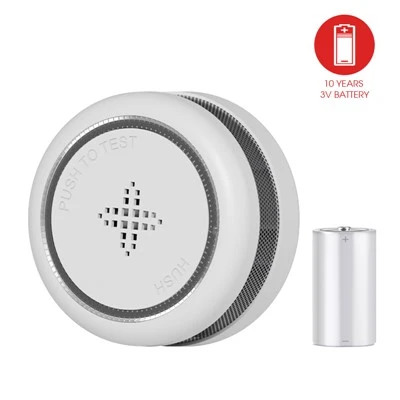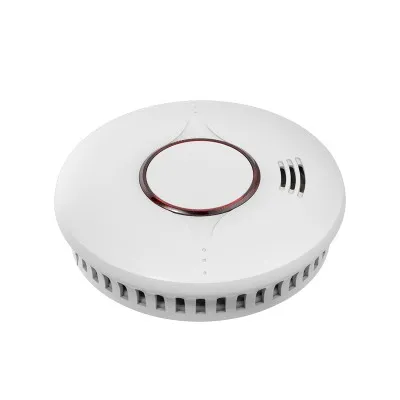




If you notice that your smoke alarm is emitting a single, piercing high-pitched chirp approximately every 30 seconds, this is typically an indication that the battery within the device is reaching its end of life and requires immediate attention. This intermittent chirping serves as an early warning signal, reminding you to take action before the battery completely dies, which could leave your home unprotected in the event of a fire.
Addressing this issue is straightforward and can be accomplished with minimal effort. All you need to do is replace the existing battery with a new one of the same type and specifications. By doing so, you ensure that your smoke alarm remains functional and capable of alerting you to potential fire hazards, thereby maintaining a safe living environment for you and your family. It's important to regularly check and replace the batteries in your smoke alarms to prevent any interruptions in their operation.
Changing the Batteries in Your Smoke Alarm

As we have mentioned, the most common reason a smoke alarm chirps is because it needs a new battery. Thankfully, it's easy to change a smoke alarm's battery. This was the first thing we tried when our new smoke alarm started chirping, thinking there was just something wrong with the battery that came with it.
Here's how to change a smoke alarm's battery:
- Remove the battery's cover. Some twist off, others pop off, and a few have screws.
- Remove the old battery.
- Make sure the battery's positive and negative labels match up with those on the device.
- Install the new battery.
- Use the test button to ensure that the detector is working.

Clearing Dust From Your Smoke Alarm
Unfortunately, changing our smoke alarm's battery didn't fix the chirping. So after confirming that it wasn't a battery problem, we moved on to the next easiest fix – cleaning the sensor.
Dust can keep smoke alarms from working properly. They can either interfere with the device's battery connection or block off the sensors. Both could have caused the chirp we were hearing, but we're guessing it was the latter because we cleaned the battery terminal after changing out the batteries.
1.Use a vacuum cleaner.
Remove the faceplate from your device and use a soft brush attachment to remove dirt and dust. Be gentle!
2.Clean with a wipe.
A wipe is useful for cleaning the outside of the unit and clearing dust from any vents in the outer casing. Most commercial wipes will work, but you can make your own using a clean, soft cloth and a mild detergent.
3.Use compressed air.
Compressed air is a handy tool for getting dust out of places a vacuum or wipe can't reach. It can also be useful for quick monthly cleanings.4 But after blowing dust off, make sure to use a vacuum cleaner to remove any that might have been dislodged inside the smoke alarm's chamber.

Resetting a Smoke Alarm
When you replace a smoke alarm's battery, a residual charge may remain in the device. This charge can cause periodic chirping. It can be useful in such cases to reset the alarm, a process which drains this charge. The steps differ for battery-operated and wired smoke alarms.

Battery-Operated Alarms
Resetting a battery-operated device takes just three steps:
1.Remove the battery.
2.Press the test button and hold it for 15 seconds.
3.Re-install or replace the battery.
Wired Alarms
Wired devices use your home's electrical power. However, most have backup batteries that need to be replaced occasionally. To do this:
1.Shut off your home's main power breaker.
2.Disconnect the alarm unit's power cable..
3.Take the alarm down.
4.Take out the backup battery.
5.Hold the test button for 15 seconds to drain any residual charge.
6.Re-install or replace the backup battery.
7.Reconnect the alarm to the power cable.
8.Replace the alarm.
9.Turn your home's main power break back on.
How Long Do Smoke Detectors Last?
Most models last up to ten years, though the exact lifespan of a smoke detector will vary depending on the manufacturer and how you take care of it. If ten years have passed since the manufacture date - not the date you bought it - you should replace the unit with a new one.
If you want to replace your smoke alarms before ten years have passed, you can do so. There's no hard and fast rule for replacing detectors - replace them as often as every two years or wait for the full ten.
However, it's important to test your smoke detectors monthly. If you perform a test and the alarm isn't going off, change the batteries to see if that helps. If not, you need to replace the detectors immediately.
As time goes on, your alarm's components can wear down, or dust and debris can get lodged inside. No matter the reason for malfunction, if your smoke alarms start having issues before they are ten years old, it's safer to replace the entire unit to help ensure your and your family's safety.
What Is the Difference Between a Battery-Operated and a Hard-Wired Smoke Alarm?
You might have either hard-wired or battery-operated alarms. If you're building or buying a home, you might be trying to decide which type is best for your place. In either case, it's essential to understand the difference between them.

Battery-Operated Smoke Detectors
Battery-operated smoke alarms are self-contained, meaning if one goes off, the others don't automatically go off with it. A battery-powered detector is easier to implement in your home than a hard-wired one.
Since it runs on batteries, the smoke alarms will work even if the power is out. They are also an affordable option for those who can't consider hard-wiring. However, you will have to remember to test the alarms and replace the batteries.
Hard-Wired Smoke Alarms
Hard-wired smoke detectors run off your home's electric grid. Often, they will come in sets of two or more, meaning you will have a detector in all the right places without needing to buy individual battery-operated units for each room.
Hard-wired smoke alarms do not require battery testing or replacement. However, a professional will need to install them, so they are more costly than battery-operated models. You can also buy hard-wired smoke alarms with battery backups to allow you extra security in a power outage.
Our staff of experienced and knowledgeable technicians can install the very best systems that will provide you with a high level of security.