

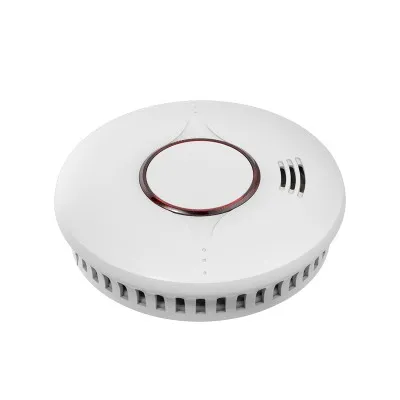




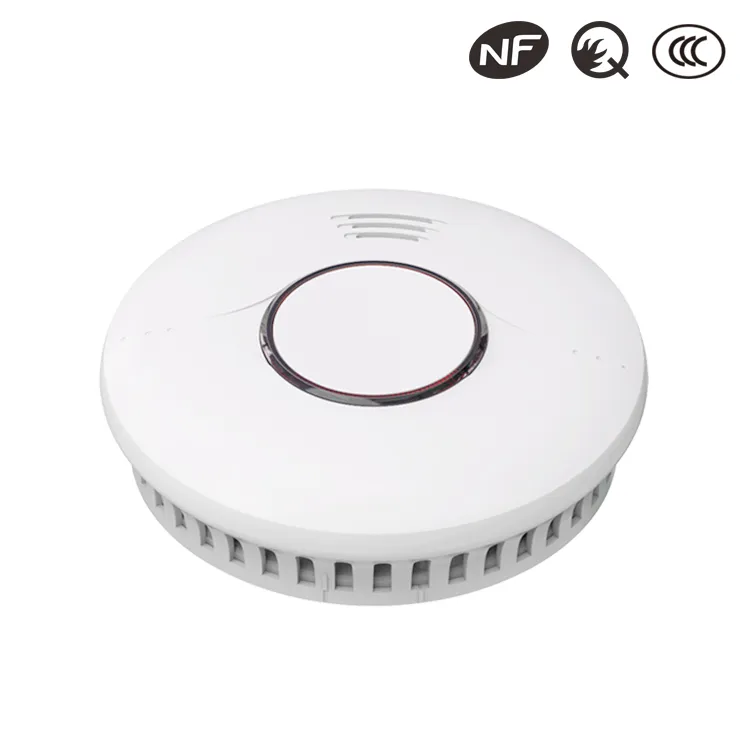
Products Description
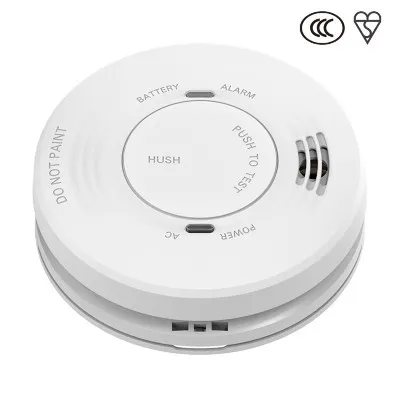
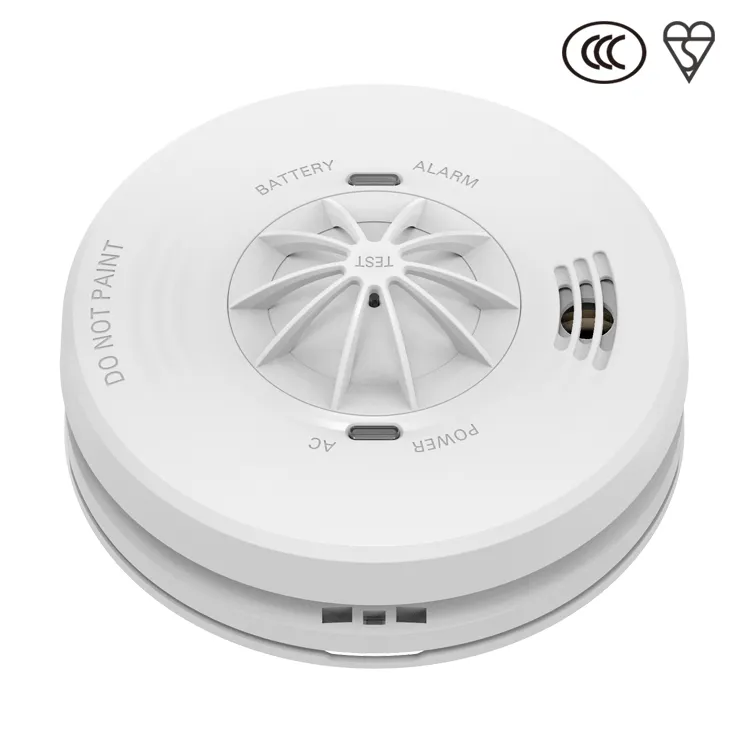
A hardwired smoke detector is actually a smoke alarm system interconnected with a 120-volt circuit. Standard smoke detectors run solely on batteries, while hardwired smoke detectors connect directly to your home's electrical system. Since all alarms sound when triggered, hardwired smoke alarms are ideal for multi-story homes, apartment buildings, and commercial buildings. However, this interconnectivity can also add an extra layer of protection to small homes.
AC 220V-240V 50Hz
DC 9V alkaline battery back up
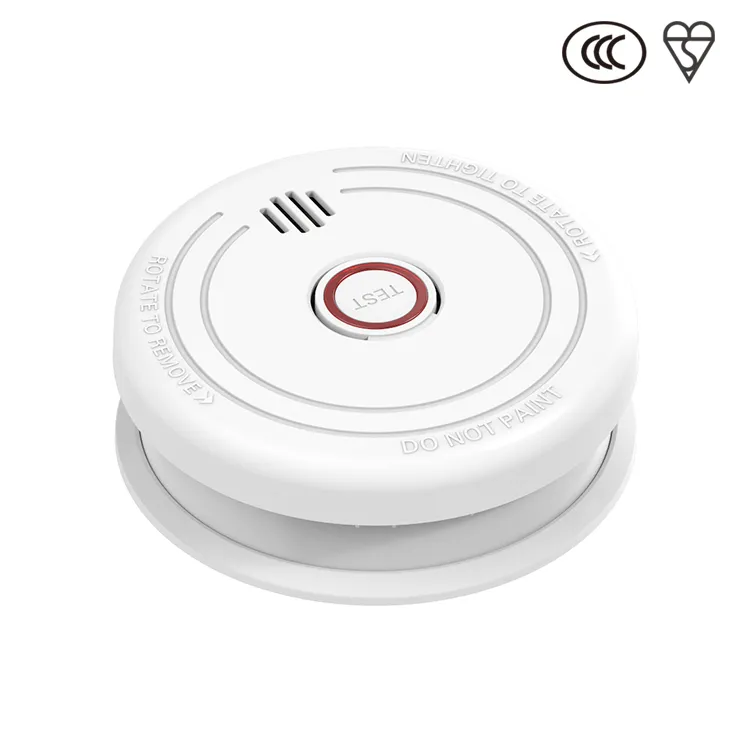
Big test button for easy weekly testing
Silence function: Approx.8 mins
Low battery signal alarm
Non-disturb model
Wired interconnection up to 40pcs
Automatic compensation design
Push base for easy installation
Big size to cover the mounting trace

Why choose hardwired detectors and alarms?Advantages of wired smoke alarms.
①Reliability and consistency
Hardwired smoke alarms connect directly to your home's electrical system, ensuring continuous power. This ensures the alarm is always running, eliminating the risk of a drained battery compromising your safety. The reliability of hardwired systems provides ongoing protection, making them the best choice for homeowners who prioritize consistent security measures.
②Interconnection and quick response
One of the standout features of hardwired smoke alarms is their interconnectability. When one alarm detects smoke or fire, it triggers all interconnected alarms simultaneously. This interconnected system ensures everyone in the house receives timely alerts, no matter where they are. This quick response can be the difference between a controlled incident and a catastrophic one.
③Integrate with smart home systems
In the age of the smart home, hardwired smoke alarms can be seamlessly integrated into your home automation system. This allows remote monitoring and control, providing real-time alerts to your smartphone or other device. The ability to monitor home security remotely adds extra convenience and peace of mind.
④Long service life and low maintenance costs
Hardwired smoke alarms typically last longer than their battery-operated counterparts. With routine maintenance, they can provide years of reliable protection. Such a long service life not only saves you the cost of frequent battery replacements, but also reduces the possibility of failure due to neglected maintenance.
⑤Enhanced sensing technology
Hardwired smoke alarms often feature advanced sensing technology such as photoelectric and ionization sensors. These technologies enhance the alarm's ability to detect different types of fires, ensuring rapid response to smoldering and fast-burning fires. This advanced detection technology makes hardwired alarms a smart investment to protect your home.
⑥Auditory and visual signals
Hardwired smoke alarms come with an audible alarm and a visual signal, such as a strobe light. This is particularly beneficial for individuals with hearing impairments, ensuring that everyone in the home is alerted in the event of a fire. The combination of auditory and visual signals maximizes the chance of rapid evacuation, further emphasizing the importance of hardwired smoke alarms in inclusive home security.
Products video
Products detail

alarm volume
Alarm volume is loud and clear, reaching or surpassing 85dB within a 3-meter radius.
time life
Our products have a service life of up to ten years, ensuring long-lasting reliability and peace of mind for our customers.


test button
Easily test your alarm weekly with the convenient test button.
Easy Installation
We offer two installation methods: expansion screws or magnetic strips.

How to wire a smoke detector in a hardwired system
Step 1: Turn off the power
The first thing you need to do is turn off the power to the circuit to which the smoke detector is connected. This is for your safety as you will be working with electricity. You should know that all wiring tasks are best handled by a professional electrician such as Titan Plumbing And Electric. There is always a risk of electric shock when wiring.
Step 2: Cut the Hole
Next, you need to find the ceiling joists or wall studs where you want to install the smoke detector. The electrical box provides tracing guides so you know where to cut the holes between the wall studs. You can use a level to ensure that the outline of the box is even.
Once you find the studs, drill a hole in the middle of the template outline you drew. Next, cut around the same outline. Now it's time to install the electrical box. It should be snug but not too tight. The electrician should repeat this process for each smoke detector to be wired.
Step 3: Route the wires
Starting from the power source, connect the wires (along the ground) to the smoke detector. The power source can have a wall switch, circuit breaker, or wall outlet. Make sure there is enough slack in the wires to allow for the necessary connections. When it comes time to install a hardwired smoke detector, an electrician will cut the wires to the appropriate length.
If multiple smoke detectors are installed, the electrician must run a 3-wire cable (along the ground) from the first smoke detector to the next. Repeat this process until all sensors are wired. This extra wire allows the smoke detectors to communicate with each other so that when a single smoke detector detects smoke, they all sound an alarm.
Step 4: Connect the wires to the electrical box
Once you've connected the wires to each smoke detector location, you're ready to make the connections. There is about 8 inches of wire sticking out of the hole. Use cable strippers to strip the insulation from the end of each wire. Now run the wires and clamp them to the electrical box.
Step 5: Secure the electrical box
Once the cables are clamped to the electrical box, it's time to secure them. Use the screws that came with the electrical box to tighten it until tight.
Step 6: Connect the Smoke Detector
Your smoke detector has two parts: the actual detector and the wiring harness. The wiring harness is where the wires are connected. There should be a red wire, a white wire, and a black wire in the nearest electrical box. Connect them to the wiring harness.
Step 7: Put it all together
Once the smoke detector wiring is complete, you can secure the mounting plate to the electrical box with the help of screws. Now connect the wiring harness to the smoke alarm from the back. All you have to do is align the two pieces and snap them into place.
Step 8: Connect to the Circuit
Now it's time to connect the smoke detector to the circuit. This is done by connecting the smoke detector cable to the circuit. Turn on power at the circuit breaker or fuse box. Finally, set up your hardwired smoke detector according to the manufacturer's instructions.
our Factory




Certifications
Certifications

BSCI

Kitemark

Intertek

NF

VdS

CE
Exhibitions

2021
Beijing Exhibition

2022
Hannover Messe in Germany

2023
The 133rd Canton Fair

2023
Spring Hong Kong Exhibition

2023
Autumn Hong Kong Exhibition

2023
London Exhibition

2023
Birmingham Show

2023
Dubai Exhibition
FAQ
Q : Can you make a conventional alarm?
A : No, all of our alarms are photoelectric type.
Q : What is your general minimum order quantity?
A : Different products have different moq..
Hot Tags: Wired Smoke Alarm, China, manufacturers, suppliers, factory, Nb Iot Wireless Smoke Detector Strobe, 120V Wireless RF Interconnect Smoke Alarm


