

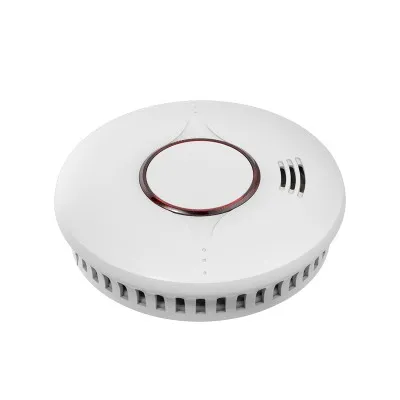




Are there any special heat detectors for areas with strong air currents in fire proofing?
Hey there! I'm with a Heat Detector Fire Proof supplier, and I get this question a lot. Strong air currents can really throw a wrench in the works when it comes to fire detection. But don't worry, there are indeed special heat detectors designed to handle these challenging conditions.


Let's first understand why strong air currents are a problem. In normal conditions, heat detectors work by sensing the increase in temperature when a fire breaks out. But when there are strong air currents, they can disperse the heat quickly. This means that the heat might not reach the detector in a timely manner, or it could be diluted to a point where the detector doesn't register it as a fire hazard.
So, what kind of special heat detectors are out there for these areas?
One option is the Intelligent Heat Detector. These detectors are pretty smart, as the name suggests. They use advanced algorithms to analyze temperature changes over time. Instead of just relying on a single temperature threshold, they can detect abnormal temperature rises even in the presence of strong air currents. For example, if the air current is causing the temperature to fluctuate, the intelligent heat detector can still identify the overall upward trend that might indicate a fire.
Another great choice is the Hard Wired Heat Alarms. These are directly connected to a power source, which gives them a stable operation. They're also built to be more robust and can withstand the interference caused by strong air currents. The hard - wired connection ensures that they receive a continuous power supply, so they won't miss any important temperature changes. They're often used in industrial settings where strong air currents are common, like factories with large ventilation systems.
Then there's the Wireless Heat Detector. These are super convenient, especially in areas where it's difficult to run wires. They use wireless technology to communicate with a central monitoring system. In areas with strong air currents, wireless heat detectors can be strategically placed to get the best possible temperature readings. They can be adjusted and re - positioned easily, which is a big advantage when dealing with complex airflow patterns.
Now, let's talk about how these detectors work in real - world scenarios. Take a large warehouse, for instance. Warehouses usually have big fans or ventilation systems that create strong air currents. If a fire starts in one corner of the warehouse, the normal heat detectors might not pick it up right away because the air currents are moving the heat around. But an intelligent heat detector in such a place can analyze the temperature data from multiple angles. It can detect the small but consistent increase in temperature that might be hidden by the air movement.
Hard - wired heat alarms in a warehouse are also great. They're installed in key locations and are less likely to be affected by the air currents. Even if the air is blowing strongly, they'll keep an eye on the temperature and send an alarm if there's a fire.
Wireless heat detectors are perfect for a warehouse that's constantly being re - arranged. You can move them around as needed to ensure that all areas are covered, regardless of the air currents.
In a commercial kitchen, there are also strong air currents from exhaust fans. A fire in a kitchen can spread quickly, so it's crucial to have the right heat detectors. Intelligent heat detectors can differentiate between the normal high temperatures in a kitchen and the abnormal heat caused by a fire. Hard - wired heat alarms provide a reliable backup, and wireless heat detectors can be placed in hard - to - reach areas.
When it comes to choosing the right heat detector for areas with strong air currents, there are a few factors to consider. First, the size of the area matters. Larger areas might need more detectors or more powerful ones. The type of air currents is also important. If the air currents are constant and predictable, you might be able to place the detectors in a way that takes advantage of the airflow. But if the air currents are random and erratic, you'll need detectors that can adapt quickly.
The environment is another factor. In a dirty or dusty environment, the detectors need to be able to withstand the debris. Some detectors come with special filters to prevent dust from clogging the sensors.
Cost is always a consideration too. Intelligent heat detectors are usually more expensive because of their advanced technology. Hard - wired heat alarms might require more installation work, which can add to the cost. Wireless heat detectors are often more affordable in terms of installation, but you might need to replace the batteries regularly.
As a Heat Detector Fire Proof supplier, we've seen firsthand how important it is to have the right heat detectors in areas with strong air currents. We've helped many customers find the perfect solution for their specific needs. Whether it's a small business with a few fans or a large industrial complex with massive ventilation systems, we've got you covered.
If you're in the market for heat detectors for areas with strong air currents, we'd love to have a chat with you. We can discuss your specific situation, recommend the best products, and help you with the installation process. Contact us today to start the conversation and make your premises safer from fire hazards.
References
- Fire Protection Handbook, National Fire Protection Association
- Research on Heat Detection in High - Airflow Environments, Journal of Fire Safety Science


