

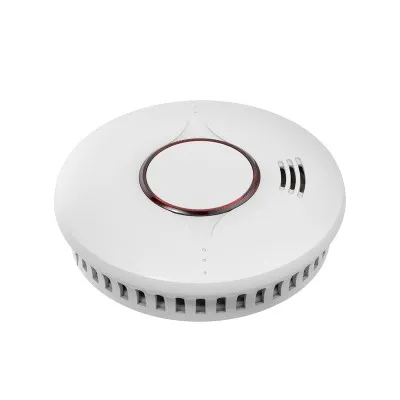


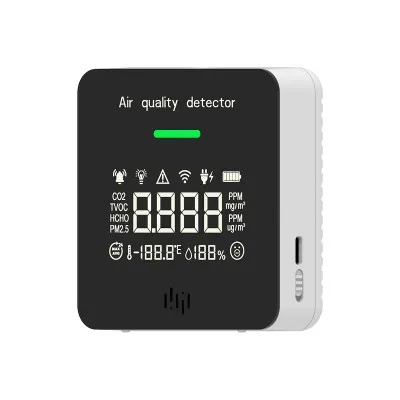


Hey there! As a supplier of RF heat detectors, I'm super stoked to share with you how these nifty devices work to detect heat in a meeting room. It's pretty fascinating stuff, and I'm sure you'll find it useful, whether you're in charge of a meeting room or just curious about how these detectors operate.
Let's start with the basics. An RF heat detector is a device that uses radio frequency (RF) technology to detect changes in temperature. Unlike traditional heat detectors that rely on wired connections, RF heat detectors are wireless, which makes them incredibly easy to install and use. They're also more flexible, as you can place them in different locations without having to worry about running wires.
So, how does an RF heat detector actually detect heat in a meeting room? Well, it all comes down to the sensor inside the detector. Most RF heat detectors use a thermistor or a thermocouple to measure the temperature. These sensors are designed to change their electrical resistance or voltage in response to changes in temperature. When the temperature in the meeting room rises above a certain threshold, the sensor detects the change and sends a signal to the detector's control unit.
The control unit is the brain of the RF heat detector. It receives the signal from the sensor and analyzes it to determine if there's a potential fire hazard. If the temperature exceeds the pre-set threshold, the control unit will trigger an alarm, alerting everyone in the meeting room to the potential danger. Some RF heat detectors also have the ability to send a signal to a central monitoring system, allowing for remote monitoring and control.
One of the key advantages of using an RF heat detector in a meeting room is its ability to provide early warning of a fire. By detecting changes in temperature before a fire breaks out, the detector can give you and your colleagues enough time to evacuate the room safely. This can be especially important in a meeting room, where there may be a large number of people present.
Another advantage of RF heat detectors is their reliability. Unlike traditional heat detectors, which can be affected by dust, dirt, and other environmental factors, RF heat detectors are designed to be more robust and resistant to interference. This means that they're less likely to give false alarms, which can be a major nuisance in a meeting room.
Now, let's talk about some of the different types of RF heat detectors that are available. There are several options to choose from, depending on your specific needs and requirements.
One type of RF heat detector is the Wireless Heat Detector. As the name suggests, this type of detector is completely wireless, which makes it easy to install and use. It's also very flexible, as you can place it in different locations without having to worry about running wires. Wireless heat detectors are a great option for meeting rooms that are already equipped with a wireless network, as they can easily integrate with the existing system.
Another type of RF heat detector is the Intelligent Heat Detector. This type of detector uses advanced algorithms and sensors to provide more accurate and reliable heat detection. It can also be programmed to detect specific types of fires, such as smoldering fires or fast-burning fires. Intelligent heat detectors are a great option for meeting rooms that require a high level of fire protection.


Finally, there's the Hard Wired Heat Alarms. This type of detector is connected to a power source and a central monitoring system using a wired connection. While it may be more difficult to install than a wireless detector, it offers a higher level of reliability and security. Hard wired heat alarms are a great option for meeting rooms that require a high level of fire protection and where wireless connectivity may not be available.
In conclusion, RF heat detectors are a great option for detecting heat in a meeting room. They're easy to install, reliable, and offer early warning of a potential fire hazard. Whether you choose a wireless, intelligent, or hard wired detector, you can be sure that you're getting a high-quality product that will help keep your meeting room safe.
If you're interested in learning more about our RF heat detectors or would like to discuss your specific needs and requirements, please don't hesitate to contact us. We'd be happy to help you find the right solution for your meeting room.
References:
- "Heat Detectors: How They Work and Why You Need Them." Fire Protection Online.
- "Wireless Heat Detectors: A Comprehensive Guide." Security Magazine.
- "Intelligent Heat Detectors: The Future of Fire Protection." Fire Safety Journal.


