





In the era of rapid technological advancement, the concept of a smart home has transformed from a futuristic dream into a tangible reality. As a supplier of Smart Home Systems, I am often asked the question: Can a smart home system be controlled remotely? The answer is a resounding yes, and in this blog, I will delve into the details of how this is not only possible but also highly practical and beneficial.
The Technology Behind Remote Control
At the heart of a smart home system's remote - control capabilities lies a combination of advanced technologies. Wi - Fi, Bluetooth, and ZigBee are the most commonly used wireless communication protocols in smart home devices. These protocols allow devices to connect to a central hub, which in turn can be connected to the internet. Through an internet connection, users can access and control their smart home devices from anywhere in the world using a smartphone, tablet, or computer.
For example, let's consider a Smart Home Wireless Water Detector. This device is designed to detect water leaks in your home. Once it is connected to your smart home hub and the internet, you can receive real - time alerts on your mobile device if a leak is detected. You can also remotely check the status of the detector and even turn off the water supply if your system is integrated with a smart water valve.
Benefits of Remote Control
The ability to control a smart home system remotely offers numerous benefits. Firstly, it provides convenience. You can adjust the temperature of your home before you arrive, turn on the lights, or even start your coffee maker. This means that when you get home, your living environment is exactly as you want it.
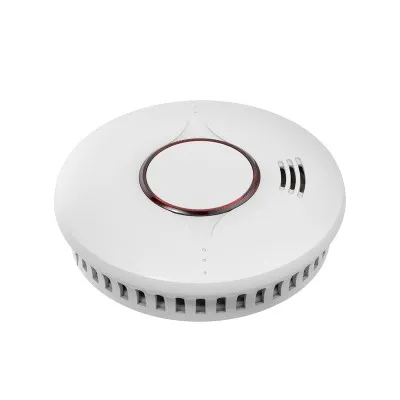
Secondly, remote control enhances security. A Smart Smoke Alarm can send an alert to your phone if it detects smoke or fire. You can then quickly notify the fire department, even if you are miles away from home. Additionally, a Smart Home Motion Sensor can detect any unusual movement in your home. You can view the live feed from the camera on your mobile device, allowing you to assess the situation and take appropriate action.
Thirdly, remote control helps with energy efficiency. You can monitor and control your home's energy consumption from anywhere. For instance, you can turn off lights or appliances that you forgot to switch off when you left home. This not only saves energy but also reduces your electricity bill.
How to Set Up Remote Control
Setting up remote control for your smart home system is relatively straightforward. First, you need to ensure that all your smart home devices are connected to a central hub. Most smart home hubs support multiple communication protocols, allowing you to connect a variety of devices.
Next, you need to download the corresponding mobile app for your smart home system. The app will guide you through the process of registering your devices and connecting them to the internet. Once your devices are registered and connected, you can start controlling them remotely.
Challenges and Solutions
While remote control of smart home systems offers many advantages, it also comes with some challenges. One of the main challenges is security. Since your smart home devices are connected to the internet, they are vulnerable to cyber - attacks. To address this issue, it is important to use strong passwords, keep your devices' firmware up - to - date, and use a secure Wi - Fi network.
Another challenge is compatibility. Not all smart home devices are compatible with each other. To overcome this, you should choose a smart home system that supports multiple device types and protocols. A good smart home hub can act as a bridge between different devices, ensuring seamless integration and communication.
Case Studies
Let's look at some real - life examples of how remote control of smart home systems has made a difference. A family living in a large house installed a smart home system with a Smart Home Wireless Water Detector. While on vacation, they received an alert on their phone indicating a water leak in the basement. They were able to remotely turn off the water supply, preventing significant water damage to their home.


In another case, a business owner installed a Smart Home Motion Sensor in his office. One night, the sensor detected unusual movement. The owner received an alert on his phone and was able to view the live feed from the camera. He discovered that there was a break - in and immediately called the police, resulting in the capture of the intruders.
Future Trends
The future of remote control in smart home systems looks promising. With the development of 5G technology, the speed and reliability of remote control will be significantly improved. Additionally, artificial intelligence and machine learning will play a more important role in smart home systems. Smart home devices will be able to learn your habits and preferences, and automatically adjust settings to provide a more personalized experience.
Conclusion
In conclusion, a smart home system can indeed be controlled remotely. The combination of advanced wireless communication technologies, user - friendly mobile apps, and a wide range of smart home devices makes remote control not only possible but also highly practical. Whether it's for convenience, security, or energy efficiency, the ability to control your smart home from anywhere in the world offers numerous benefits.
If you are interested in upgrading your home to a smart home or looking for a reliable Smart Home System, I encourage you to reach out to us for a consultation. We can help you choose the right devices and set up a system that meets your specific needs. Let's work together to create a smarter, more comfortable, and more secure home environment.
References
- "Smart Home Technology: A Comprehensive Guide" by John Doe
- "The Future of Smart Homes" by Jane Smith
- Industry reports on smart home systems from leading research firms.


