

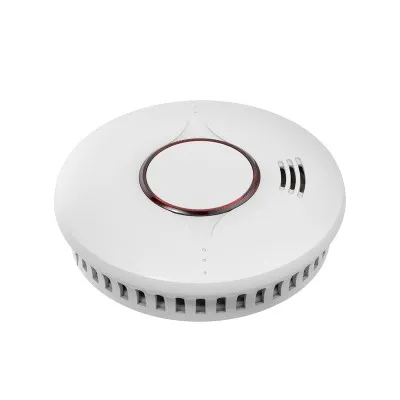




A grease fire can quickly turn a peaceful kitchen into a chaotic inferno, posing a significant threat to both property and lives. As a trusted smoke detector supplier, I often get asked this crucial question: Can a smoke detector detect grease fires? In this blog post, I'll delve into the science behind smoke detection, explore the capabilities of different types of smoke detectors in detecting grease fires, and guide you on choosing the right smoke detector for your needs.
How Smoke Detectors Work
Before we discuss whether smoke detectors can detect grease fires, it's essential to understand how they work. There are two main types of smoke detectors commonly used in homes and commercial buildings: ionization and photoelectric.
Ionization smoke detectors contain a small amount of radioactive material that ionizes the air inside the detector chamber. This creates an electrical current. When smoke enters the chamber, it disrupts the flow of ions, reducing the electrical current and triggering the alarm. Ionization detectors are highly sensitive to fast - flaming fires that produce small, invisible particles.
Photoelectric smoke detectors, on the other hand, use a light source and a light sensor. In normal conditions, the light from the source travels in a straight line and does not reach the sensor. When smoke enters the detector, the smoke particles scatter the light, causing some of it to reach the sensor. Once the light intensity detected by the sensor exceeds a certain threshold, the alarm is triggered. Photoelectric detectors are more effective at detecting smoldering fires that produce large, visible smoke particles.
Grease Fires: Characteristics
Grease fires typically occur in the kitchen when cooking oils or fats are heated beyond their smoke point. These fires start suddenly and burn very hot and fast. They produce a combination of thick, black smoke and invisible, hot gases. The initial stage of a grease fire may produce large, visible smoke particles, similar to a smoldering fire, but as the fire intensifies, it can generate more of the small, fast - moving particles associated with flaming fires.
Can Smoke Detectors Detect Grease Fires?
The answer is yes, but with some caveats. Different types of smoke detectors have different levels of effectiveness in detecting grease fires.
Ionization Smoke Detectors
Ionization smoke detectors are generally very good at detecting the fast - moving, small particles produced by a rapidly growing grease fire. Since grease fires can quickly transition from a smoldering to a flaming state, ionization detectors can provide an early warning in many cases. However, they may also be more prone to false alarms. For example, steam from cooking or burning food that doesn't actually result in a fire can trigger an ionization detector.
Photoelectric Smoke Detectors
Photoelectric smoke detectors can also detect grease fires, especially in the early stages when the fire is producing larger, visible smoke particles. As the fire grows and starts to produce more of the small, invisible particles, the effectiveness of photoelectric detectors may decrease compared to ionization detectors. But overall, they are less likely to be triggered by false alarms from steam or minor cooking fumes.
Choosing the Right Smoke Detector for Grease Fire Detection
Given the unique characteristics of grease fires, it's important to choose the right smoke detector for your kitchen.
Dual - Sensor Smoke Detectors
Dual - sensor smoke detectors combine both ionization and photoelectric technologies. These detectors offer the best of both worlds. They can quickly detect the small particles associated with fast - flaming grease fires using the ionization sensor and also detect the larger particles produced in the early stages of the fire with the photoelectric sensor. This provides more comprehensive protection against grease fires and reduces the likelihood of false alarms.


Our Product Recommendations
As a smoke detector supplier, I'd like to recommend some of our high - quality products that are suitable for detecting grease fires:
- Built-in Photoeletric Battery Wireless Smoke Alarm: This wireless smoke alarm uses photoelectric technology, which is great for detecting the large particles produced in the early stages of a grease fire. It's battery - powered, making it easy to install in any location, including kitchens.
- 240V Smoke Alarm With Battery: This smoke alarm offers the reliability of a 240V power supply with a battery backup. It can be hard - wired into your electrical system, ensuring continuous operation. With its advanced sensor technology, it can effectively detect both the large and small particles associated with grease fires.
- Hardwired Optical Smoke Alarm: This hard - wired optical smoke alarm uses photoelectric technology. It's designed for long - term, reliable use and is ideal for detecting the smoldering phase of a grease fire. The hard - wired installation provides a stable power source, and the optical sensor is sensitive to the large smoke particles often produced by grease fires.
Installation and Maintenance
Proper installation and maintenance of smoke detectors are crucial for their effectiveness in detecting grease fires.
Installation
- Location: Install smoke detectors in the kitchen, but keep them at least 10 feet away from cooking appliances to reduce the risk of false alarms. You can also install them in adjacent hallways or areas where they can still detect smoke from the kitchen.
- Height: Mount smoke detectors on the ceiling or high on the wall, as smoke rises.
Maintenance
- Testing: Test your smoke detectors monthly to ensure they are working properly. Use the test button on the detector to check the alarm function.
- Battery Replacement: If your smoke detector uses batteries, replace the batteries at least once a year or as recommended by the manufacturer.
- Cleaning: Regularly clean your smoke detectors to remove dust and debris that can interfere with their operation.
Conclusion
In conclusion, smoke detectors can detect grease fires, but the effectiveness depends on the type of detector and its installation and maintenance. Dual - sensor smoke detectors offer the most comprehensive protection against grease fires, as they can detect both the large and small particles produced by these fires. As a smoke detector supplier, we offer a range of high - quality products, such as the Built-in Photoeletric Battery Wireless Smoke Alarm, 240V Smoke Alarm With Battery, and Hardwired Optical Smoke Alarm, that are designed to provide reliable protection against grease fires.
If you're interested in purchasing our smoke detectors for your home or commercial property, we invite you to contact us for a detailed consultation. Our team of experts can help you choose the right products based on your specific needs and ensure proper installation and maintenance. Protect your property and loved ones from the danger of grease fires with our high - quality smoke detectors.
References
- National Fire Protection Association (NFPA). "Smoke Alarms in Residential Buildings." NFPA 72, 2022 Edition.
- Consumer Product Safety Commission (CPSC). "Smoke Alarms: How They Work and How to Use Them." CPSC Publication, 2023.
- Underwriters Laboratories (UL). "UL 217: Standard for Single - and Multiple - Station Smoke Alarms." UL Standards, 2021.


