

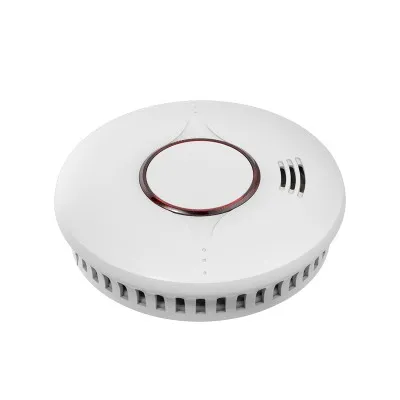




Hey there! As a supplier of RF Heat Detectors, I often get asked if these nifty devices can detect overheating electrical equipment. Well, let's dive right into it and find out!
First off, let's understand what an RF Heat Detector is. RF stands for Radio Frequency, and these detectors use radio waves to communicate. They're part of a family of heat - detecting devices that also includes Hard Wired Heat Alarms, Intelligent Heat Detector, and Wireless Heat Detector.
Now, electrical equipment overheating can be a serious issue. It can lead to malfunctions, fires, and even endanger lives. So, having a reliable way to detect this overheating is crucial.
RF Heat Detectors work by sensing changes in temperature. They have a built - in sensor that can pick up on increases in heat. When the temperature in the area where the detector is installed goes above a pre - set threshold, the detector is triggered.
So, can they detect overheating electrical equipment? The short answer is yes, they can. Electrical equipment, when overheating, emits heat. This heat raises the temperature in the surrounding area. An RF Heat Detector placed in the vicinity of the electrical equipment can sense this temperature rise.
Let's take a look at some scenarios where an RF Heat Detector would come in handy. In a data center, there are a whole bunch of servers running 24/7. These servers generate a lot of heat, and if there's a problem with the cooling system or a component starts to malfunction, they can overheat. An RF Heat Detector installed in the data center can quickly detect this overheating and send an alert.
Another example is in an industrial setting. Factories have all sorts of electrical machinery. Motors, generators, and control panels are constantly in use. If a motor starts to overheat due to a worn - out bearing or a short - circuit, an RF Heat Detector can detect the temperature increase and notify the maintenance team before a major breakdown occurs.
But, like any technology, RF Heat Detectors have their limitations. One of the main limitations is the distance between the detector and the overheating equipment. If the detector is too far away from the source of the heat, it might not be able to detect the overheating in a timely manner. The heat might dissipate before it reaches the detector, or the detector might not be sensitive enough to pick up the small temperature change at a distance.
Also, the environment plays a role. If the area where the detector is installed is already hot, it can be more challenging for the detector to accurately detect overheating. For example, in a foundry where the ambient temperature is very high, the detector needs to be carefully calibrated to distinguish between normal high temperatures and overheating of electrical equipment.


However, modern RF Heat Detectors are getting smarter. They come with advanced features like adjustable temperature thresholds. This means that you can set the detector to trigger at different temperature levels depending on the type of electrical equipment and the environment. Some detectors also have self - diagnostic capabilities. They can check their own functionality regularly and send an alert if there's a problem with the detector itself.
When it comes to installation, it's important to place the RF Heat Detector in the right location. It should be close enough to the electrical equipment to detect overheating but not so close that it gets damaged by the heat or other factors related to the equipment. For example, in a control panel, the detector should be installed on the side or near the top, where it can sense the heat rising from the components inside.
In addition to detecting overheating, RF Heat Detectors can also be integrated with other security and monitoring systems. They can be connected to a central alarm system, so when the detector is triggered, an alarm goes off not only locally but also at a monitoring station. This allows for a quicker response in case of an emergency.
They're also great for remote monitoring. With the help of wireless technology, the data from the RF Heat Detector can be sent to a smartphone or a computer. This means that you can keep an eye on the temperature of your electrical equipment even when you're not on - site.
Now, if you're thinking about getting an RF Heat Detector for your electrical equipment, there are a few things to consider. First, you need to determine the right type of detector for your needs. As I mentioned earlier, there are different types like Hard Wired Heat Alarms, Intelligent Heat Detector, and Wireless Heat Detector.
Hard - wired heat alarms are more reliable in terms of power supply as they're directly connected to the electrical system. Intelligent heat detectors have more advanced features and can provide more detailed information. Wireless heat detectors are easy to install and can be moved around if needed.
You also need to consider the size of the area where the electrical equipment is located. Larger areas might require multiple detectors to ensure full coverage. And don't forget about the calibration. Make sure to calibrate the detector according to the specific requirements of your electrical equipment and the environment.
In conclusion, RF Heat Detectors are a great tool for detecting overheating electrical equipment. They offer a reliable and efficient way to monitor temperature and can help prevent potential disasters. If you're in the market for a heat - detecting solution for your electrical equipment, I highly recommend considering an RF Heat Detector.
If you're interested in learning more about our RF Heat Detectors or have any questions about how they can be used in your specific situation, we'd love to hear from you. Reach out to us to start a conversation about your procurement needs. We're here to help you find the best solution for your electrical equipment protection.
References
- Electrical Safety Standards Handbook
- Industrial Temperature Monitoring Guidelines
- Data Center Cooling and Monitoring Best Practices


