

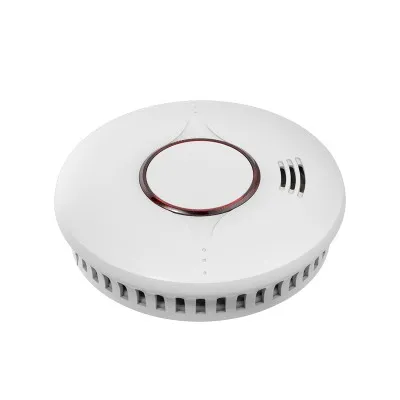


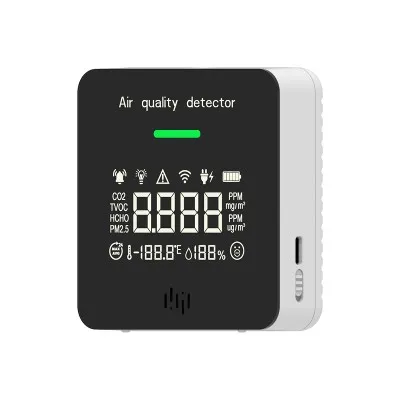


Hey there! As a supplier of Smart Home Smoke Detectors, I often get asked this question: Can a smart home smoke detector detect other types of gas? Well, let's dive right into it and find out.
First off, let's understand what a smart home smoke detector is all about. These nifty devices are designed to keep our homes safe by detecting smoke, which is usually a sign of a fire. They're part of the smart home ecosystem, which means they can connect to our smartphones or other smart devices, giving us real - time alerts when there's a problem. You can check out our Smart Fire Detector to see one of our top - notch products in action.
Now, back to the question at hand. Can they detect other types of gas? The short answer is: it depends.
How Smart Home Smoke Detectors Work
Most smart home smoke detectors use one of two main technologies: ionization or photoelectric.
Ionization smoke detectors have a small amount of radioactive material that ionizes the air inside the detector. When smoke enters, it disrupts the flow of ions, and this change triggers the alarm. These detectors are really good at detecting fast - flaming fires that produce small smoke particles.
Photoelectric smoke detectors, on the other hand, use a light source and a light sensor. When smoke enters the chamber, it scatters the light, and when the sensor detects this change in light, the alarm goes off. They're better at detecting smoldering fires that produce larger smoke particles.
Detecting Other Gases
- Carbon Monoxide (CO)
Carbon monoxide is a colorless, odorless, and deadly gas. It's produced by the incomplete combustion of fuels like gas, oil, coal, and wood. Unfortunately, most standard smart home smoke detectors are not designed to detect carbon monoxide. CO has different chemical and physical properties compared to smoke.
However, there are some multi - function detectors on the market that combine smoke and carbon monoxide detection. These are great because they offer an extra layer of protection. Our Smart Fire Alarm is an example of a high - quality device that can be part of a comprehensive home safety solution.
- Natural Gas
Natural gas is mainly composed of methane. Similar to carbon monoxide, standard smoke detectors are not built to detect natural gas. Methane has a very low density and different molecular characteristics compared to smoke particles.
But again, there are specialized gas detectors available. Some smart home systems can be integrated with natural gas detectors to provide a more holistic safety approach. For instance, if you have a gas stove or a gas - powered heater in your home, having a natural gas detector is a smart move.
- Other Toxic Gases
There are many other toxic gases that can be present in a home environment, such as hydrogen sulfide (which can come from sewage systems) or volatile organic compounds (VOCs) from paints, cleaning products, and furniture. Standard smoke detectors won't detect these either.
Specialized gas sensors are needed to detect these specific gases. These sensors work based on different principles, like electrochemical reactions or semiconductor technology.
Advantages of Multi - Gas Detection
If you're considering getting a device that can detect multiple types of gases, here are some advantages:
- Comprehensive Safety: You don't have to worry about installing multiple single - function detectors. One device can cover different threats, which simplifies your home safety setup.
- Cost - Effective: In the long run, buying a multi - gas detector can be more cost - effective than buying separate detectors for each type of gas.
- Convenience: With a single device, you only need to maintain and monitor one unit. It also reduces the clutter of having multiple detectors around your home.
Our Wireless Interlinked Smoke Alarms
We also offer Wireless Interlinked Smoke Alarms. These alarms are a great addition to any home. When one alarm detects smoke, all the interconnected alarms in the house will go off. This is super important because it ensures that everyone in the house is alerted, even if the fire is in a remote corner.
Conclusion
So, while a standard smart home smoke detector is mainly designed to detect smoke, there are options available for detecting other types of gases. If you're looking for a more comprehensive home safety solution, consider multi - function detectors that can detect carbon monoxide, natural gas, or other toxic gases.

At our company, we're committed to providing high - quality smart home smoke detectors and related safety products. Whether you need a basic smoke detector or a multi - gas detection system, we've got you covered.
If you're interested in purchasing our products or have any questions about our smart home smoke detectors and their capabilities, we'd love to hear from you. Reach out to us for a detailed discussion about your home safety needs and how our products can fit into your setup. Let's work together to make your home a safer place.
References
- "Smoke and Carbon Monoxide Detectors: How They Work and Why You Need Them", Consumer Reports
- "Gas Detection Handbook", Industrial Scientific Corporation


