

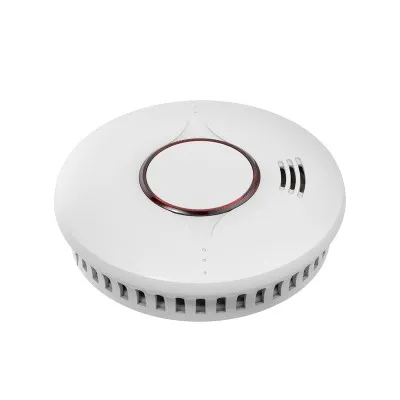




As a supplier of wireless heat detectors, I've encountered numerous inquiries from customers regarding the tamper - proof function of these devices. In this blog post, I'll delve into the topic of whether wireless heat detectors have a tamper - proof function, exploring the science behind it, real - world implications, and how it relates to our products.
First, let's understand what a wireless heat detector is. A wireless heat detector is designed to sense an increase in temperature and trigger an alarm. It operates without the need for extensive wiring, which makes it a convenient option for both residential and commercial settings. Unlike Mains Power Heat Detector With Battery or Hard Wired Heat Alarms, wireless heat detectors offer flexibility in installation and can be easily re - positioned if needed.
Now, onto the tamper - proof function. Tampering with a heat detector can have serious consequences, as it compromises the safety and security of a building. A tamper - proof function is intended to prevent unauthorized access or interference with the detector. There are several aspects to consider when assessing whether wireless heat detectors possess this function.
Physical Tamper - Proof Design
Most modern wireless heat detectors are engineered with a robust physical design to prevent tampering. The enclosures are typically made of durable materials that are difficult to break or open without the proper tools. For example, the housing might be constructed from high - impact plastic or metal alloys. These materials can withstand attempted physical damage, protecting the internal components of the detector.
Moreover, many wireless heat detectors are equipped with tamper switches. These switches are activated if the detector's cover is removed or if there is any attempt to access the internal circuitry. Once the tamper switch is triggered, the detector can send an alarm signal to the monitoring system. This ensures that any unauthorized access is quickly detected and can be addressed.
Communication Tamper Protection
In addition to physical tampering, there is also the risk of communication tampering. Since wireless heat detectors rely on wireless signals to transmit data, there is a potential for someone to disrupt or interfere with these signals. To combat this, advanced wireless heat detectors use encryption technologies.
Encryption scrambles the data transmitted between the detector and the monitoring system, making it unreadable to unauthorized parties. For example, AES (Advanced Encryption Standard) is commonly used in wireless communication devices. This means that even if someone tries to intercept the signals, they won't be able to access or manipulate the data without the correct decryption key.
Installation - Based Tamper Prevention
During the installation of wireless heat detectors, proper mounting techniques can also contribute to the tamper - proof function. When installed correctly, the detector is securely attached to the surface, making it difficult to remove or dislodge. For instance, using screws or brackets designed specifically for the device ensures a stable installation.
Some wireless heat detectors also have a self - diagnostic feature that can detect if the detector has been moved from its original position. If such a change is detected, an alert can be sent to the monitoring system, indicating possible tampering.
Real - World Applications and Benefits
In a commercial setting, such as a warehouse or an office building, the tamper - proof function of wireless heat detectors is crucial. Warehouses often store valuable goods, and any tampering with the heat detection system could lead to undetected fires, resulting in significant financial losses. By having a tamper - proof wireless heat detector, business owners can have peace of mind knowing that their safety system is secure.
In a residential context, the tamper - proof feature also plays an important role. Families can feel safer knowing that their heat detectors are protected from unauthorized access. This is especially important in multi - unit buildings where there may be a higher risk of accidental or deliberate tampering.


Our Company's Wireless Heat Detectors
As a leading supplier of wireless heat detectors, we take the tamper - proof function seriously. Our Intelligent Heat Detector is a state - of - the - art device that incorporates all the latest tamper - proof technologies. It has a durable enclosure, equipped with sensitive tamper switches that can detect even the slightest attempt to open the device.
The communication protocols used in our detectors are highly encrypted, ensuring that the data transmitted is secure. We also provide detailed installation instructions to ensure that the detectors are installed in a way that maximizes their tamper - proof capabilities. Additionally, our detectors are regularly updated with the latest firmware to address any potential security vulnerabilities.
Comparing with Other Options
When compared to Mains Power Heat Detector With Battery or Hard Wired Heat Alarms, wireless heat detectors offer distinct advantages in terms of tampering prevention. Traditional wired detectors can be more vulnerable to tampering through cable cuts or access to junction boxes. Wireless detectors eliminate many of these risks, as they don't rely on exposed cables.
Future Developments
The field of wireless heat detectors is constantly evolving, and the tamper - proof function is no exception. In the future, we can expect to see even more advanced technologies being incorporated. For example, the use of artificial intelligence and machine learning algorithms could enable detectors to better detect and analyze patterns of tampering. This would allow for more accurate and proactive responses to potential threats.
Another area of development is the integration of biometric authentication. Instead of relying solely on switches and encryption, detectors could be equipped with fingerprint or facial recognition technology to ensure that only authorized personnel can access or modify the device.
Conclusion
In conclusion, wireless heat detectors do have a tamper - proof function, and it is an essential feature for ensuring the safety and reliability of these devices. Through physical design, communication protection, and proper installation, modern wireless heat detectors can effectively prevent unauthorized access and interference.
As a supplier, we are committed to providing the highest quality wireless heat detectors with advanced tamper - proof features. If you're interested in learning more about our products or have any questions regarding the tamper - proof function of our wireless heat detectors, we encourage you to reach out to us for a detailed discussion. We'd be more than happy to assist you in making the right choice for your safety needs.
References
- "Advanced Encryption Standard (AES)", National Institute of Standards and Technology.
- "Heat Detector Design and Safety Standards", International Fire Protection Association.
- "Wireless Communication Technologies for Safety Devices", IEEE Transactions on Industrial Electronics.


