

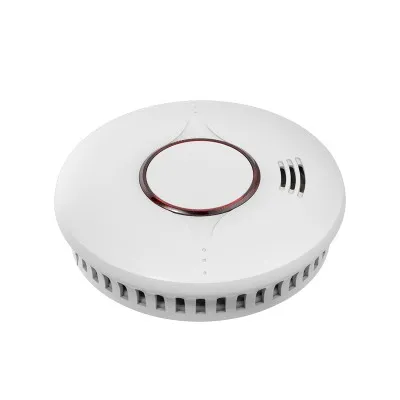




In the realm of fire safety, fire proof heat detectors play a pivotal role in safeguarding lives and property. These devices are designed to sense abnormal temperature increases and promptly communicate this information to an alarm system. As a leading supplier of fire proof heat detectors, I am often asked about the intricate process of how these detectors communicate with alarm systems. In this blog post, I will delve into the various methods of communication, highlighting the technologies and mechanisms that enable seamless interaction between heat detectors and alarm systems.
Understanding the Basics of Fire Proof Heat Detectors
Before we explore the communication methods, it's essential to understand what fire proof heat detectors are and how they work. Fire proof heat detectors are specialized sensors that monitor the ambient temperature in a given area. They are built to withstand high temperatures and harsh environments, ensuring reliable operation even in the presence of a fire. These detectors can be classified into different types based on their operating principles, such as fixed temperature detectors, rate - of - rise detectors, and combination detectors.
Fixed temperature detectors are designed to trigger an alarm when the temperature reaches a pre - set threshold, typically around 57°C to 74°C. Rate - of - rise detectors, on the other hand, detect rapid increases in temperature, regardless of the actual temperature value. Combination detectors incorporate both fixed temperature and rate - of - rise sensing capabilities for enhanced fire detection.
Wired Communication
One of the most common methods of communication between fire proof heat detectors and alarm systems is through wired connections. Wired systems offer several advantages, including reliability, stability, and the ability to transmit data over long distances.
Conventional Wired Systems
In conventional wired systems, heat detectors are connected to the alarm panel using a pair of wires. Each detector is assigned to a specific zone on the alarm panel. When a detector senses a fire, it sends a signal to the alarm panel, which then activates the alarm for the corresponding zone. However, conventional systems have a limitation in that they can only indicate the general area where the fire has been detected, not the exact location of the detector.
Addressable Wired Systems
Addressable wired systems are more advanced than conventional systems. In these systems, each heat detector has a unique address, which allows the alarm panel to identify the exact location of the detector that has triggered the alarm. This is achieved through a communication protocol, such as the two - wire loop system. The alarm panel continuously sends out signals to the detectors on the loop, and each detector responds with its status information. If a detector senses a fire, it sends a specific signal to the alarm panel, which can then display the exact location of the detector on a display screen.
Wired communication is suitable for large commercial and industrial buildings where reliability is of utmost importance. However, the installation of wired systems can be time - consuming and costly, especially in existing buildings where extensive wiring may be required.
Wireless Communication
Wireless communication has gained popularity in recent years due to its ease of installation and flexibility. Wireless fire proof heat detectors communicate with the alarm system using radio frequency (RF) signals.
Proprietary Wireless Systems
Many manufacturers offer proprietary wireless systems for their heat detectors. These systems use a specific frequency band and communication protocol that is unique to the manufacturer. The heat detectors transmit their status information to a wireless receiver, which is connected to the alarm panel. Proprietary systems offer a high level of security and reliability, as they are designed to operate in a specific environment and are less likely to be affected by interference from other wireless devices.
Standard Wireless Protocols
In addition to proprietary systems, some heat detectors use standard wireless protocols, such as ZigBee or Wi - Fi. ZigBee is a low - power, wireless communication protocol that is designed for short - range applications. It offers a mesh network topology, which means that the detectors can communicate with each other and relay signals to the alarm panel, even if some detectors are out of range of the receiver. Wi - Fi, on the other hand, is a widely used wireless protocol that offers high - speed data transfer and long - range communication. However, Wi - Fi systems may be more susceptible to interference from other Wi - Fi devices and require a stable Wi - Fi network infrastructure.
Wireless communication is ideal for retrofit applications and small - to - medium - sized buildings where the installation of wired systems is not feasible or cost - effective. However, wireless systems may be affected by factors such as signal interference, battery life, and range limitations.
Powerline Communication
Powerline communication (PLC) is another method of communication between fire proof heat detectors and alarm systems. In PLC systems, the heat detectors use the existing electrical wiring in a building to transmit their status information to the alarm panel.
The heat detectors are connected to the electrical circuit, and they modulate the electrical signal on the power line to send their data. The alarm panel has a powerline modem that can demodulate the signal and extract the information from the detectors. PLC systems offer the advantage of using the existing electrical infrastructure, which eliminates the need for additional wiring. However, PLC systems can be affected by electrical noise and interference on the power line, which may degrade the communication quality.
Integration with Other Systems
Fire proof heat detectors can also be integrated with other building systems, such as building management systems (BMS) and emergency lighting systems. This integration allows for a more comprehensive approach to fire safety.


When a heat detector senses a fire, it can send a signal to the BMS, which can then activate other safety measures, such as closing fire doors, shutting down ventilation systems, and activating emergency lighting. This integration can be achieved through various communication protocols, such as Modbus or BACnet.
Our Product Range
As a supplier of fire proof heat detectors, we offer a wide range of products to meet the diverse needs of our customers. Our Portable Heat Detector is ideal for temporary or mobile applications, such as construction sites or events. It is easy to install and can be moved from one location to another as needed.
Our Mains Heat Detector is designed for permanent installation in commercial and residential buildings. It is powered by the mains electricity supply, ensuring continuous operation and reliable performance.
For areas where a wired connection is not available or desirable, we offer the Battery Operated Heat Alarm. This detector is powered by batteries, providing flexibility and ease of installation.
Conclusion
The communication between fire proof heat detectors and alarm systems is a critical aspect of fire safety. Whether through wired, wireless, or powerline communication, these detectors ensure that any signs of fire are promptly detected and communicated to the appropriate authorities. As a supplier, we are committed to providing high - quality heat detectors that offer reliable communication and effective fire detection.
If you are interested in purchasing our fire proof heat detectors or have any questions about our products, please feel free to contact us for a detailed discussion. We look forward to working with you to enhance the fire safety of your premises.
References
- National Fire Protection Association (NFPA). NFPA 72: National Fire Alarm and Signaling Code.
- International Electrotechnical Commission (IEC). IEC 60730 - 2 - 9: Automatic electrical controls - Part 2 - 9: Particular requirements for temperature sensitive controls for household and similar use.


