

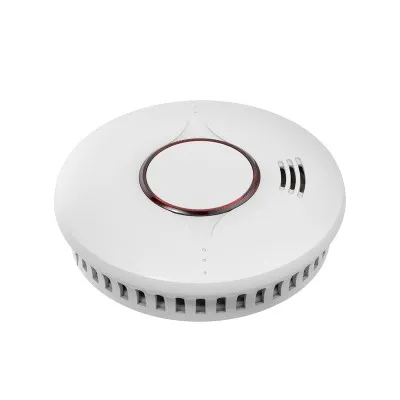




In various industrial and residential settings, the reliable operation of fire proof heat detectors is crucial for ensuring safety. Low - light conditions are common in many areas such as basements, storage rooms, and some industrial facilities during off - shift hours. This blog post will explore how our fire proof heat detectors perform in these low - light environments.
Understanding Fire Proof Heat Detectors
Fire proof heat detectors are designed to sense an increase in temperature and trigger an alarm when a pre - set temperature threshold is reached. They are essential components of fire safety systems, providing early warnings to prevent property damage and save lives. Our company, as a leading supplier of fire proof heat detectors, offers a range of products including Portable Heat Detector, Battery Operated Heat Alarm, and Mains Heat Detector.


Performance in Low - Light Conditions
Detection Mechanism Independence
The performance of our fire proof heat detectors in low - light conditions is largely unaffected because their detection mechanism is based on temperature sensing rather than light. Unlike smoke detectors that rely on the scattering of light by smoke particles, heat detectors use thermistors or bimetallic strips to measure temperature changes. These components work equally well in complete darkness as they do in well - lit areas. For example, in a basement where natural light is scarce, our heat detectors continuously monitor the temperature. If there is a sudden spike in temperature due to a potential fire, the thermistor will detect the change and send a signal to activate the alarm.
Reliability in Challenging Environments
Low - light areas often come with other challenges such as high humidity, dust, and potential obstructions. Our fire proof heat detectors are engineered to be highly reliable in such conditions. They are enclosed in durable casings that protect the internal components from dust and moisture. In a storage room with low light and high humidity, the sealed design of our detectors prevents water vapor from entering and damaging the sensitive temperature - sensing elements. This ensures that the detector can accurately measure temperature changes over an extended period without false alarms or malfunctions.
Visibility of Indicators
Although the detection mechanism is not affected by low light, the visibility of the alarm indicators can be a concern. Our heat detectors are equipped with high - intensity LED lights that are clearly visible even in dimly lit areas. The bright red LEDs flash when an alarm is triggered, providing a visual warning that can be easily noticed by anyone in the vicinity. Additionally, the alarms are also equipped with loud audible signals, which are especially important in low - light conditions where visual cues may be difficult to spot.
Installation Flexibility
In low - light areas, it is often necessary to install heat detectors in locations that are not easily accessible or visible. Our products offer great installation flexibility. They can be mounted on walls, ceilings, or even in hard - to - reach corners. The compact design of our Portable Heat Detector allows it to be placed in various positions, ensuring comprehensive coverage of the area. This flexibility is crucial in low - light industrial facilities where equipment and storage racks may obstruct the line of sight.
Case Studies
Industrial Warehouse
An industrial warehouse with large storage areas often has low - light conditions, especially in the far corners. Our Mains Heat Detector was installed throughout the warehouse. One night, a short - circuit in an electrical panel caused a significant increase in temperature. Despite the low light in the area, the heat detector quickly sensed the temperature rise and triggered the alarm. The early warning allowed the warehouse staff to respond promptly, preventing a potential fire from spreading and causing extensive damage.
Residential Basement
In a residential basement, which is typically a low - light area, a Battery Operated Heat Alarm was installed. A small fire started due to a faulty appliance. The heat detector detected the increase in temperature and activated the alarm. The bright LED lights and loud audible signal alerted the homeowners, who were able to extinguish the fire before it caused major damage to the basement.
Advantages of Our Products
Energy Efficiency
Our fire proof heat detectors are designed to be energy - efficient. The Battery Operated Heat Alarm has a long battery life, which is ideal for low - light areas where access to a power source may be limited. This reduces the need for frequent battery replacements and ensures continuous operation.
Cost - Effectiveness
Compared to some other fire detection systems, our heat detectors offer a cost - effective solution. They are relatively inexpensive to purchase and install, especially considering their high reliability in low - light conditions. The long - term savings in maintenance and energy costs make them an attractive option for both residential and commercial customers.
Easy Maintenance
Maintenance of our fire proof heat detectors is straightforward. Regular checks of the battery (for battery - operated models) and visual inspections of the detector's condition are all that is required. In low - light areas, where access may be difficult, the simplicity of maintenance is a significant advantage.
Conclusion
In conclusion, our fire proof heat detectors perform exceptionally well in low - light conditions. Their temperature - based detection mechanism, reliability in challenging environments, visible indicators, and installation flexibility make them an ideal choice for areas with limited light. Through real - world case studies, we have demonstrated their effectiveness in preventing fires and protecting property.
If you are interested in purchasing our high - quality fire proof heat detectors, we invite you to contact us for procurement discussions. We are committed to providing you with the best fire safety solutions for your specific needs.
References
- National Fire Protection Association (NFPA). NFPA 72: National Fire Alarm and Signaling Code.
- Fire Protection Research Foundation. Research on Fire Detection Technologies in Challenging Environments.
- International Electrotechnical Commission (IEC). IEC 60730 - 2 - 9: Automatic electrical controls - Part 2 - 9: Particular requirements for temperature sensitive controls.


