

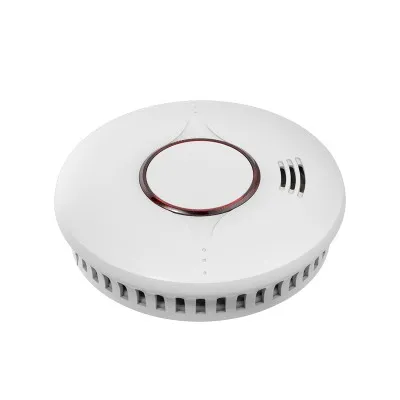




Yo, folks! As a supplier of smoke detectors, I've seen firsthand how different environmental factors can mess with these life - saving devices. One biggie that often gets overlooked is humidity. So, let's dig into how humidity affects the performance of a smoke detector.
What's Humidity Anyway?
Before we jump into the nitty - gritty, let's quickly define humidity. Humidity is basically the amount of water vapor in the air. We've got two main types: absolute humidity and relative humidity. Absolute humidity is the actual amount of water vapor in the air, while relative humidity is the ratio of the amount of water vapor present in the air to the maximum amount the air can hold at a given temperature.
How Smoke Detectors Work
First off, you need to know how smoke detectors do their thing. There are two common types: ionization and photoelectric.
Ionization smoke detectors have a small amount of radioactive material that ionizes the air inside the detector. This creates a flow of electrical current. When smoke enters the detector, it disrupts this current, and the alarm goes off.
Photoelectric smoke detectors, on the other hand, use a light source and a light sensor. Normally, the light from the source doesn't hit the sensor. But when smoke gets into the detector, it scatters the light, and some of it reaches the sensor, triggering the alarm.
The Impact of High Humidity on Smoke Detectors
False Alarms
High humidity can be a real pain in the butt for smoke detectors. When the air is super humid, water droplets can act like smoke particles. In ionization detectors, these water droplets can disrupt the electrical current just like smoke does, leading to false alarms. It's like the detector is getting tricked into thinking there's a fire when there really isn't.


For photoelectric detectors, water droplets can also scatter light in a similar way to smoke. This means that even in the absence of actual smoke, the light can reach the sensor, setting off the alarm. Imagine being woken up in the middle of the night by a false alarm because it's a really humid day!
Corrosion
Another issue with high humidity is corrosion. Smoke detectors have various metal components, and when they're exposed to high levels of moisture, they can start to corrode. Corrosion can damage the internal circuitry of the detector, making it less reliable. Over time, this can lead to the detector not working at all when it's really needed.
Reduced Sensitivity
High humidity can also reduce the sensitivity of smoke detectors. In ionization detectors, the presence of water vapor can interfere with the ionization process. This means that it might take more smoke to trigger the alarm, which is a huge problem in case of a real fire.
In photoelectric detectors, the water droplets can absorb some of the light, making it harder for the scattered light to reach the sensor. As a result, the detector might not detect smoke as quickly as it should.
The Impact of Low Humidity on Smoke Detectors
It's not just high humidity that can cause problems. Low humidity can also have an impact on smoke detectors.
Static Electricity
In low - humidity environments, static electricity can build up. This static charge can interfere with the electrical components of the smoke detector. It might cause false readings or even damage the detector's internal circuits.
Brittle Components
Low humidity can also make some of the components in the smoke detector brittle. For example, plastic parts can become more prone to cracking. This can affect the overall integrity of the detector and reduce its effectiveness.
Solutions to Humidity - Related Issues
Choose the Right Location
When installing a smoke detector, it's important to choose the right location. Avoid placing it in areas with high humidity, like bathrooms or near steam - producing appliances. Also, keep it away from areas where there might be a lot of static electricity, such as near electronic devices.
Use Humidity - Resistant Detectors
Some smoke detectors are designed to be more resistant to humidity. These detectors have special coatings or materials that can withstand high levels of moisture without getting damaged.
Regular Maintenance
Regular maintenance is key. Check your smoke detectors regularly to make sure they're working properly. Clean them to remove any dust or moisture that might have accumulated. Replace the batteries as needed.
Our Products and How They Handle Humidity
At our company, we offer a range of smoke detectors that are designed to perform well in different humidity conditions.
The Hot Sale Stand - alone 9V Smoke Alarm is a great option for general use. It's built with high - quality materials that can resist the effects of humidity to a certain extent. The internal components are protected to reduce the risk of false alarms and corrosion.
The BSI Lithium Battery Smoke Alarm is another excellent choice. The lithium battery provides long - lasting power, and the detector is engineered to work reliably in both high and low humidity environments.
If you're looking for smoke detectors for your home, our Smoke Alarms For Home are top - notch. They're designed to be user - friendly and can handle the normal humidity levels found in most homes.
Conclusion
Humidity can have a significant impact on the performance of smoke detectors. Whether it's high humidity causing false alarms and corrosion or low humidity leading to static electricity and brittle components, it's important to be aware of these issues. By choosing the right location, using humidity - resistant detectors, and performing regular maintenance, you can ensure that your smoke detectors work effectively.
If you're interested in purchasing high - quality smoke detectors that can handle different humidity conditions, we're here to help. Contact us for more information and to start a procurement discussion. We're committed to providing you with the best products to keep you and your loved ones safe.
References
- American Society for Testing and Materials (ASTM). Standard test methods for smoke detectors.
- National Fire Protection Association (NFPA). NFPA 72: National Fire Alarm and Signaling Code.


