

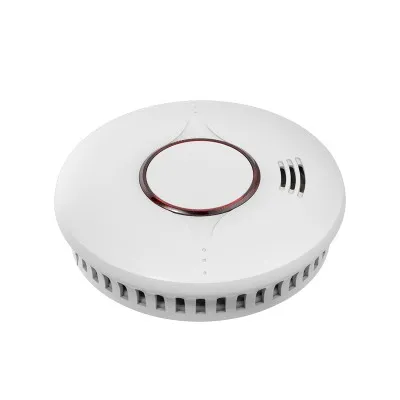




Wireless smoke detectors have become an essential safety feature in homes and businesses around the world. They offer the convenience of easy installation without the hassle of wiring, and they provide reliable protection against the threat of fire. One important function of many wireless smoke detectors is the mute function. In this blog post, I'll delve into how the mute function works in a wireless smoke detector and why it's a valuable feature. As a supplier of wireless smoke detectors, I have in - depth knowledge of these devices and their functionality.
Understanding the Basics of a Wireless Smoke Detector
Before we explore the mute function, let's briefly understand how a wireless smoke detector operates. Wireless smoke detectors are equipped with sensors that can detect smoke particles in the air. There are mainly two types of sensors used in smoke detectors: ionization sensors and photoelectric sensors. Ionization sensors are more sensitive to fast - flaming fires, while photoelectric sensors are better at detecting smoldering fires.
When the sensors in a wireless smoke detector detect smoke, they send a signal to the detector's control unit. The control unit then activates an audible alarm, usually a loud beeping sound, to alert occupants of the building to the potential fire hazard. Some wireless smoke detectors can also send a signal to other connected devices, such as a smartphone app or a home security system, through wireless communication technologies like Wi - Fi or ZigBee.
Wireless Interconnected Smoke Detectors are an excellent example of such interconnected systems. They can be linked together wirelessly so that when one detector goes off, all the detectors in the network will also activate, providing comprehensive coverage of the area.
What is the Mute Function and Why is it Important?
The mute function in a wireless smoke detector allows users to temporarily silence the alarm. This can be useful in many situations. For instance, if there is a false alarm caused by cooking smoke, steam from a shower, or dust from cleaning, the loud alarm can be quite annoying. Instead of having to wait for the alarm to stop on its own, which could take several minutes, users can simply press the mute button to turn off the sound.
It's important to note that the mute function is only a temporary solution. It doesn't disable the detector's ability to sense smoke. If there is an actual fire, and more smoke enters the detector's sensing chamber, the alarm will re - activate. This ensures that the safety of the occupants is not compromised.
How the Mute Function Works
When you press the mute button on a wireless smoke detector, a series of actions take place. First, the detector's control unit receives the signal from the mute button. This signal is then processed by the microcontroller inside the detector.
The microcontroller is like the "brain" of the smoke detector. It is responsible for managing all the functions of the device, including the alarm and the mute function. When it receives the mute signal, it sends a command to the sound - generating component of the detector, usually a piezoelectric buzzer. This command tells the buzzer to stop producing sound.
At the same time, the microcontroller also sets a timer. The length of the timer varies depending on the model of the detector, but it is typically around 5 - 15 minutes. During this time, the detector continues to monitor the air for smoke particles. If no new smoke is detected within the timer period, the mute state will remain, and the detector will return to its normal standby mode when the timer expires.
Rf Smoke Alarms often use radio - frequency technology for communication. In these alarms, the mute signal is transmitted wirelessly to the connected detectors in the network, so that all interconnected detectors are silenced simultaneously.
Additional Features Related to the Mute Function
Some advanced wireless smoke detectors have additional features related to the mute function. For example, some detectors can provide a visual indication when the mute function is activated. This could be a flashing light on the detector itself, which helps users confirm that the alarm has been silenced.
Another feature is the ability to mute the detector remotely. If your wireless smoke detector is connected to your smartphone via a dedicated app, you can use the app to mute the alarm from anywhere as long as you have an internet connection. This is especially useful if you are not at home when a false alarm occurs.
Considerations When Using the Mute Function
While the mute function is a convenient feature, it should be used with caution. Remember that the primary purpose of a smoke detector is to alert you of a fire. If you frequently mute the alarm without investigating the cause, you may miss an actual fire hazard.
If the alarm keeps going off repeatedly even after you've used the mute function, it's important to check the detector for malfunctions. Dust, dirt, or electrical issues can sometimes cause false alarms. You can try cleaning the detector according to the manufacturer's instructions or replacing the batteries if it is a battery - powered model.
Different Types of Mute Modes
There are different types of mute modes available in wireless smoke detectors. Some detectors have a simple one - time mute mode. When you press the mute button, the alarm is silenced for a set period, and then it resets to its normal state.
Other detectors offer a more advanced multi - stage mute mode. In a multi - stage mute mode, if the initial mute period passes and the detector still detects no significant amount of additional smoke, it may enter a second stage of a longer mute period. This can be useful in situations where there is a bit of lingering smoke, such as when you've burned a small piece of food in the oven.
Linked Smoke Alarms are designed to work in tandem. When you mute one detector in a linked system, it's important to ensure that all detectors are properly interconnected and that the mute signal is successfully transmitted to each device. This ensures seamless operation of the entire safety system.


Conclusion
In conclusion, the mute function in a wireless smoke detector is a valuable feature that offers convenience and flexibility. It allows users to deal with false alarms effectively without disabling the overall safety functionality of the detector. Whether it's due to cooking smoke or a minor disturbance, the ability to temporarily silence the alarm can make a big difference in your daily life.
As a supplier of high - quality wireless smoke detectors, we understand the importance of this function and ensure that our products are designed with the latest technology to provide reliable and effective protection. Our detectors are easy to install, maintain, and operate, and they come with a range of features, including a robust mute function.
If you're interested in our wireless smoke detectors or have any questions about their functionality, we encourage you to contact us for further consultation. We can provide you with detailed product information, technical support, and assistance with your procurement needs. We are committed to helping you create a safe environment with our top - notch safety products.
References
- "Smoke Detector Handbook" - A comprehensive guide on the working principles of smoke detectors and their various features.
- Industry reports on the latest advancements in wireless smoke detector technology.
- Manufacturer manuals of our wireless smoke detectors for detailed technical specifications.


