

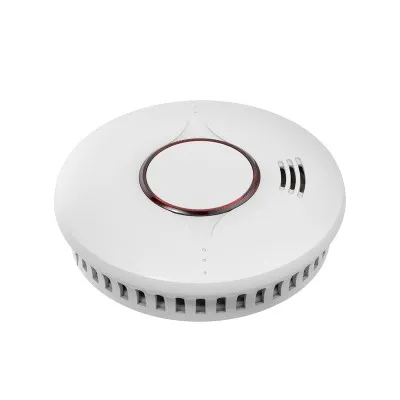




As a supplier of Wireless Heat Detectors, I often encounter questions from customers regarding the data storage capacity of these devices. Understanding the data storage capacity is crucial for assessing the detector's ability to record and retain important information, which can be invaluable in various applications such as fire safety monitoring and compliance reporting.
The Basics of Data Storage in Wireless Heat Detectors
Wireless heat detectors are designed to detect changes in temperature and transmit this information wirelessly to a central monitoring system. Along with real - time temperature data, these detectors may also store additional information such as the time of temperature events, the duration of abnormal temperature conditions, and the maximum and minimum temperatures recorded.
The data storage capacity of a wireless heat detector is typically measured in bytes, kilobytes (KB), megabytes (MB), or even gigabytes (GB) in more advanced models. The amount of storage required depends on several factors, including the frequency of data collection, the length of time the data needs to be stored, and the level of detail in the data being recorded.
Factors Affecting Data Storage Capacity
Data Collection Frequency
The more frequently a wireless heat detector collects and records data, the more storage space it will require. For example, a detector that records temperature readings every minute will generate significantly more data than one that records readings every hour. In high - risk environments where rapid temperature changes can occur, a higher data collection frequency may be necessary to accurately monitor conditions. However, this also means that the detector will need a larger data storage capacity to accommodate the increased volume of data.
Storage Duration
The length of time for which data needs to be stored is another important factor. In some applications, such as short - term construction site monitoring, data may only need to be stored for a few days or weeks. In other cases, such as in commercial buildings or industrial facilities, regulatory requirements may mandate that data be stored for several months or even years. Detectors with longer storage durations will need larger data storage capacities to hold all the relevant information.
Data Detail
The level of detail in the data being recorded can also impact storage capacity. Some wireless heat detectors may only record basic temperature readings, while others may include additional information such as the rate of temperature change, the location within the detector's range where the temperature was measured, and the environmental conditions at the time of measurement. More detailed data provides a more comprehensive picture of the monitored environment but requires more storage space.
Typical Data Storage Capacities
In the market, the data storage capacity of wireless heat detectors can vary widely. Entry - level models may have a storage capacity of a few kilobytes, which is sufficient for short - term monitoring with low data collection frequencies. These detectors are often used in small residential or light - commercial applications where the need for extensive data storage is limited.
Mid - range wireless heat detectors typically offer storage capacities in the range of several megabytes. These models are suitable for most commercial and industrial applications, where they can store data for a reasonable period of time with moderate data collection frequencies.
High - end wireless heat detectors, which are often used in critical infrastructure, large - scale industrial facilities, or research environments, may have storage capacities of several gigabytes or more. These detectors can handle high - frequency data collection and long - term storage requirements, providing a comprehensive historical record of temperature conditions.


Comparing with Other Heat Detection Devices
When considering the data storage capacity of wireless heat detectors, it's useful to compare them with other types of heat detection devices. For example, Mains Power Heat Detector With Battery may have different storage characteristics. Mains - powered detectors with battery backup often have more consistent power supply, which can support more complex data storage systems. However, they may also be more limited in terms of mobility compared to wireless detectors.
Hard Wired Heat Alarms are another alternative. These devices are directly connected to a building's electrical system and may offer reliable data storage, but they lack the flexibility of wireless detectors. Wireless heat detectors, on the other hand, can be easily installed in various locations without the need for extensive wiring, making them a popular choice for many applications. You can learn more about our Wireless Heat Detector on our website.
Importance of Adequate Data Storage Capacity
Having an adequate data storage capacity in a wireless heat detector is essential for several reasons. Firstly, it ensures that all relevant temperature data is captured and retained, which can be crucial for investigating incidents such as fires or overheating equipment. By analyzing historical data, it may be possible to identify patterns or precursors to problems, allowing for proactive maintenance and prevention of future issues.
Secondly, in many industries, regulatory bodies require that temperature data be recorded and stored for a certain period of time. Detectors with insufficient storage capacity may not be able to meet these requirements, which can result in non - compliance and potential fines.
How to Choose the Right Data Storage Capacity
When selecting a wireless heat detector, it's important to carefully consider your specific requirements. Evaluate the data collection frequency, storage duration, and data detail needed for your application. If you're unsure, our team of experts can help you determine the most appropriate data storage capacity for your needs.
Contact Us for Procurement
If you're interested in purchasing a wireless heat detector with the right data storage capacity for your project, we invite you to contact us for procurement discussions. Our team is ready to provide you with detailed product information, answer any questions you may have, and help you find the best solution for your specific requirements. Whether you need a detector for a small residential building or a large industrial facility, we have the expertise and products to meet your needs.
References
- "Fire Detection and Alarm Systems Handbook", Third Edition, by NFPA
- "Industrial Temperature Monitoring Best Practices", published by the Institute of Electrical and Electronics Engineers (IEEE)
- Manufacturer's specifications and technical documentation for wireless heat detectors.


