

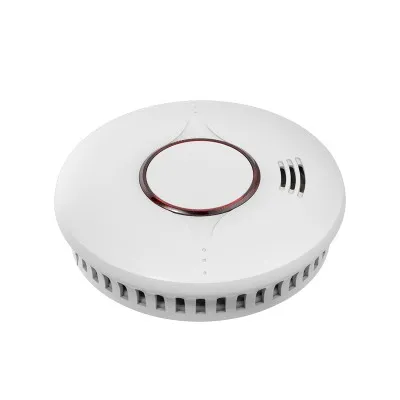




When it comes to fire safety, heat detectors play a crucial role in providing early warnings. Among various types of heat detectors, the heat detector with cable has gained significant attention for its unique features and applications. In this blog, as a supplier of Heat Detector with Cable, I will delve into the detection speed of this particular type of heat detector, exploring the factors that influence it and its importance in real - world scenarios.
Understanding the Heat Detector with Cable
A heat detector with cable is a hard - wired device designed to sense changes in temperature. It consists of a sensing element connected to a control unit via a cable. The sensing element is usually placed in areas where heat accumulation is likely to occur, such as industrial settings, warehouses, and large commercial buildings.
The cable serves as a medium for transmitting the temperature data from the sensing element to the control unit. This type of heat detector is known for its reliability and the ability to cover large areas, as the cable can be extended over a considerable distance. You can learn more about our Heat Detector with Cable by visiting Heat Detector with Cable.
Factors Affecting the Detection Speed
1. Sensing Element Design
The design of the sensing element is one of the most critical factors affecting the detection speed. Different sensing elements have different response characteristics to temperature changes. For example, some heat detectors use thermistors, which are temperature - sensitive resistors. The resistance of a thermistor changes rapidly with temperature, allowing for quick detection of temperature variations.
On the other hand, bimetallic strips are also commonly used in heat detectors. When the temperature rises, the two metals in the strip expand at different rates, causing the strip to bend. Once the bending reaches a certain point, a switch is triggered, indicating a high - temperature event. However, the response time of bimetallic strips is generally slower compared to thermistors.
2. Cable Length and Quality
The length and quality of the cable can also impact the detection speed. A longer cable may introduce signal delays, as the electrical signals from the sensing element take more time to reach the control unit. Additionally, the quality of the cable, including its insulation and conductivity, affects the accuracy and speed of signal transmission. A high - quality cable with good insulation can minimize signal loss and interference, ensuring that the control unit receives the temperature data in a timely manner.
3. Environmental Conditions
The environment in which the heat detector is installed plays a significant role in its detection speed. In a well - ventilated area, heat can dissipate more quickly, which may slow down the rate at which the temperature around the sensing element rises. Conversely, in an enclosed or poorly ventilated space, heat can accumulate rapidly, leading to faster detection.
Other environmental factors, such as humidity and dust, can also affect the performance of the heat detector. High humidity levels may cause corrosion of the sensing element or cable, while dust can accumulate on the sensing element, reducing its sensitivity.
4. Temperature Rise Rate
The rate at which the temperature rises is a key determinant of the detection speed. If the temperature increases rapidly, the heat detector will be able to detect the change more quickly. For example, in a fire situation where there is a sudden and significant increase in temperature, the heat detector should trigger an alarm within a short period. However, if the temperature rises slowly over a long period, the detection time may be extended.
Importance of Fast Detection Speed
1. Fire Prevention
A fast - detecting heat detector can significantly reduce the risk of fire. By detecting a temperature increase at an early stage, it allows for timely intervention, such as activating sprinkler systems or evacuating the area. This can prevent a small fire from spreading and causing extensive damage to property and endangering lives.
2. Minimizing Downtime
In industrial and commercial settings, a fire can lead to significant downtime. A heat detector with a fast detection speed can help minimize this downtime by quickly alerting the relevant personnel. This enables them to take immediate action to control the situation and resume operations as soon as possible.
3. Compliance with Regulations
Many building codes and safety regulations require the installation of heat detectors with specific detection speed requirements. By using a heat detector with a fast detection speed, building owners and operators can ensure compliance with these regulations, avoiding potential fines and legal issues.
Comparing with Other Types of Heat Detectors
1. Wireless Heat Alarm
Wireless heat alarms, such as the ones available at Wireless Heat Alarm, offer the advantage of easy installation. However, their detection speed may be affected by factors such as signal strength and interference. In some cases, the wireless signal may experience delays, which can impact the overall detection time.
Heat detectors with cable, on the other hand, provide a more direct and reliable connection between the sensing element and the control unit, resulting in potentially faster detection speeds.
2. 240V Heat Detector
The 240V Heat Detector is another type of hard - wired heat detector. While it offers high - power operation, its detection speed is also influenced by similar factors as the heat detector with cable. However, the specific design and construction of the 240V heat detector may result in different response times compared to the heat detector with cable.
Real - World Applications and Performance
In real - world applications, the heat detector with cable has demonstrated its effectiveness in various scenarios. For example, in a large warehouse storing flammable materials, a heat detector with a fast detection speed can quickly detect a potential fire hazard. The sensing element, placed strategically throughout the warehouse, can sense a temperature increase caused by a smoldering fire or overheating equipment.
Once the temperature reaches a pre - set threshold, the heat detector sends a signal to the control unit via the cable. The control unit then activates an alarm system, alerting the warehouse staff. This early warning allows them to take immediate action, such as using fire extinguishers or calling the fire department.


Conclusion
The detection speed of a heat detector with cable is influenced by multiple factors, including the sensing element design, cable length and quality, environmental conditions, and temperature rise rate. A fast - detecting heat detector is crucial for fire prevention, minimizing downtime, and ensuring compliance with regulations.
Compared to other types of heat detectors, such as wireless heat alarms and 240V heat detectors, the heat detector with cable offers a reliable and potentially faster detection solution. At our company, we are committed to providing high - quality heat detectors with cable that offer fast and accurate detection.
If you are interested in learning more about our heat detectors with cable or would like to discuss your specific fire safety needs, we encourage you to reach out to us for a procurement discussion. We are here to help you find the best fire safety solutions for your application.
References
- Fire Protection Handbook, National Fire Protection Association
- Standards for Heat Detectors, International Electrotechnical Commission


