

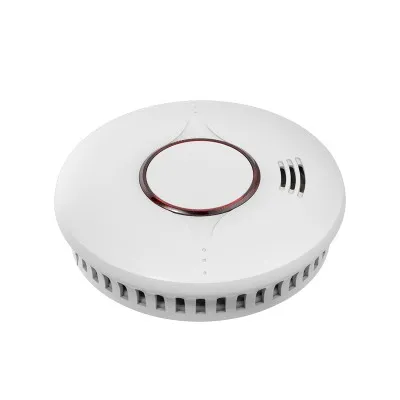


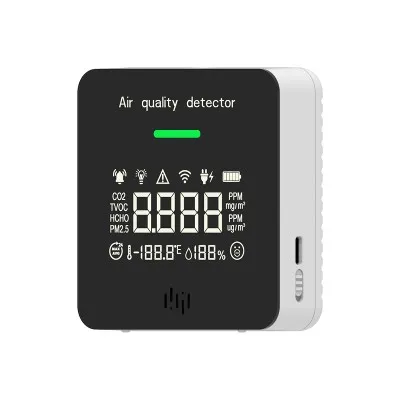


Hey there! As a supplier of Fire Proof Heat Detectors, I often get asked about the sensitivity adjustment method for these crucial safety devices. So, let's dive right in and explore what it's all about.
First off, why is sensitivity adjustment so important? Well, a heat detector that's too sensitive might go off for minor temperature changes, like when you're cooking a big meal or using a hair dryer nearby. On the other hand, if it's not sensitive enough, it might not detect a real fire in time, putting lives and property at risk. So, finding the right balance is key.
Types of Fire Proof Heat Detectors
Before we get into the adjustment methods, let's quickly talk about the different types of fire proof heat detectors. There are generally two main types: fixed temperature heat detectors and rate - of - rise heat detectors.
Fixed temperature heat detectors are designed to activate when the temperature reaches a pre - set level. For example, a common fixed temperature setting might be 57°C (135°F). Once the ambient temperature hits this mark, the detector will trigger an alarm.
Rate - of - rise heat detectors, on the other hand, are more concerned with how quickly the temperature is increasing. If the temperature rises at a rate faster than a pre - determined value, say 12°C (22°F) per minute, the detector will sound the alarm.
Sensitivity Adjustment Methods
Manual Adjustment
Some of our Portable Heat Detector models come with manual sensitivity adjustment features. This usually involves using a small screwdriver or a dial on the detector itself.
For fixed temperature detectors, you can adjust the set temperature. If you're in an area where the normal temperature is a bit higher, like a boiler room, you might want to increase the set temperature to avoid false alarms. Conversely, in a cooler environment, you can lower it to ensure timely detection.
With rate - of - rise detectors, you can adjust the rate at which the temperature increase is measured. If you expect sudden but small temperature spikes in your environment, you can increase the rate threshold to prevent false alarms.
Digital Adjustment
Our more advanced Battery Operated Heat Alarm and Mains Heat Detector models offer digital sensitivity adjustment. This is done through a control panel or a mobile app.
Using a control panel, you can access a menu where you can input specific values for temperature settings or rate - of - rise thresholds. It's a more precise way of adjusting the sensitivity as you can set the values to the exact degree or rate you need.
The mobile app option is even more convenient. You can adjust the sensitivity of your heat detectors from anywhere, as long as your detectors are connected to your home or business network. This is great for remote monitoring and quick adjustments in case of changing environmental conditions.
Factory - Set Sensitivity
In some cases, especially for our entry - level models, the sensitivity is factory - set. This means that the manufacturer has pre - determined the optimal sensitivity based on typical usage scenarios. While you can't directly adjust the sensitivity, these detectors are designed to work well in a wide range of environments.
However, if you find that the factory - set sensitivity isn't suitable for your specific needs, you can always contact us, and our technical support team can guide you on whether a different model with adjustable sensitivity would be a better fit.
Factors to Consider When Adjusting Sensitivity
When you're adjusting the sensitivity of your fire proof heat detector, there are several factors you need to keep in mind.
Environment
The environment where the detector is installed plays a huge role. In a kitchen, for example, there are going to be frequent temperature changes due to cooking. So, you'll need to set the sensitivity higher to avoid false alarms. In a storage room with stable temperatures, you can set it lower for better fire detection.
Type of Fire Risk
Different areas have different fire risks. A chemical storage area might have a higher risk of a fast - spreading fire, so you might want a more sensitive rate - of - rise detector. In a living room, a fixed temperature detector with a moderate sensitivity might be sufficient.
Local Regulations
Local fire safety regulations can also impact how you adjust the sensitivity of your heat detectors. Some areas have specific requirements for the temperature settings or response times of fire detectors. Make sure you're aware of these regulations and comply with them.
Testing After Adjustment
Once you've adjusted the sensitivity of your fire proof heat detector, it's crucial to test it. Most detectors come with a test button. Press this button to make sure the alarm goes off as expected.
You can also perform a more realistic test using a heat source. For example, you can use a hair dryer on a low setting to gradually increase the temperature near the detector. Make sure the detector triggers the alarm at the appropriate temperature or rate of rise.
Conclusion
Sensitivity adjustment for fire proof heat detectors is an important process that can significantly impact the effectiveness of your fire safety system. Whether you're using a manual, digital, or factory - set adjustment method, it's essential to consider the environment, fire risk, and local regulations.
If you're interested in purchasing our high - quality fire proof heat detectors or need more information on sensitivity adjustment, feel free to reach out to us. We're here to help you find the best solution for your fire safety needs.


References
- NFPA 72: National Fire Alarm and Signaling Code
- Underwriters Laboratories (UL) Standards for Fire Detectors


