

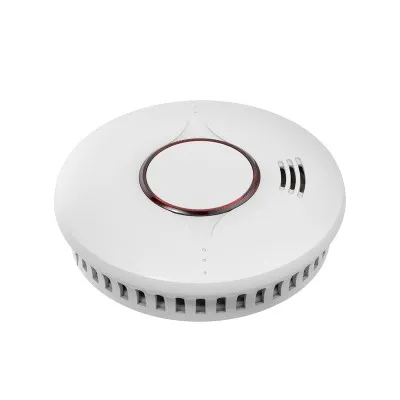




Yo, what's up folks! As a supplier of Wireless Heat Detectors, I've been getting a lot of questions lately about the signal strength of these nifty devices. So, I thought I'd take a few minutes to break it down for you and give you the lowdown on what signal strength means when it comes to wireless heat detectors.
First off, let's talk about what a wireless heat detector is. A wireless heat detector is a device that's designed to detect changes in temperature. When the temperature rises above a certain level, the detector sends a signal to an alarm system, which then alerts you that there might be a fire or some other kind of heat-related problem. The cool thing about wireless heat detectors is that they don't need to be connected to a wired system. They use radio frequencies to communicate with the alarm system, which makes them super easy to install and move around if you need to.
Now, let's get to the main topic: signal strength. The signal strength of a wireless heat detector is basically how strong the radio frequency signal is that the detector uses to communicate with the alarm system. A strong signal is crucial because it ensures that the detector can send its warning signal to the alarm system without any hiccups. If the signal is weak, the alarm system might not receive the message, and you could be left in the dark about a potential fire hazard.


There are a few factors that can affect the signal strength of a wireless heat detector. One of the biggest factors is distance. The farther the detector is from the alarm system, the weaker the signal will be. This is because the radio waves have to travel a longer distance, and they can lose power along the way. As a general rule, you should try to keep your wireless heat detectors within the recommended range specified by the manufacturer. Usually, this range can be anywhere from a few meters to several dozen meters, depending on the model.
Another factor that can impact signal strength is obstacles. Walls, furniture, and other objects can block or interfere with the radio waves, causing the signal to weaken. If you have a wireless heat detector in a room with a lot of walls or large objects, you might need to think about relocating it to a more open area. Sometimes, you might even need to use signal repeaters, which are devices that can boost the signal and help it reach the alarm system.
The environment can also play a role in signal strength. For example, certain electromagnetic fields can interfere with the radio signals. If you have a lot of electronic devices in the area, like microwaves, routers, or cordless phones, they could be causing interference and weakening the signal. In these cases, you might need to adjust the placement of the detector or the electronic devices to minimize the interference.
Now, how can you tell if the signal strength of your wireless heat detector is good? Most modern wireless heat detectors come with some kind of indicator that shows the signal strength. This could be a series of lights, where more lights mean a stronger signal. If you notice that the signal strength indicator is showing a weak signal, it's a good idea to check the factors I mentioned earlier, like distance, obstacles, and interference.
As a Wireless Heat Detector supplier, I offer a range of high-quality products that are designed to have strong and reliable signal strength. Our Wireless Heat Detector is equipped with advanced technology to ensure that it can send a clear signal to the alarm system even in challenging environments. We also have other types of heat detectors, such as Hard Wired Heat Alarms and Mains Power Heat Detector With Battery, which might be a better fit for your specific needs depending on your situation.
If you're in the market for a heat detector, signal strength is something you definitely want to consider. A reliable signal can make all the difference when it comes to keeping your home or business safe from fire. Whether you need a wireless heat detector for a small office or a large industrial space, we've got you covered.
We understand that every customer's needs are different, and that's why we offer personalized solutions. Our team of experts is always ready to help you choose the right heat detector for your situation and answer any questions you might have. We can also provide you with installation tips and advice on how to ensure that your heat detector has the best possible signal strength.
So, if you're interested in learning more about our wireless heat detectors or any of our other products, don't hesitate to reach out. We're here to make the process as easy as possible for you and to ensure that you get the right product for your needs. Contact us today to start the conversation and take the first step towards a safer environment.
References
- Various industry standards and guidelines for heat detectors
- Product manuals of wireless heat detectors


