



1. Prerequisites for privacy protection measures related to cameras in smoke alarms
First of all, it should be clear that there should be no cameras in normal and legal smoke alarms. However, in view of the fact that there are cases where criminals disguise cameras as smoke alarms to invade privacy, the following are some privacy protection measures for this potential risk.
(I) Detection and identification
- Visual detection
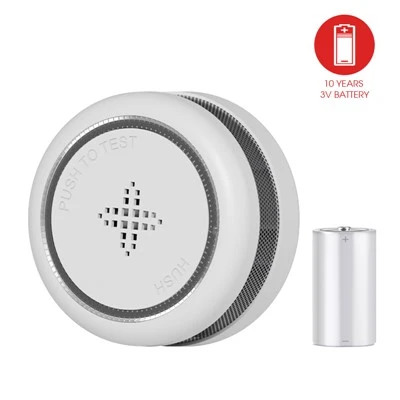
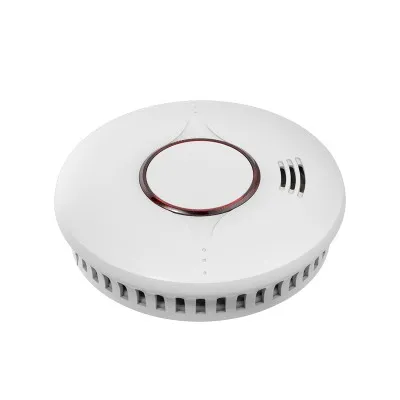
- Judging by appearance: Normal smoke alarms are generally fully enclosed, with only a sensing window at the bottom, and are mostly simple round or square shapes. If you find that the appearance of the smoke alarm has abnormal small holes or a strange shape, there may be a problem. For example, some disguised cameras may have small holes on the surface of the smoke alarm that are not easily noticed for lens shooting. This difference from the appearance of ordinary smoke alarms can be used as a preliminary basis for judgment.
- Judging by light characteristics: The alarm indicator light of a normal smoke alarm flashes regularly when working normally, generally flashing once every 5 seconds, and the flashing light is vertical at the bottom of the smoke alarm. If you find that the light of the smoke alarm is always on, the flashing frequency is irregular, or there is a suspicious light on the side of the smoke alarm, then the smoke alarm may have been modified into a camera. Because the camera does not have such a normal working indicator light for concealment, and if the pinhole camera is equipped with an infrared fill light, its state is generally always on and does not flash (infrared light is invisible when it exceeds the visible frequency of the naked eye), which is different from the normal smoke alarm indicator light.
- Technical detection
- Use the mobile phone camera to detect: In a dark environment, turn on the mobile phone camera and scan the smoke alarm carefully and slowly. If a bright spot appears on the dark mobile phone screen, it is likely to be a micro camera. This is because the camera lens may reflect light under the photosensitive element of the mobile phone camera and appear bright spots. Although this method is not 100% accurate, it can be used as a preliminary investigation method.
(II) Prevention and prevention
- Physical prevention
- Block suspicious parts: If you are suspicious of a smoke alarm, you can use physical blocking to protect your privacy. For example, you can use black tape to stick the light or suspicious small hole on the shell of the smoke alarm, but be careful not to stick the smoke inlet hole to avoid affecting the normal fire monitoring function of the smoke alarm.
- Remove suspicious equipment: If it is determined that the smoke alarm has been illegally modified and there is a risk of privacy infringement, you can consider removing it. For some detachable smoke alarms (such as the type with a base fixed on the ceiling and a main part that is stuck together), you can remove them by turning or pulling them to completely avoid the risk of privacy leakage, but this operation must be carried out under the premise of ensuring compliance with relevant regulations and safety to avoid damaging the equipment or violating regulations.
- Legal rights protection
- Preserve evidence: If it is found that a camera has been illegally installed in the smoke alarm and privacy has been violated, relevant evidence should be retained in a timely manner, such as taking photos and videos to record the status and location of the equipment. These evidences are very important for subsequent rights protection.
- Seek legal help: According to relevant laws and regulations, report the case to the relevant departments (such as public security organs, etc.), protect your privacy rights through legal channels, and pursue the legal responsibilities of lawbreakers.