





Can I plug a high - wattage appliance into a regular electrical socket?
Hey there, folks! I'm an electrical socket supplier, and this is a question I get asked a lot. So, let's dig into it and find out what's what.
First off, let's understand the basics. A regular electrical socket is designed to handle a certain amount of power. In most homes, the standard sockets in the UK, for example, are rated at around 13 amps and operate at 230 - 240 volts. The power (in watts) that a socket can handle is calculated by multiplying the voltage by the current (P = V x I). So, for a 13 - amp socket at 230 volts, it can handle about 2990 watts (230 x 13).
Now, high - wattage appliances are those that need a lot of power to run. Think of things like electric heaters, kettles, and some large power tools. These appliances can draw a significant amount of current, sometimes well over the capacity of a regular socket.
If you try to plug a high - wattage appliance into a regular socket that can't handle the load, you're asking for trouble. One of the most immediate risks is overheating. When too much current flows through the socket and the wiring connected to it, the resistance in the wires causes them to heat up. This heat can damage the insulation around the wires, which in turn can lead to short circuits. A short circuit is when the electrical current takes an unintended path, often resulting in a sudden surge of power that can trip the circuit breaker or, in the worst - case scenario, cause a fire.
Another issue is the wear and tear on the socket itself. High - wattage appliances can cause the contacts in the socket to degrade more quickly. The constant high - current flow can cause the metal contacts to warp or melt, which not only makes the socket less effective but also increases the risk of arcing. Arcing is when the electrical current jumps across a gap in the circuit, creating a spark. This spark can be a fire hazard and can also damage the appliance.
So, what should you do if you have a high - wattage appliance? Well, the safest option is to use a dedicated circuit. A dedicated circuit is a circuit that is designed specifically to power one high - wattage appliance. This way, the socket and the wiring are sized to handle the load of that particular appliance. For example, an electric oven or a large air - conditioning unit might have its own dedicated circuit.
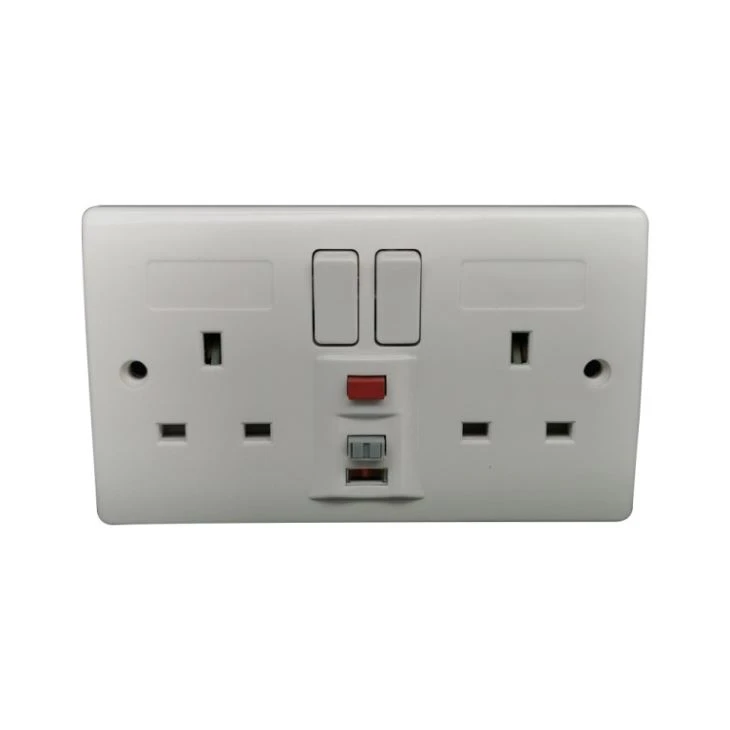
But if a dedicated circuit isn't an option, you need to be really careful. You can look for sockets that are designed to handle higher loads. For instance, we offer the Safety Power Use 250V 1 Gang 13A Switched Socket With RCD Protection 30mA & 10mA. This socket comes with Residual Current Device (RCD) protection, which can detect any imbalance in the electrical current and quickly cut off the power, reducing the risk of electric shock and fire. It's a great option for those situations where you need a bit more safety when using high - wattage appliances.
If you don't need the extra RCD protection, our 13A Switched Socket is a reliable choice. It's built to handle the standard 13 - amp load and has a switch, which makes it easy to turn the power on and off without having to unplug the appliance. And if you're looking for a simple, no - frills option, our Switched Socket is a good bet. It's a basic but sturdy socket that can handle regular household appliances.

It's also important to check the wattage of your appliances. Most appliances have a label on them that tells you how much power they use. Make sure you know the wattage of the appliance you want to plug in and compare it to the capacity of the socket. If the wattage of the appliance is close to or exceeds the capacity of the socket, you should either use a different socket or a dedicated circuit.
In addition to the socket itself, the quality of the wiring is also crucial. Old or substandard wiring can't handle high - wattage appliances as well as newer, properly installed wiring. If you live in an older property, it might be a good idea to have an electrician check the wiring to make sure it can handle the load.
To sum it up, in general, you shouldn't plug a high - wattage appliance into a regular electrical socket unless you're 100% sure that the socket and the wiring can handle the load. It's always better to err on the side of caution when it comes to electricity.
If you're in the market for electrical sockets, whether it's for high - wattage appliances or just regular household use, we've got you covered. We offer a wide range of sockets that are designed to meet different needs and safety standards. Don't hesitate to get in touch if you're interested in purchasing. Our team of experts is ready to help you choose the right socket for your situation.
References
- Electrical Installation Regulations.
- Manufacturers' guidelines for electrical appliances.


