





How do I troubleshoot a faulty switched socket?
As a supplier of switched sockets, I've encountered numerous situations where customers face issues with their sockets. Troubleshooting a faulty switched socket can seem daunting, but with a systematic approach, you can often identify and resolve the problem quickly. In this blog, I'll share some common issues and steps to troubleshoot them.
1. Initial Checks
Before you start any detailed troubleshooting, there are a few basic checks you can perform. First, make sure the appliance you're trying to use with the socket is working properly. Try plugging it into another known - working socket. If the appliance doesn't work in any socket, the problem likely lies with the appliance itself.
Next, check the circuit breaker or fuse box. A tripped circuit breaker or a blown fuse can cause a socket to stop working. Locate the breaker or fuse corresponding to the area where the faulty socket is located. If the breaker is tripped, switch it back on. If it trips again immediately, there may be a more serious issue such as a short - circuit in the wiring. In the case of a fuse, replace it with a new one of the same rating.

2. Inspect the Socket Itself
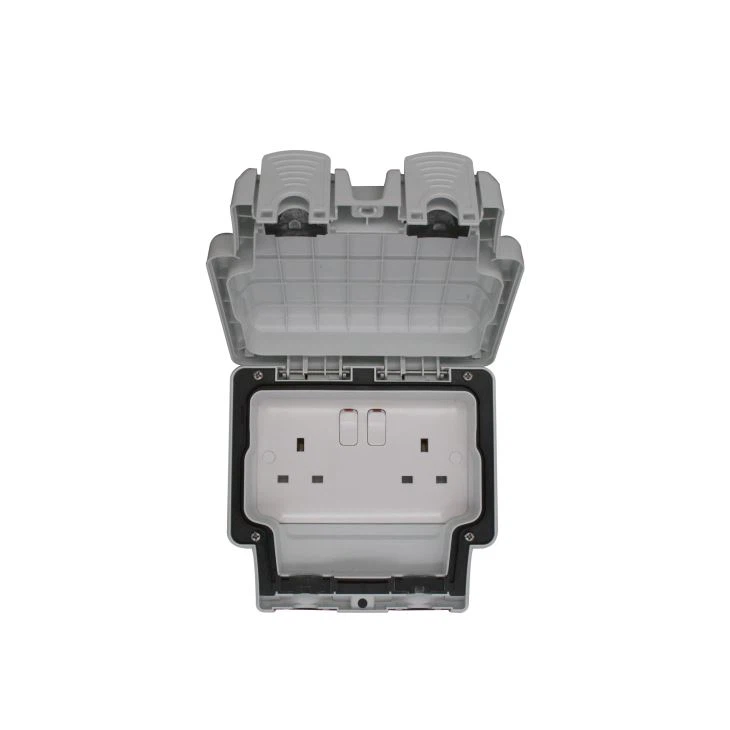
- Physical Damage: Visually inspect the switched socket for any signs of physical damage. Cracks, burns, or loose parts can indicate a problem. For example, if you see burn marks around the socket, it could be a sign of overheating due to a loose connection or an overloaded circuit. In such cases, the socket may need to be replaced. You can find high - quality sockets like the IP66 RCD Weatherproof Wall Socket With 2gang BS Socket Switch which are designed to be durable and safe.
- Loose Connections: Check if the socket is loose in the wall box. A loose socket can cause intermittent power problems. To check, gently try to wiggle the socket. If it moves, it may need to be tightened. You can use a screwdriver to loosen the screws on the faceplate, remove the faceplate, and then tighten the screws that hold the socket to the wall box.
3. Test the Socket
- Using a Socket Tester: A socket tester is a handy tool that can quickly tell you if the socket is working correctly. Plug the socket tester into the faulty socket. The tester will have indicator lights that show the status of the wiring, such as whether the live, neutral, and earth connections are correct. If the tester shows incorrect readings, there may be a wiring problem.
- Multimeter Test: If you have a multimeter, you can use it to measure the voltage at the socket. Set the multimeter to the AC voltage setting (usually around 230 - 250V for most household sockets). Insert the probes into the live and neutral slots of the socket. A reading close to the expected voltage (e.g., 230V) indicates that the socket is receiving power. If there is no voltage or a very low voltage, there may be a problem with the wiring upstream.
4. Check the Switch Functionality
- Switch Not Working: If the switch on the socket doesn't turn the power on or off, there could be an issue with the switch itself. First, check if the switch is stuck or damaged. If it seems to be physically okay, the problem may be with the internal contacts of the switch. In some cases, you can try to clean the contacts with a contact cleaner. However, if the problem persists, the switch may need to be replaced. Our Safety Power Use 250V 1 Gang 13A Switched Socket With RCD Protection 30mA & 10mA comes with a reliable switch mechanism that reduces the chances of such issues.
- Intermittent Switching: If the switch works intermittently, it could be due to a loose connection within the socket or a problem with the switch contacts. Check all the connections inside the socket and make sure they are tight. If the problem continues, replacing the switch may be necessary.
5. Wiring Issues
- Faulty Wiring: Wiring problems are one of the most common causes of socket faults. Look for signs of frayed or damaged wires inside the socket. If you find any, you'll need to repair or replace the damaged section of the wire. Make sure to turn off the power at the circuit breaker before working on the wiring.
- Incorrect Wiring: Incorrect wiring can also lead to socket problems. For example, if the live and neutral wires are reversed, it can cause safety hazards and incorrect operation of the socket. If you suspect incorrect wiring, it's best to consult a qualified electrician to correct the wiring.
6. RCD Protection
- RCD Tripping: If the socket is protected by a Residual Current Device (RCD) and the RCD keeps tripping, it could be due to a leakage current. This could be caused by a faulty appliance plugged into the socket, a wiring fault, or a problem with the RCD itself. Try unplugging all appliances from the socket and reset the RCD. If it doesn't trip again, then one of the appliances may be faulty. Plug the appliances back in one by one to identify the problematic one. If the RCD still trips with no appliances plugged in, there may be a wiring problem that needs to be investigated.
In conclusion, troubleshooting a faulty switched socket requires a methodical approach. By following these steps, you can often identify and resolve the problem. However, if you're unsure or if the problem persists after trying these steps, it's always best to consult a qualified electrician.
At our company, we offer a wide range of high - quality Electrical Plugs Sockets that are designed to meet the highest safety and performance standards. If you're in need of new sockets or have any questions about our products, we encourage you to reach out to us for a purchase negotiation. We're committed to providing excellent customer service and ensuring that you get the right products for your needs.
References
- Electrical Installation Guidebooks
- Socket Manufacturer's Technical Manuals


