

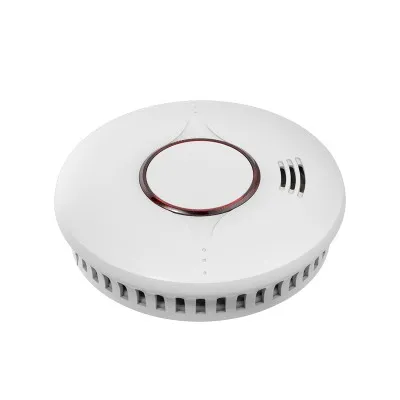




Hey there! As a supplier of heat detectors with cable, I often get asked how these nifty gadgets actually detect heat. Well, let me break it down for you in a way that's easy to understand.
First off, let's talk about what a heat detector with cable is all about. It's a device designed to sense an increase in temperature and trigger an alarm when things start to get a bit too hot. These detectors are super important in places like industrial facilities, warehouses, and even some homes, as they can help prevent fires from spreading by alerting people early on.
So, how does it work? There are a few different ways that a heat detector with cable can detect heat, and I'll go through the main ones here.


Rate-of-Rise Detection
One of the most common methods is rate-of-rise detection. This is all about how quickly the temperature is increasing. The cable in the heat detector is made up of special materials that are sensitive to changes in temperature. When the temperature around the cable starts to rise rapidly, the electrical properties of the cable change.
Think of it like this: if you're standing outside on a normal day, and the temperature slowly goes up over a few hours, that's not a big deal. But if it suddenly jumps up 10 degrees in just a few minutes, something's probably wrong. The rate-of-rise heat detector can sense that sudden change, like a temperature spurt, and that's when it sends a signal to the alarm.
This type of detection is great because it can catch fires in the early stages, even before the temperature gets really high. It's like having a little temperature detective that's always on the lookout for any suspicious temperature changes.
Fixed-Temperature Detection
Another way that heat detectors with cable work is through fixed-temperature detection. In this case, the cable is set to a specific temperature. When the temperature around the cable reaches that set point, the detector triggers the alarm.
For example, let's say the fixed temperature is set at 135°F (57°C). As long as the temperature stays below that, everything's fine. But once it hits 135°F, the detector goes off. It's kind of like a safety valve that only opens when the pressure (or in this case, temperature) gets too high.
This method is useful in areas where you know the normal temperature range and want to be alerted if it goes above a certain level. It's like having a little thermostat that's there to keep you safe.
How the Cable Comes Into Play
The cable in a heat detector is a key component. It's not just any ordinary cable. The cable is designed to be in close contact with the environment, so it can accurately sense the temperature. It's usually installed in areas where heat is likely to build up, like near machinery or in corners of a room.
The cable is also connected to the detector unit, which is where all the electronics are. The detector unit reads the signals from the cable and decides whether to trigger the alarm. It's like a little control center that's constantly analyzing the temperature data from the cable.
Real-World Applications
Now that you know how a heat detector with cable works, let's talk about where you might actually see them in action.
In industrial settings, these detectors are used to monitor the temperature of equipment. For example, in a factory, there might be a lot of machinery that generates heat. By installing heat detectors with cable near the equipment, you can make sure that the temperature doesn't get too high, which could cause damage to the machinery or even start a fire.
In warehouses, heat detectors with cable can be used to protect stored goods. If there's a fire in the warehouse, the detectors can quickly alert the staff, giving them time to evacuate and try to save the inventory.
And in some homes, especially in areas where there's a high risk of fire, like near the kitchen or in the attic, heat detectors with cable can provide an extra layer of safety.
Our Product Range
We're a supplier of heat detectors with cable, and we offer a wide range of products to suit different needs. We have detectors that are suitable for industrial use, as well as ones that are great for home applications.
If you're looking for a wireless option, check out our BSI Wireless Heat Alarm. It's easy to install and can be a great choice for areas where running cables might be difficult.
For those who prefer a hardwired option, our Mains Heat Alarm is a reliable choice. It's connected to the main power supply, so you don't have to worry about changing batteries.
And if you need a detector that uses optical technology, our Heat Fire Alarm is a great option. It combines the benefits of heat detection with optical sensing, providing an extra level of protection.
Why Choose Us
As a supplier, we're committed to providing high-quality heat detectors with cable. Our products are tested to meet the highest standards of safety and reliability. We also offer excellent customer service, so if you have any questions or need help with installation, our team is here to assist you.
We understand that every customer has different needs, so we work closely with you to find the right solution for your specific situation. Whether you're a small business owner or a homeowner, we have a heat detector with cable that will fit your requirements.
Contact Us for Purchase
If you're interested in purchasing heat detectors with cable, we'd love to hear from you. We can provide you with more information about our products, give you a quote, and discuss the installation process. Don't hesitate to reach out to us if you have any questions or need further assistance. Let's work together to keep your property safe from the threat of fire.
References
- "Fire Detection and Alarm Systems Handbook" by Brannigan, V. J.
- NFPA 72: National Fire Alarm and Signaling Code.
That's it for today's blog post. I hope you now have a better understanding of how a heat detector with cable detects heat. If you have any more questions, feel free to leave a comment below. Thanks for reading!


