

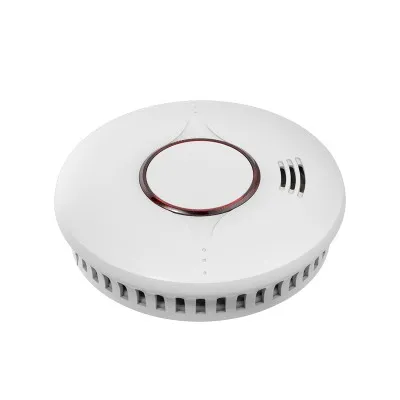


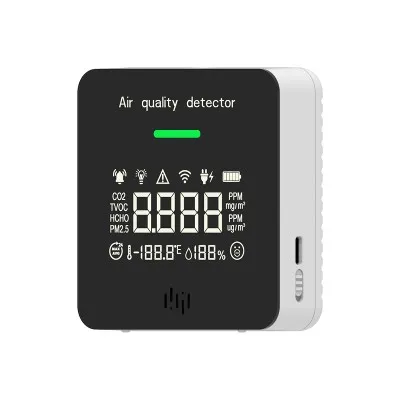


Hey there! As a supplier of RF heat detectors, I'm super stoked to share with you how these nifty devices work in multi - story buildings. Let's dive right in!
The Basics of RF Heat Detectors
First off, what's an RF heat detector? RF stands for radio frequency. These detectors use radio waves to communicate, which is a game - changer, especially in multi - story buildings. Unlike some traditional detectors that rely on hard - wired connections, RF heat detectors can send signals wirelessly. This makes them a lot easier to install, especially in existing buildings where running wires through multiple floors can be a real pain in the neck.
How They Detect Heat
RF heat detectors are designed to sense changes in temperature. Inside the detector, there's a temperature - sensitive element. This could be a thermistor or a bimetallic strip. A thermistor is a type of resistor whose resistance changes with temperature. As the temperature around the detector goes up, the resistance of the thermistor changes, and the detector's circuitry can detect this change.
A bimetallic strip, on the other hand, is made up of two different metals bonded together. When the temperature changes, the two metals expand at different rates, causing the strip to bend. This bending can be used to trigger a switch within the detector.


Once the temperature reaches a pre - set threshold, the detector knows there's a potential fire situation. For example, most heat detectors are set to activate when the temperature reaches around 57°C (135°F) or when there's a rapid increase in temperature, like 12°C (22°F) per minute.
Communication in Multi - Story Buildings
Now, let's talk about how these detectors communicate in a multi - story building. Each RF heat detector has a unique ID. When it detects a rise in temperature and decides there's a fire, it sends out a radio signal with its ID and the alarm status.
There's usually a central control panel in the building. This panel acts like the brain of the whole system. It's connected to all the RF heat detectors in the building, no matter which floor they're on. The panel can receive the radio signals from the detectors and figure out exactly which detector has triggered the alarm.
The radio signals used by RF heat detectors operate on specific frequencies. These frequencies are regulated to avoid interference with other wireless devices. In most cases, they use frequencies in the unlicensed bands, which means you don't need a special license to use them.
Advantages in Multi - Story Buildings
There are several reasons why RF heat detectors are a great choice for multi - story buildings.
Easy Installation: As I mentioned earlier, installing hard - wired detectors in a multi - story building can be a nightmare. You have to drill through floors, run wires through walls, and deal with all sorts of construction headaches. With RF heat detectors, you can simply mount them on the wall or ceiling and they're ready to go. This saves a lot of time and money during the installation process.
Flexibility: If you need to add or move a detector in the future, it's a breeze. You don't have to worry about cutting wires or rewiring the whole system. Just move the detector to the new location and it will start communicating with the central control panel again.
Reliability: RF heat detectors are designed to be reliable. They have built - in self - diagnostic features that can detect if there's a problem with the detector itself, like a low battery or a malfunctioning sensor. If there's an issue, the detector can send a signal to the control panel to let the building management know.
Our Product Range
We offer a variety of RF heat detectors to suit different needs in multi - story buildings.
The Mains Power Heat Detector With Battery is a great option. It's powered by the building's electrical system, but it also has a backup battery. This means that even if there's a power outage, the detector will still be able to function and send out an alarm if needed.
The Wireless Heat Detector is perfect for areas where it's difficult to run wires. It can be easily installed anywhere in the building and will communicate wirelessly with the control panel.
And then there's the Intelligent Heat Detector. This detector uses advanced algorithms to analyze the temperature data more accurately. It can distinguish between a normal increase in temperature, like from a sunny window, and a real fire situation, reducing false alarms.
Installation and Placement
Proper installation and placement of RF heat detectors are crucial in a multi - story building. Detectors should be placed on the ceiling or high on the walls, as heat rises. In open areas, they should be spaced out according to the manufacturer's recommendations.
In corridors and stairwells, detectors should be placed at regular intervals to ensure that any fire can be detected quickly. It's also important to make sure that the detectors are not blocked by any objects, as this can prevent them from accurately sensing the temperature.
Maintenance
Regular maintenance is essential to keep RF heat detectors working properly. This includes checking the batteries (if they're battery - powered), cleaning the detectors to remove any dust or debris that could affect the sensors, and testing the detectors periodically to make sure they're still functioning.
Most modern RF heat detectors have a test button that you can press to check if the alarm is working. The central control panel also has diagnostic features that can help you identify any problems with the detectors.
Contact Us for Procurement
If you're in charge of a multi - story building and you're looking for reliable RF heat detectors, we're here to help. Our products are high - quality, easy to install, and come with excellent customer support. Whether you need a few detectors for a small building or a whole system for a large complex, we can provide you with the right solution.
Get in touch with us to start a procurement discussion. We'll be happy to answer all your questions and help you choose the best RF heat detectors for your building.
References
- Fire Protection Handbook, National Fire Protection Association
- "Wireless Fire Detection Systems: Technology and Applications" by industry research reports


