

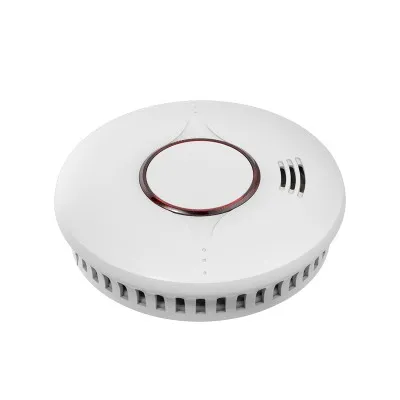




Hey there! As a supplier of wireless smoke detectors, I've been getting a lot of questions lately about how these nifty devices communicate with other gadgets. So, I thought I'd break it down for you in this blog post.
First off, let's talk about why communication between smoke detectors and other devices is so important. When a fire breaks out, every second counts. If a smoke detector can quickly alert other devices, like smart home hubs, smartphones, or even other smoke detectors in the house, it can significantly improve response times and potentially save lives.
There are a few different ways that wireless smoke detectors can communicate with other devices. One of the most common methods is through radio frequency (RF) technology. RF is a form of electromagnetic radiation that can travel through the air, allowing devices to send and receive signals without the need for physical wires.
Most wireless smoke detectors use a specific RF frequency, such as 433 MHz or 868 MHz, to communicate with other devices. These frequencies are typically reserved for low-power, short-range wireless communication, making them ideal for use in home security systems.
When a smoke detector detects smoke or fire, it sends an RF signal to other devices that are within range. This signal contains information about the alarm, such as the type of alarm (smoke or fire), the location of the detector, and the severity of the situation. Other devices can then use this information to take appropriate action, such as sounding an alarm, sending a notification to your smartphone, or even contacting the fire department.
Another way that wireless smoke detectors can communicate with other devices is through Wi-Fi. Wi-Fi is a wireless networking technology that allows devices to connect to the internet and communicate with each other over a local area network (LAN).
Some wireless smoke detectors come with built-in Wi-Fi capabilities, allowing them to connect directly to your home Wi-Fi network. Once connected, these detectors can send real-time alerts to your smartphone or other smart home devices, even if you're away from home.
Wi-Fi-enabled smoke detectors also offer the advantage of being able to integrate with other smart home devices, such as smart speakers, smart lights, and smart thermostats. For example, you could set up your smoke detector to automatically turn on all the lights in your house when it detects smoke, making it easier to find your way out in an emergency.
In addition to RF and Wi-Fi, some wireless smoke detectors also support other communication protocols, such as Zigbee or Z-Wave. These protocols are designed specifically for use in home automation systems and allow devices to communicate with each other over a mesh network.
A mesh network is a type of network where each device acts as a node, relaying signals to other devices in the network. This allows devices to communicate with each other even if they are not within direct range of each other.
Zigbee and Z-Wave are both low-power, wireless communication protocols that are designed to be energy-efficient and reliable. They are also compatible with a wide range of smart home devices, making them a popular choice for home automation systems.
Now that you know how wireless smoke detectors communicate with other devices, let's talk about some of the benefits of using interconnected smoke detectors.
One of the biggest benefits of interconnected smoke detectors is that they provide whole-house protection. When one smoke detector detects smoke or fire, it can send a signal to all the other detectors in the house, causing them to sound an alarm as well. This ensures that everyone in the house is alerted to the danger, even if they are in a different room or on a different floor.
Interconnected smoke detectors also offer the advantage of being able to provide early warning. If a fire starts in one part of the house, the smoke detector in that area will detect it and send a signal to the other detectors. This gives you more time to evacuate the house and call the fire department before the fire spreads.


Another benefit of interconnected smoke detectors is that they can be more convenient to install and maintain. Instead of having to install separate wiring for each smoke detector, you can simply connect them wirelessly. This makes the installation process faster and easier, and it also reduces the risk of electrical problems.
If you're interested in learning more about interconnected smoke detectors, you can check out our Interlinked Smoke Detectors page. We also offer Hardwired Fire Alarm options for those who prefer a more traditional installation method. And if you're looking for a wireless smoke detector with non-replaceable batteries, you can check out our Wireless Interconnected Smoke Detectors page.
At the end of the day, the most important thing is to make sure that your home is protected by a reliable smoke detection system. Whether you choose a wireless smoke detector that communicates through RF, Wi-Fi, or another protocol, or a hardwired fire alarm system, the key is to make sure that it meets your needs and provides the level of protection that you require.
If you have any questions about our wireless smoke detectors or would like to discuss your options for protecting your home, please don't hesitate to get in touch. We're here to help you find the right solution for your needs and ensure that your home is safe and secure.
References
- "Wireless Smoke Detectors: How They Work and Why You Need Them." Safety.com.
- "Understanding Radio Frequency (RF) Technology." TechTarget.
- "Wi-Fi: A Wireless Networking Technology." Cisco.
- "Zigbee and Z-Wave: The Future of Home Automation." HomeKit News.


