

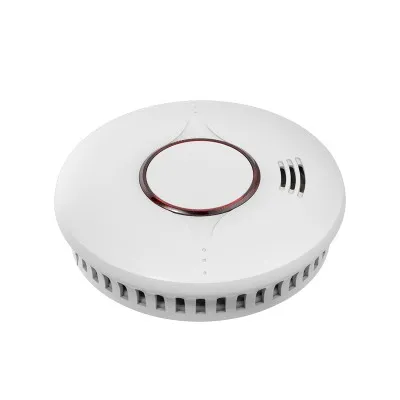




As a supplier of Wireless Smoke Detectors, I often get asked about the types of information that can be stored in the memory of these essential safety devices. In this blog post, I'll delve into the various data points that a wireless smoke detector can store, and why this information is crucial for ensuring the safety and functionality of your home or business.
1. Alarm History
One of the most important types of information stored in a wireless smoke detector's memory is the alarm history. Every time the detector is triggered, it records the date and time of the alarm. This data is invaluable for several reasons. Firstly, it allows homeowners and business owners to track when alarms have gone off, which can help in identifying patterns or potential issues. For example, if an alarm goes off frequently at a certain time of day, it could indicate a problem with cooking or a malfunction in the detector itself.
Secondly, the alarm history can be used by emergency responders to understand the sequence of events in a fire. This information can be crucial in determining the origin and spread of the fire, which can help in formulating an effective response strategy.
2. Battery Status
Another key piece of information stored in the memory is the battery status. Wireless smoke detectors typically rely on batteries for power, and it's essential to monitor the battery level to ensure that the detector is always operational. The detector records the battery voltage at regular intervals, allowing users to track the battery's health over time.
If the battery voltage drops below a certain threshold, the detector will usually emit a low-battery warning. This warning can be a beep or a visual indicator, depending on the model. By storing the battery status in memory, users can easily check the battery level and replace the batteries as needed, preventing false alarms or non-functioning detectors.
3. Sensor Readings
The sensor readings are also stored in the memory of a wireless smoke detector. These readings provide information about the levels of smoke, heat, or other substances in the air. By analyzing these readings, users can get an idea of the environmental conditions in the area where the detector is installed.
For example, if the sensor readings show a gradual increase in smoke levels over time, it could indicate a smoldering fire. On the other hand, a sudden spike in smoke levels could indicate a more immediate threat. By monitoring the sensor readings, users can take appropriate action, such as evacuating the area or calling the fire department.
4. Test Results
Most wireless smoke detectors come with a test button that allows users to check the functionality of the detector. When the test button is pressed, the detector performs a self-test and records the results in memory. These test results can be used to verify that the detector is working properly and to identify any potential issues.
If the test results indicate a problem, such as a faulty sensor or a low battery, the user can take steps to address the issue. This could involve replacing the batteries, cleaning the sensor, or contacting the manufacturer for further assistance.
5. Firmware Updates
In addition to the above information, some wireless smoke detectors also store information about firmware updates. Firmware is the software that runs on the detector, and it's important to keep it up to date to ensure the detector's optimal performance and security.
When a firmware update is available, the detector will usually notify the user. The detector may also store information about the update, such as the version number and the release date. By keeping track of the firmware updates, users can ensure that their detectors are always running the latest version of the software.
6. Connection Status
Since wireless smoke detectors rely on a wireless connection to communicate with other devices, the connection status is also stored in memory. This information includes details about the strength of the wireless signal, the quality of the connection, and any errors or disruptions that may have occurred.
A strong and stable wireless connection is essential for the proper functioning of the detector. If the connection is weak or unstable, the detector may not be able to communicate effectively with other devices, such as a central monitoring system or a smartphone app. By monitoring the connection status, users can take steps to improve the signal strength, such as repositioning the detector or using a signal booster.
7. Installation Information
The memory of a wireless smoke detector may also store installation information, such as the date of installation, the location of the detector, and the type of mounting used. This information can be useful for maintenance and troubleshooting purposes.
For example, if a detector is experiencing problems, the installation information can help technicians determine if the detector was installed correctly. It can also provide information about the age of the detector, which can be important for determining when it may need to be replaced.
8. Diagnostic Information
In addition to the above, wireless smoke detectors may also store diagnostic information. This information can include error codes, system logs, and other data that can help in identifying and resolving issues with the detector.
For example, if the detector is malfunctioning, the diagnostic information can provide clues about the cause of the problem. This can save time and effort in troubleshooting, as technicians can quickly access the relevant information and take appropriate action.


Conclusion
In conclusion, the memory of a wireless smoke detector can store a wealth of information that is essential for ensuring the safety and functionality of the device. From alarm history and battery status to sensor readings and diagnostic information, this data provides valuable insights into the performance of the detector and the environmental conditions in the area where it is installed.
As a supplier of Wireless Smoke Detectors, we offer a range of high-quality products that are designed to store and manage this information effectively. Our Wireless Mains Smoke Detector provides reliable protection with dual power supply options, while our Wired Fire Alarm offers a hardwired solution for enhanced security. Our Linked Smoke Detectors are designed to work together, providing comprehensive coverage for your home or business.
If you're interested in learning more about our wireless smoke detectors or would like to discuss your specific requirements, please don't hesitate to contact us. We're here to help you find the best solution for your safety needs.
References
- National Fire Protection Association. (2020). NFPA 72: National Fire Alarm and Signaling Code.
- Underwriters Laboratories. (2019). UL 217: Standard for Smoke Detectors for Fire Protection Signaling Systems.
- International Association of Fire Chiefs. (2018). Fire Prevention and Public Education.


