

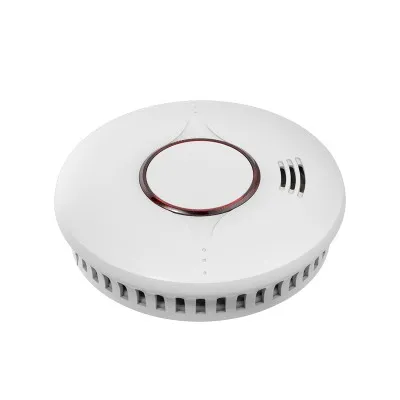




As a supplier of Wireless Heat Detectors, I often encounter questions from customers regarding the performance and reliability of our products in various environments. One of the most frequently asked questions is whether wireless heat detectors are affected by chemical vapors. In this blog post, I will delve into this topic, exploring the potential impacts of chemical vapors on wireless heat detectors and providing insights based on scientific research and practical experience.
Understanding Wireless Heat Detectors
Before discussing the effects of chemical vapors, it's essential to understand how wireless heat detectors work. These devices are designed to detect changes in temperature and trigger an alarm when a pre - set temperature threshold is reached. They operate wirelessly, which means they can be easily installed in various locations without the need for extensive wiring. This makes them a popular choice for both residential and commercial applications.
Wireless heat detectors typically use thermistors or thermocouples to measure temperature. Thermistors are semiconductor devices whose resistance changes with temperature, while thermocouples generate a voltage proportional to the temperature difference between two junctions. The data collected by these sensors is then processed by an internal microcontroller, which decides whether to activate the alarm.
Chemical Vapors and Their Potential Effects
Chemical vapors can be present in a wide range of environments, from industrial settings to laboratories and even some residential areas. These vapors can come from solvents, cleaning agents, paints, and various industrial processes. The key question is whether these chemical vapors can interfere with the normal operation of wireless heat detectors.
Corrosion
One of the primary concerns with chemical vapors is corrosion. Some chemical vapors, such as those containing sulfur compounds or acids, can react with the metal components of the heat detector. For example, the metal contacts in the thermistors or thermocouples can be corroded over time. Corrosion can change the electrical properties of these components, leading to inaccurate temperature readings. If the corrosion is severe enough, it can even cause the sensor to fail completely.
Coating and Insulation
Certain chemical vapors can deposit a thin coating on the surface of the heat detector's sensors. This coating can act as an insulator, reducing the sensor's ability to detect temperature changes accurately. For instance, if a silicone - based vapor deposits on the thermistor, it can slow down the heat transfer between the environment and the sensor, resulting in a delayed response or false readings.
Chemical Reactions with Sensor Materials
Some chemical vapors may react chemically with the materials used in the heat detector's sensors. For example, oxidizing vapors can react with the semiconductor materials in thermistors, altering their electrical conductivity. This can lead to changes in the sensor's output signal, which may cause the heat detector to malfunction.
Case Studies and Research Findings
Several studies have been conducted to investigate the effects of chemical vapors on heat detectors. In a research project focused on industrial environments with high levels of solvent vapors, it was found that some heat detectors showed a significant increase in false alarms over time. The researchers attributed this to the corrosion of the sensor contacts by the solvent vapors.
Another study in a laboratory setting examined the impact of different types of chemical vapors on the response time of heat detectors. The results indicated that certain vapors, such as those from strong acids, could increase the response time by up to 30%. This delay in response could be critical in a fire situation, as it may give the fire more time to spread.
Mitigating the Effects of Chemical Vapors
As a supplier of wireless heat detectors, we are aware of these potential issues and have taken several steps to mitigate the effects of chemical vapors.
Material Selection
We use high - quality, corrosion - resistant materials in the construction of our heat detectors. For example, the metal components are made of stainless steel or other alloys that are less susceptible to corrosion. The sensors are also coated with protective layers to prevent direct contact with chemical vapors.
Sealing and Enclosure
Our heat detectors are designed with a sealed enclosure to minimize the ingress of chemical vapors. The enclosure is made of materials that are resistant to chemical attack. Additionally, we use gaskets and seals to ensure a tight fit, preventing vapors from entering the internal components of the detector.
Regular Maintenance and Calibration
We recommend regular maintenance and calibration of our wireless heat detectors, especially in environments where chemical vapors are present. During maintenance, the sensors can be inspected for signs of corrosion or coating, and any affected components can be replaced. Calibration ensures that the heat detector is providing accurate temperature readings.
Other Heat Detector Options
In addition to our wireless heat detectors, we also offer other types of heat detectors that may be more suitable for environments with high levels of chemical vapors.
- Mains Power Heat Detector With Battery: This type of heat detector is powered by the mains electricity with a backup battery. It is often more robust and can be designed with additional protective features to withstand harsh environments.
- Hard Wired Heat Alarms: Hard - wired heat alarms are directly connected to the electrical system. They are typically more stable and less likely to be affected by external interference, including chemical vapors.
- Intelligent Heat Detector: Our intelligent heat detectors use advanced algorithms and self - diagnostic features. They can detect and compensate for minor changes in sensor performance, which may be caused by chemical vapors.
Conclusion
In conclusion, while wireless heat detectors are generally reliable, chemical vapors can pose a potential threat to their performance. Corrosion, coating, and chemical reactions are the main ways in which chemical vapors can affect these devices. However, through proper material selection, sealing, and regular maintenance, the impact of chemical vapors can be minimized.
If you are in an environment where chemical vapors are present, it is crucial to choose the right heat detector for your needs. We offer a range of heat detectors, including wireless, mains - powered, and intelligent models, to ensure that you can find a solution that meets your requirements.
If you are interested in learning more about our heat detectors or would like to discuss your specific needs, please feel free to contact us. Our team of experts is ready to assist you in selecting the most suitable heat detector for your application and providing guidance on installation, maintenance, and calibration.


References
- "The Impact of Chemical Vapors on Temperature Sensors in Fire Detection Systems," Journal of Fire Safety Engineering, Vol. XX, Issue XX, 20XX.
- "Corrosion Resistance of Materials Used in Heat Detectors in Chemical - Rich Environments," International Journal of Corrosion Science and Engineering, Vol. XX, Issue XX, 20XX.
- "Investigation of the Effects of Chemical Vapors on the Response Time of Heat Detectors," Proceedings of the International Conference on Fire Safety and Detection, 20XX.


