





An electrical socket that keeps losing power can be a frustrating and potentially dangerous issue. As an Electrical Socket supplier, I've encountered various scenarios where customers face this problem. In this blog, I'll share some practical steps to troubleshoot an electrical socket that keeps losing power.
Step 1: Check the Circuit Breaker
The first thing you should do when an electrical socket loses power is to check the circuit breaker. Circuit breakers are designed to trip and cut off power when there's an overload or a short - circuit in the electrical system. Locate your home's electrical panel, which is usually in the basement, garage, or utility room.
Look for any breakers that are in the "tripped" position. A tripped breaker is typically in a position between "on" and "off". To reset the breaker, firmly push it all the way to the "off" position and then back to the "on" position. If the breaker trips again immediately, there may be a more serious problem in the circuit.
It's important to note that if you're not familiar with working with electrical panels, it's best to call a professional electrician. Working with electrical panels can be dangerous, and incorrect handling can lead to electric shock or fire.
Step 2: Inspect the Socket Itself
If the circuit breaker isn't the issue, the next step is to inspect the electrical socket. First, unplug all devices from the socket. Look for any signs of damage, such as burn marks, cracks, or loose connections. A damaged socket can cause intermittent power loss or even pose a fire hazard.
You can also use a voltage tester to check if the socket is receiving power. A voltage tester is a simple tool that can be purchased at most hardware stores. Insert the tester's probes into the socket's slots. If the tester lights up or beeps, it means the socket is receiving power. If not, there may be a problem with the wiring inside the socket.
If you notice any damage to the socket, it's recommended to replace it. As an Electrical Socket supplier, we offer a wide range of high - quality Electrical Socket to meet your needs. Our sockets are designed to be safe and reliable, ensuring a stable power supply for your devices.

Step 3: Examine the Wiring
If the socket appears to be in good condition but still isn't receiving power, the problem may lie in the wiring. Check the wires connected to the socket for any signs of fraying, damage, or loose connections. Loose wires can cause intermittent power loss as they may not make a proper electrical connection.
To access the wiring, you'll need to turn off the power to the socket at the circuit breaker. Then, remove the socket cover plate and carefully unscrew the socket from the wall. Gently pull the socket out to expose the wires. Make sure to handle the wires carefully to avoid any electrical shock.
If you find any loose wires, you can try tightening the screws that hold them in place. However, if the wires are frayed or damaged, it's best to replace them. This is a more advanced electrical repair, and if you're not confident in your abilities, it's advisable to hire a professional electrician.
Step 4: Look for Overloaded Circuits
Overloading a circuit is a common cause of power loss in electrical sockets. Each circuit in your home is designed to handle a certain amount of electrical load. If you plug in too many high - wattage devices into a single circuit, it can cause the circuit breaker to trip or the socket to lose power.
To determine if a circuit is overloaded, make a list of all the devices connected to the socket and their wattage. You can usually find the wattage information on the device's label. Add up the wattages of all the devices. If the total wattage exceeds the circuit's capacity, you'll need to redistribute the devices among different circuits.
For example, if you have a refrigerator, a microwave, and a toaster all plugged into the same circuit, it's likely overloaded. Unplug some of the devices and plug them into other sockets on different circuits. This can help prevent power loss and reduce the risk of electrical problems.
Step 5: Consider External Factors
Sometimes, external factors can cause an electrical socket to lose power. For example, a power outage in your neighborhood can affect the power supply to your home. Check with your neighbors to see if they're also experiencing a power outage. If so, contact your local power company to report the issue.
Another external factor could be water damage. If the socket is located in a damp area, such as a bathroom or basement, water can seep into the socket and cause electrical problems. If you suspect water damage, turn off the power to the socket at the circuit breaker and have the socket inspected by a professional electrician.
Step 6: Test with Different Devices
If you've gone through all the above steps and still can't determine the cause of the power loss, try plugging different devices into the socket. Sometimes, the problem may be with the device itself rather than the socket.
For example, if a particular lamp keeps causing the socket to lose power, try plugging in a different lamp. If the new lamp works fine, then the problem was likely with the original lamp. If the new device also doesn't work, then the issue is more likely related to the socket or the circuit.
Our Product Recommendations
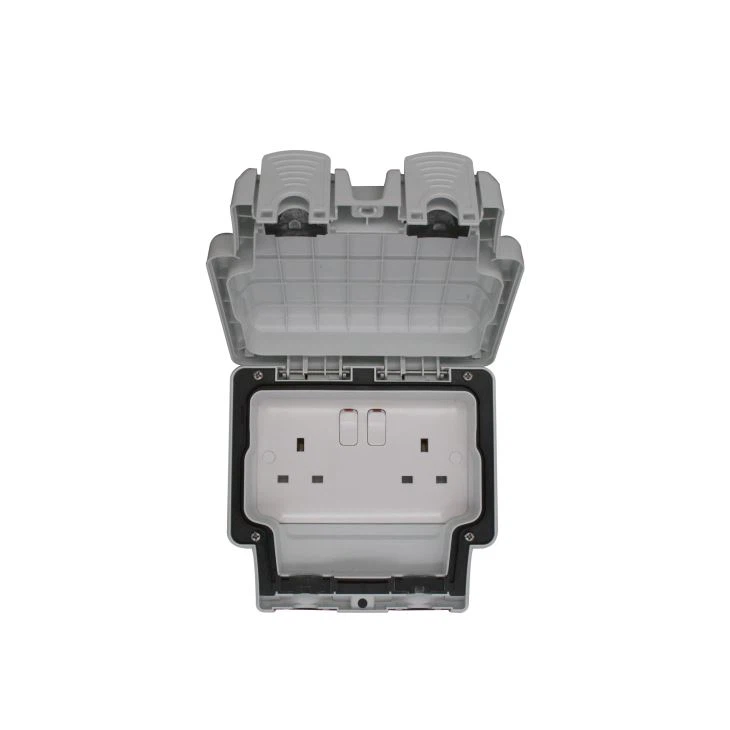
As an Electrical Socket supplier, we have a variety of products that can help you solve your electrical socket problems. One of our popular products is the IP66 RCD Weatherproof Wall Socket With 2gang BS Socket Switch. This socket is designed to be weatherproof, making it suitable for outdoor use. It also has an RCD (Residual Current Device) switch, which provides an extra layer of safety by quickly cutting off power in case of a fault.
We also offer Electrical Switch Socket that are not only functional but also aesthetically pleasing. Our switch sockets come in different styles and colors to match your home decor.
Contact Us for Purchase and Consultation
If you're experiencing problems with your electrical sockets or are interested in purchasing our high - quality electrical sockets, we're here to help. Our team of experts can provide you with professional advice on troubleshooting and choosing the right products for your needs. Whether you're a homeowner, a contractor, or a business owner, we can offer the best solutions for your electrical socket requirements.
Don't hesitate to reach out to us for more information. We look forward to working with you and helping you solve your electrical socket problems.
References
- Electrical Wiring Handbook, various editions
- National Electrical Code (NEC) standards
- Manufacturer's manuals for electrical sockets and circuit breakers


