

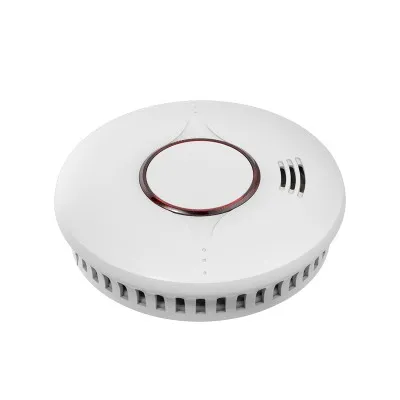


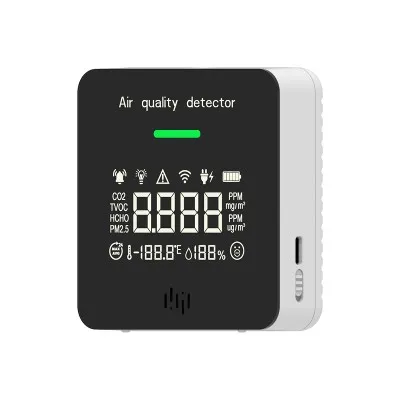


Hey there! As a smoke detector supplier, I often get asked a whole bunch of questions about these nifty devices. One question that's been popping up a lot lately is, "Can a smoke detector detect smoke from a wildfire?" Well, let's dive right into it and find out.
First off, let's talk about how smoke detectors actually work. There are mainly two types: ionization and photoelectric. Ionization smoke detectors use a small amount of radioactive material to ionize the air inside the detector. When smoke particles enter, they disrupt the flow of ions, triggering the alarm. Photoelectric smoke detectors, on the other hand, use a beam of light. When smoke enters and scatters the light, it hits a light sensor, and that's when the alarm goes off.
Now, can these detectors sense wildfire smoke? The short answer is yes, but it's a bit more complicated than that. Wildfire smoke is different from the smoke you might get from a kitchen fire or a small electrical fire. It contains larger particles and a different mix of chemicals.
Photoelectric smoke detectors are generally better at detecting the smoldering type of smoke that's common in wildfires. They're really sensitive to those larger particles that are often found in wildfire smoke. If you're interested in a great photoelectric option, check out our Photoelectric Hardwired Smoke Detector. It's designed to pick up on those hard - to - spot smoke particles, and it's been a hit with our customers.
Ionization smoke detectors are more sensitive to fast - flaming fires. But they can still detect wildfire smoke, especially if the fire is close enough and the smoke has a good amount of smaller particles. However, they might not be as reliable as photoelectric ones when it comes to the slow - burning, smoldering smoke from wildfires.
Another factor to consider is the distance between the wildfire and your home. If the fire is far away, the smoke might be diluted by the time it reaches your area. In this case, the concentration of smoke particles might be too low for the detector to trigger an alarm. But if the fire is nearby, the smoke will be more concentrated, and your detector is more likely to go off.


The environment around your home also plays a role. If you live in an area with a lot of trees or vegetation, the natural air movement can affect how the smoke travels. Wind can carry the smoke in different directions, and it might not reach your detector at all. On the other hand, if your home is in a valley or a low - lying area, the smoke can get trapped, increasing the chances of your detector picking it up.
Now, let's talk about some of the different types of smoke detectors we offer. Our Conventional Smoke Detector is a great option for those who want a simple, reliable device. It's easy to install and can provide basic protection against smoke, whether it's from a wildfire or a small fire inside your home.
If you're looking for something more advanced, our Wired Fire Alarm is the way to go. It's connected to your home's electrical system, so you don't have to worry about changing batteries. And it can be integrated with other fire safety devices in your home, giving you a more comprehensive protection.
So, to sum it all up, yes, a smoke detector can detect smoke from a wildfire, but there are a lot of factors that come into play. The type of detector, the distance of the fire, and the environment around your home all affect its ability to detect the smoke.
If you're in the market for a smoke detector, whether it's to protect against wildfires or just for general fire safety, we've got you covered. We have a wide range of products to suit different needs and budgets. And if you have any questions or need help choosing the right detector, don't hesitate to reach out. We're here to make sure you and your family are safe.
If you're interested in learning more about our products or want to start a purchase negotiation, feel free to get in touch. We're always happy to have a chat and find the best solution for you.
References
- National Fire Protection Association. (2023). Smoke Detectors: How They Work and Why You Need Them.
- Federal Emergency Management Agency. (2023). Wildfire Smoke and Your Health.


