

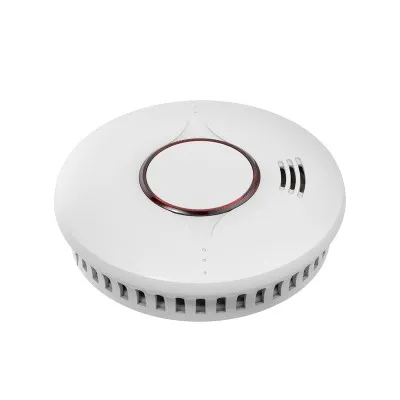


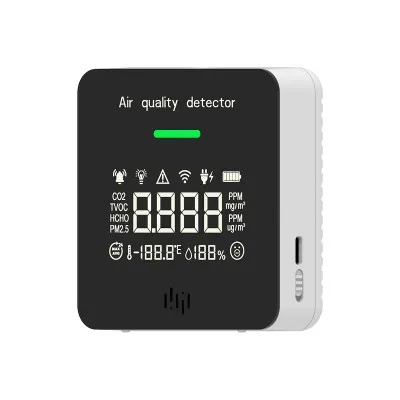


When it comes to ensuring the safety of residential areas, the use of appropriate fire detection devices is of utmost importance. One such device that has gained popularity in recent years is the Portable Heat Detector. As a supplier of these detectors, I am often asked whether a portable heat detector can be effectively used in residential settings. In this blog post, I will explore this question in detail, considering the functionality, advantages, limitations, and practicality of using portable heat detectors in homes.
Functionality of Portable Heat Detectors
Portable heat detectors are designed to sense changes in temperature within a specific area. They work on the principle that a rapid increase in temperature can be an early sign of a fire. Unlike smoke detectors, which rely on detecting smoke particles, heat detectors are triggered by the heat generated by a fire. This makes them particularly useful in environments where smoke may not be the first indicator of a fire, such as in kitchens or areas with high levels of dust or steam.
The Portable Heat Detector typically consists of a sensor, a control unit, and an alarm. The sensor continuously monitors the temperature, and when it detects a significant increase beyond a pre - set threshold, it sends a signal to the control unit. The control unit then activates the alarm, alerting the occupants of the potential fire.
Advantages of Using Portable Heat Detectors in Residential Areas
1. Versatility
One of the main advantages of portable heat detectors is their versatility. They can be easily moved from one location to another within a residential area. This is particularly useful in homes where there may be areas that are more prone to fires at different times. For example, during the holiday season, a portable heat detector can be placed near a Christmas tree to monitor for any potential fire hazards. Similarly, in a home with a wood - burning stove, the detector can be positioned close to the stove when it is in use.
2. Easy Installation
Portable heat detectors are relatively easy to install. They do not require complex wiring like some of the mains - powered heat detectors. Many models are Battery Operated Heat Alarm, which means they can be simply placed or mounted on a wall or ceiling without the need for professional electrical work. This makes them a convenient option for homeowners who want to quickly enhance their fire safety measures.
3. Complementary to Other Detectors
Portable heat detectors can be used in conjunction with other fire detection devices, such as smoke detectors. While smoke detectors are excellent at detecting smoldering fires, heat detectors can provide an additional layer of protection for fast - growing fires that produce a significant amount of heat. Having both types of detectors in a residential area can increase the overall effectiveness of the fire detection system.
4. Cost - Effective
In general, portable heat detectors are more cost - effective compared to some of the larger, hard - wired fire detection systems. This makes them an attractive option for budget - conscious homeowners who still want to ensure a certain level of fire safety in their homes.
Limitations of Portable Heat Detectors in Residential Areas
1. Limited Detection Range
Portable heat detectors generally have a limited detection range compared to larger, fixed - location fire detection systems. They are designed to monitor a specific, relatively small area. If a fire starts outside of this range, the detector may not be able to detect it in a timely manner. This means that multiple portable heat detectors may be required to cover a larger residential area effectively.


2. Dependence on Temperature Changes
Since portable heat detectors rely on detecting temperature changes, they may not be as effective in detecting smoldering fires that produce little heat initially. Smoldering fires can gradually develop over time and may produce a large amount of smoke before significant heat is generated. In such cases, a smoke detector would be more likely to provide an early warning.
3. Battery Life
For battery - operated portable heat detectors, battery life can be a concern. If the batteries are not replaced regularly, the detector may fail to function when needed. This requires homeowners to be diligent in checking and replacing the batteries, which can be a hassle for some.
Practical Considerations for Using Portable Heat Detectors in Homes
1. Placement
Proper placement of portable heat detectors is crucial for their effectiveness. They should be placed in areas where fires are most likely to start, such as near kitchens, heaters, or fireplaces. It is also important to ensure that they are not obstructed by furniture or other objects, as this can affect their ability to detect temperature changes.
2. Maintenance
Regular maintenance is essential for portable heat detectors. This includes checking the batteries (if applicable), testing the alarm regularly, and cleaning the detector to ensure that the sensor is working properly. Homeowners should also follow the manufacturer's instructions for maintenance and replacement of the detector over time.
3. Compatibility with Home Layout
The layout of the home can also affect the suitability of portable heat detectors. In a large, multi - level home, it may be more challenging to ensure that all areas are adequately covered by a portable heat detector. In such cases, a combination of portable and Mains Heat Detector may be a better solution.
Conclusion
In conclusion, portable heat detectors can indeed be used in residential areas, and they offer several advantages such as versatility, easy installation, and cost - effectiveness. However, they also have some limitations, including limited detection range and a dependence on temperature changes. To make the most of portable heat detectors in a residential setting, homeowners should carefully consider their needs, the layout of their home, and ensure proper placement and maintenance.
If you are interested in enhancing the fire safety of your residential area with our high - quality portable heat detectors, we invite you to get in touch for procurement discussions. Our team of experts can provide you with detailed information about our products, assist you in choosing the most suitable detectors for your home, and answer any questions you may have.
References
- NFPA 72: National Fire Alarm and Signaling Code
- Fire Protection Handbook, National Fire Protection Association


