

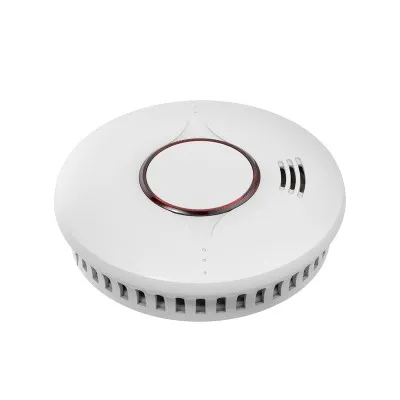




Power surges are sudden spikes in electrical voltage that can pose a significant threat to electronic devices, including smart smoke detectors. As a leading supplier of Smart Smoke Detector, we understand the importance of ensuring that our products can withstand these unpredictable events. In this blog post, we will explore how smart smoke detectors handle power surges and the mechanisms in place to protect them.
Understanding Power Surges
Before delving into how smart smoke detectors deal with power surges, it's essential to understand what causes them. Power surges can occur due to various reasons, such as lightning strikes, utility grid switching, and the operation of large electrical appliances. When a power surge happens, the voltage in the electrical system can spike far above the normal level, potentially causing damage to connected devices.
The Impact of Power Surges on Smart Smoke Detectors
Smart smoke detectors are sophisticated electronic devices that rely on a stable power supply to function correctly. A power surge can disrupt the internal circuitry of a smoke detector, leading to malfunctions or even permanent damage. This can compromise the detector's ability to detect smoke and alert occupants in the event of a fire, putting lives and property at risk.
Protective Mechanisms in Smart Smoke Detectors
To safeguard against power surges, modern smart smoke detectors are equipped with several protective mechanisms. These mechanisms work together to ensure that the detector remains operational and reliable, even in the face of electrical disturbances.
Surge Protectors
One of the most common protective features in smart smoke detectors is a surge protector. A surge protector is a device that diverts excess voltage away from the detector's sensitive components, preventing them from being damaged. It acts as a barrier between the detector and the electrical supply, absorbing or redirecting the surge energy.
Surge protectors in smart smoke detectors typically use metal oxide varistors (MOVs) or gas discharge tubes (GDTs). MOVs are semiconductor devices that change their resistance in response to changes in voltage. When a power surge occurs, the MOV's resistance decreases, allowing the excess current to flow through it and away from the detector. GDTs, on the other hand, are gas-filled tubes that conduct electricity when the voltage exceeds a certain threshold. They provide a low-resistance path for the surge current, protecting the detector from damage.


Voltage Regulation
In addition to surge protectors, smart smoke detectors also incorporate voltage regulation circuits. These circuits ensure that the voltage supplied to the detector's internal components remains within a safe and stable range. They monitor the incoming voltage and adjust it as needed to prevent overvoltage or undervoltage conditions.
Voltage regulators can be either linear or switching regulators. Linear regulators use a series pass transistor to control the output voltage, while switching regulators use a switching transistor and an inductor to convert the input voltage to the desired output voltage. Switching regulators are more efficient and can handle higher power levels, making them suitable for use in smart smoke detectors.
Battery Backup
Many smart smoke detectors are designed to operate on both AC power and battery power. In the event of a power surge or a power outage, the detector can automatically switch to battery power, ensuring continuous operation. Battery backup provides an additional layer of protection against power surges and helps to maintain the detector's functionality when the electrical supply is interrupted.
The batteries used in smart smoke detectors are typically rechargeable and have a long lifespan. They are designed to provide enough power to operate the detector for an extended period, allowing occupants to evacuate safely in the event of a fire.
Self-Testing and Diagnostic Features
Smart smoke detectors often come with self-testing and diagnostic features that can detect and report any issues caused by power surges. These features regularly check the detector's internal components and functionality to ensure that it is operating correctly. If a problem is detected, the detector will alert the user via a visual or audible alarm, allowing them to take appropriate action.
Some smart smoke detectors also have the ability to communicate with a smartphone app or a home automation system. This allows users to monitor the status of their detectors remotely and receive notifications if any issues are detected.
Testing and Certification
To ensure the reliability and safety of smart smoke detectors, they are subjected to rigorous testing and certification procedures. These procedures evaluate the detector's performance under various conditions, including power surges. Detectors that meet the required standards are awarded certification marks, indicating that they have been tested and approved for use.
In the United States, smart smoke detectors are typically tested and certified by organizations such as Underwriters Laboratories (UL). UL tests detectors for compliance with relevant safety standards, including UL 217, which covers single- and multiple-station smoke alarms. Detectors that pass the UL 217 test are considered to be safe and reliable for use in residential and commercial applications.
Conclusion
Power surges are a common and potentially dangerous threat to smart smoke detectors. However, with the use of advanced protective mechanisms, such as surge protectors, voltage regulation, battery backup, and self-testing features, modern smart smoke detectors are designed to withstand these electrical disturbances and continue to function reliably.
As a supplier of Smart Smoke Detector, we are committed to providing our customers with high-quality, reliable products that meet the highest safety standards. Our Smoke Detector Intelligent and Smart Fire Alarm are equipped with the latest protective technologies to ensure that they can handle power surges and protect your home or business from fire.
If you are interested in learning more about our smart smoke detectors or would like to discuss your specific requirements, please contact us. Our team of experts will be happy to assist you and provide you with the information you need to make an informed decision.
References
- Underwriters Laboratories (UL). (2023). UL 217: Single- and Multiple-Station Smoke Alarms.
- National Fire Protection Association (NFPA). (2023). NFPA 72: National Fire Alarm and Signaling Code.
- Electrical Safety Foundation International (ESFI). (2023). Power Surges: What You Need to Know.


