

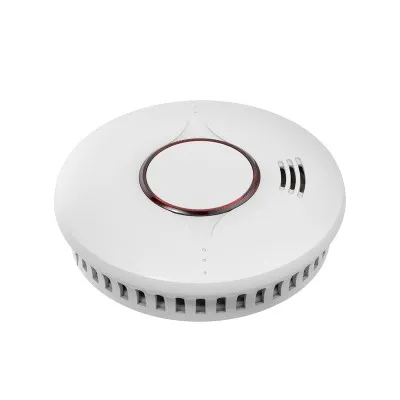




As a provider of smart home smoke detectors, I've witnessed firsthand the increasing demand for reliable and efficient safety solutions in modern households. Smart home smoke detectors are a crucial component of home security systems, offering early detection of fires and potentially saving lives. However, like any technology, they are not immune to interference, which can compromise their performance and reliability. In this blog post, I'll explore how smart home smoke detectors handle interference and the strategies we employ to ensure their optimal functionality.
Understanding Interference in Smart Home Smoke Detectors
Interference in smart home smoke detectors can come from various sources, both internal and external. Internal interference may arise from electrical components within the detector itself, such as the power supply, sensors, or communication modules. External interference, on the other hand, can be caused by environmental factors, electromagnetic radiation, or other electronic devices operating in the vicinity.
One of the most common types of interference is electromagnetic interference (EMI), which occurs when electromagnetic waves from external sources disrupt the normal operation of the smoke detector. EMI can be generated by a wide range of devices, including microwave ovens, cordless phones, Wi-Fi routers, and power lines. These devices emit electromagnetic fields that can interfere with the signals transmitted and received by the smoke detector, leading to false alarms or reduced sensitivity.


Another source of interference is environmental factors, such as dust, humidity, and temperature. Dust particles can accumulate on the sensors of the smoke detector, blocking the detection of smoke and reducing its effectiveness. High humidity levels can also cause condensation on the sensors, leading to false alarms or malfunction. Extreme temperatures, both hot and cold, can affect the performance of the smoke detector's components, causing them to degrade or fail.
How Smart Home Smoke Detectors Handle Interference
To ensure the reliable operation of smart home smoke detectors in the presence of interference, manufacturers employ a variety of techniques and technologies. These include:
Signal Filtering and Processing
Smart home smoke detectors are equipped with advanced signal filtering and processing algorithms that can distinguish between genuine smoke signals and interference. These algorithms analyze the characteristics of the detected signals, such as their frequency, amplitude, and duration, to determine whether they are likely to be caused by smoke or other sources. By filtering out unwanted signals, the smoke detector can reduce the occurrence of false alarms and improve its sensitivity to real fires.
Multiple Sensor Technologies
Many smart home smoke detectors use multiple sensor technologies to enhance their detection capabilities and reduce the impact of interference. For example, some detectors combine ionization and photoelectric sensors, which are sensitive to different types of smoke. Ionization sensors are more effective at detecting fast-flaming fires, while photoelectric sensors are better at detecting smoldering fires. By using both types of sensors, the smoke detector can provide more comprehensive coverage and improve its ability to detect fires in various conditions.
Wireless Communication Protocols
Smart home smoke detectors often use wireless communication protocols, such as Wi-Fi, Bluetooth, or Zigbee, to connect to other devices in the home network. These protocols are designed to be robust and reliable, with built-in mechanisms to handle interference and ensure the secure transmission of data. For example, Wi-Fi routers can use channel hopping techniques to avoid interference from other Wi-Fi networks operating on the same frequency band. Bluetooth devices can use adaptive frequency hopping to change frequencies rapidly, reducing the likelihood of interference from other Bluetooth devices.
Self-Testing and Calibration
Smart home smoke detectors are equipped with self-testing and calibration features that allow them to monitor their own performance and adjust their sensitivity as needed. These features can help to detect and correct any issues caused by interference or other factors, ensuring that the smoke detector remains accurate and reliable over time. For example, some detectors can perform regular self-tests to check the functionality of their sensors and communication modules. If a problem is detected, the detector can send an alert to the homeowner or the monitoring service, indicating that maintenance or replacement is required.
Strategies for Minimizing Interference
In addition to the built-in features of smart home smoke detectors, there are several strategies that homeowners can employ to minimize the impact of interference on their performance. These include:
Proper Placement of Smoke Detectors
The placement of smoke detectors is crucial for their effective operation. To minimize the impact of interference, smoke detectors should be installed away from sources of electromagnetic radiation, such as microwave ovens, cordless phones, and Wi-Fi routers. They should also be installed in areas where they are less likely to be affected by environmental factors, such as dust, humidity, and temperature. For example, smoke detectors should not be installed in kitchens, bathrooms, or near air vents, where they may be exposed to high levels of steam, grease, or dust.
Regular Maintenance and Cleaning
Regular maintenance and cleaning of smoke detectors are essential for their optimal performance. Homeowners should follow the manufacturer's instructions for cleaning and maintaining their smoke detectors, including replacing the batteries regularly and testing the detectors monthly. By keeping the sensors clean and free of dust and debris, homeowners can ensure that the smoke detectors remain sensitive and reliable.
Use of Shielding and Grounding
In some cases, it may be necessary to use shielding and grounding techniques to reduce the impact of electromagnetic interference on smart home smoke detectors. Shielding involves the use of materials, such as metal foil or conductive paint, to block the electromagnetic fields generated by external sources. Grounding involves connecting the smoke detector to a grounding wire or a metal object, such as a water pipe, to provide a path for the electrical current to flow safely to the ground.
Our Solutions for Interference Handling
As a leading provider of smart home smoke detectors, we are committed to providing our customers with the highest quality products that are reliable, efficient, and resistant to interference. Our smoke detectors are equipped with the latest technologies and features, including advanced signal filtering and processing algorithms, multiple sensor technologies, and wireless communication protocols, to ensure their optimal performance in the presence of interference.
We offer a range of Wireless Interconnected Smoke Alarms that are designed to work together to provide comprehensive coverage and early detection of fires. These alarms are interconnected wirelessly, so that when one alarm detects smoke, all the alarms in the home will sound, providing a louder and more effective warning. Our Interconnected Photoelectric Smoke Alarms use photoelectric sensors to detect smoke, which are more effective at detecting smoldering fires. They are also equipped with advanced signal processing algorithms to reduce the occurrence of false alarms.
In addition, we offer Smoke Detector Intelligent that are designed to be easy to install and use. These detectors are equipped with self-testing and calibration features, so that they can monitor their own performance and adjust their sensitivity as needed. They also have a built-in battery backup, so that they will continue to operate in the event of a power outage.
Contact Us for Procurement
If you are interested in purchasing our smart home smoke detectors or have any questions about our products and services, please contact us. We would be happy to discuss your specific needs and provide you with a customized solution that meets your requirements. Our team of experts is available to assist you with the installation, maintenance, and support of our products, ensuring that you have a reliable and effective home security system.
References
- National Fire Protection Association. (2023). NFPA 72: National Fire Alarm and Signaling Code.
- Underwriters Laboratories. (2023). UL 217: Standard for Single- and Multiple-Station Smoke Alarms.
- Federal Communications Commission. (2023). Rules and Regulations Governing Radio Frequency Devices.


