

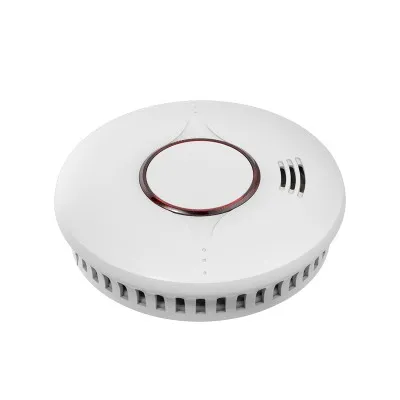




Hey there! I'm a supplier of Heat Detector Fire Proof systems, and today I wanna chat about whether heat detectors can be used in schools for fire proofing. It's a super important topic, especially when it comes to the safety of our kids and staff in educational institutions.
Let's first understand what heat detectors are. Heat detectors are devices that sense an increase in temperature. They're designed to trigger an alarm when the temperature reaches a certain level or when there's a rapid rise in temperature. There are different types of heat detectors out there, like fixed-temperature detectors, which go off when the temperature hits a pre - set point, and rate - of - rise detectors, which react to a sudden increase in heat.
Now, why would we even consider using heat detectors in schools? Well, schools are bustling places with lots of people moving in and out, classes going on, and various activities taking place. Fires can break out due to many reasons, such as faulty electrical wiring, overheating equipment, or even kids playing with fire (although that's rare). Having a good fire - proofing system in place is crucial to protect lives and property.
One of the big advantages of using heat detectors in schools is their reliability. Unlike smoke detectors, which can be set off by things like steam from a science experiment or dust in the air, heat detectors are less likely to give false alarms. In a school environment, where a false alarm can disrupt classes and cause panic, this is a huge plus. For example, in a school cafeteria, where there's a lot of cooking and steam, smoke detectors might go off frequently without there being a real fire. A heat detector, on the other hand, will only react when there's a genuine increase in heat that indicates a fire.
Another benefit is that heat detectors can be a great addition to a comprehensive fire - safety system. They can work in conjunction with smoke detectors, giving an extra layer of protection. If a fire starts and there's not much smoke at first but the temperature is rising, the heat detector will pick up on it and alert the school.
Now, let's talk about the different types of heat detectors that we offer and how they can be useful in schools.
First up, we have the Hard Wired Heat Alarms. These are the traditional type of heat detectors that are directly connected to the building's electrical system. They're very reliable because they have a constant power source. In a school, hard - wired heat alarms can be installed in areas where there's a high risk of fire, like near electrical panels, in boiler rooms, or in science labs. They're also great for larger schools where a centralized fire - alarm system is needed. Since they're hard - wired, they can be easily integrated with other fire - safety equipment in the building.
Next is the Intelligent Heat Detector. These detectors are pretty cool because they use advanced technology to analyze the heat patterns in a room. They can distinguish between normal temperature fluctuations and a real fire situation. For example, if there's a sunny day and the temperature in a classroom rises a bit, the intelligent heat detector won't give a false alarm. But if there's a sudden spike in temperature due to a fire, it will immediately trigger an alert. These are perfect for classrooms and other areas where there are a lot of variables affecting the temperature.
We also have the Wireless Heat Detector. Wireless heat detectors are really convenient, especially in older schools where it might be difficult to install hard - wired systems. They can be easily placed in different locations without the need for extensive wiring. This means they can be quickly installed in areas like portable classrooms or in areas where renovations are taking place. They communicate wirelessly with a central control panel, so the school can still have a unified fire - alarm system.
However, there are also some limitations to using heat detectors in schools. One of the main drawbacks is that they may not detect a fire in the early stages if there's no significant rise in temperature. For example, a smoldering fire that produces a lot of smoke but not much heat right away might go undetected by a heat detector. That's why it's so important to have a combination of smoke detectors and heat detectors in a school.
Another thing to consider is the maintenance of heat detectors. Like any other device, they need to be regularly checked and tested to make sure they're working properly. Schools need to have a maintenance plan in place to ensure the reliability of these detectors.


In conclusion, heat detectors can definitely be used in schools for fire proofing, but they work best when used as part of a larger fire - safety system. They offer reliability, fewer false alarms, and a range of options to suit different school environments. Whether it's the hard - wired heat alarms, intelligent heat detectors, or wireless heat detectors, there's a solution for every school.
If you're a school administrator, a facility manager, or someone involved in the decision - making process for fire - safety in your school, I encourage you to get in touch with us. We can discuss your specific needs, assess your school's layout, and recommend the best heat - detector fire - proofing solutions. Investing in a good fire - safety system is an investment in the safety of your students, teachers, and staff.
References
NFPA 72: National Fire Alarm and Signaling Code.
"Fire Protection Handbook" - National Fire Protection Association


