





Hey there! I'm a supplier of heat detectors, and today I wanna chat about a question that often pops up: Do heat detectors have a memory function?
First off, let's break down what heat detectors are. Heat detectors are crucial safety devices used in homes, offices, and industrial settings to detect abnormal temperature increases. When they sense a significant rise in temperature, they trigger an alarm to alert people to potential fire hazards. There are different types of heat detectors out there, like fixed-temperature heat detectors that go off when the temperature reaches a set point, and rate-of-rise heat detectors that activate when the temperature rises too quickly.
Now, let's dig into the memory function. Some people think heat detectors have a built - in memory that can store information about past temperature spikes or alarm events. But generally speaking, most basic heat detectors don't have a traditional memory function like a computer or a smartphone. They're designed to be simple, reliable, and focused on the immediate task of detecting heat and raising the alarm.


The way a lot of heat detectors work is pretty straightforward. They use sensors, usually thermistors or thermocouples, to measure the temperature in their surroundings. When the temperature hits the pre - determined threshold, the detector sends a signal to the alarm system, and that's it. There's no long - term data storage involved. For example, if a fixed - temperature heat detector is set to go off at 135°F (57°C), as soon as the temperature in the area it's monitoring reaches that level, it'll sound the alarm. Once the temperature drops back below the threshold and the detector resets, there's no record of that previous over - temperature event.
However, things get a bit different when we talk about more advanced heat detectors. Some high - end models do come with a form of memory. These detectors are often used in commercial or industrial applications where detailed records of temperature events are required for safety audits or troubleshooting. They can store data about the time, duration, and intensity of temperature spikes. This data can be really useful for facility managers or safety officers to analyze what might have caused a sudden increase in temperature and take appropriate measures to prevent future incidents.
For instance, in a large factory, an advanced heat detector with a memory function can record if there were any abnormal temperature changes in a specific area during a certain shift. This data can then be used to check if there were any issues with machinery overheating or if there were potential fire risks developing.
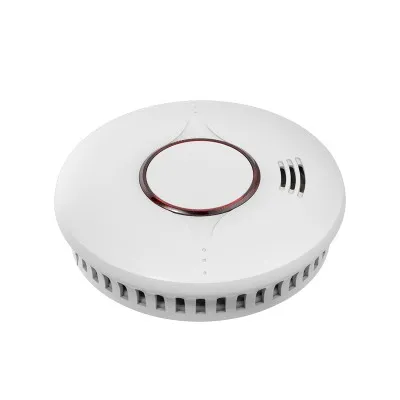
Now, I'd like to introduce some of our products. We offer a wide range of heat detectors, including Wired Heat Detector. This wired heat detector is not only reliable but also comes with a battery backup, ensuring it works even during a power outage. It's perfect for both residential and commercial use.
Another great option is our Linkable Hardwired Heat Detector. These detectors can be linked together, so if one of them detects a heat increase and triggers an alarm, all the linked detectors will sound too. This is really helpful in larger buildings where you want to make sure everyone is alerted in case of a fire.
And of course, we have the Heat Fire Alarm. This detector combines optical and heat - sensing technology, providing an extra layer of protection. It can detect both heat and smoke, making it a very effective safety device.
So, to sum it up, while basic heat detectors usually don't have a memory function, there are advanced models that do. If you're just looking for simple heat detection for a small space like a home or a small office, a standard heat detector without memory will do the job. But if you need more detailed data for larger commercial or industrial facilities, you might want to consider a detector with a memory function.
Interested in purchasing heat detectors? Whether you need a simple alarm for your home or a high - tech system for your business, we've got you covered. Don't hesitate to contact us for more information and to discuss your specific requirements. We're here to help you choose the best heat detector for your needs.
References
- Fire Protection Handbook, National Fire Protection Association
- Introduction to Heat Detectors, Underwriters Laboratories


