





Can I use an electrical socket for a battery charger? This is a question that many people often ask, especially those who are new to using battery chargers or are not well - versed in electrical knowledge. As an electrical socket supplier, I am here to provide a comprehensive answer to this question.
First of all, it is generally possible to use an electrical socket for a battery charger. Electrical sockets are designed to provide a stable source of electrical power to various electrical appliances, including battery chargers. Most battery chargers are equipped with a plug that can be inserted into a standard electrical socket. However, there are several important factors to consider to ensure safety and proper operation.
Compatibility of Voltage and Current
The most crucial aspect is the compatibility of voltage and current between the electrical socket and the battery charger. Different regions have different standard voltages for electrical sockets. For example, in the United States, the standard voltage is around 120V, while in many European countries, it is 230V. Battery chargers are designed to work within a specific voltage range. If the voltage of the electrical socket is outside this range, it can cause serious problems.
A charger designed for a 120V socket may overheat or even be damaged if plugged into a 230V socket. On the other hand, a charger designed for 230V may not function properly or charge the battery very slowly when connected to a 120V socket. Therefore, before using a battery charger with an electrical socket, always check the voltage requirements of the charger and ensure that the socket provides the appropriate voltage.

In addition to voltage, current is also an important factor. The electrical socket should be able to supply enough current to meet the charger's requirements. If the socket cannot provide sufficient current, the charger may not be able to charge the battery at its normal rate, or it may not work at all. Some high - power battery chargers, such as those used for electric vehicles, require a dedicated high - current electrical socket.
Socket Quality and Safety
The quality and safety of the electrical socket are also of great significance. A poor - quality socket may have loose connections, which can lead to overheating and even fires. As an electrical socket supplier, I always emphasize the importance of using high - quality sockets. Our Electrical Switch Socket is designed with strict quality control to ensure a stable and safe power supply.
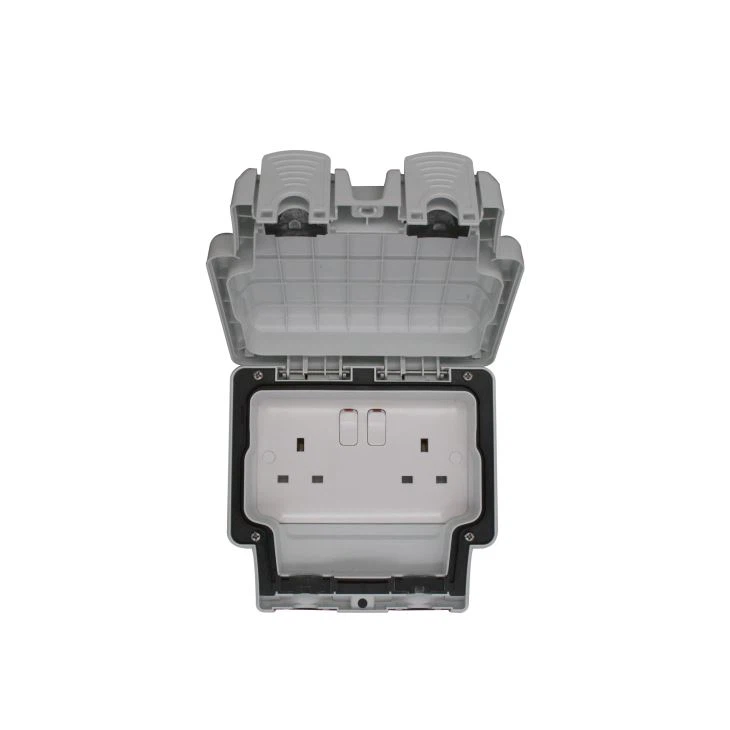
It is also important to check the socket for any signs of damage, such as cracks or exposed wires. If a socket is damaged, it should be replaced immediately to avoid potential safety hazards. Another safety feature to consider is the presence of a residual current device (RCD). Our IP66 RCD Weatherproof Wall Socket With 2gang BS Socket Switch is equipped with an RCD, which can detect any leakage of electrical current and quickly cut off the power supply, protecting users from electric shocks.
Type of Battery Charger
The type of battery charger also plays a role in determining whether it can be used with a particular electrical socket. There are different types of battery chargers, such as trickle chargers, fast chargers, and smart chargers. Trickle chargers are designed to charge batteries slowly over a long period of time and usually have a relatively low power requirement. They can typically be used with a standard household electrical socket.
Fast chargers, on the other hand, are designed to charge batteries quickly and require a higher power supply. Some fast chargers may need to be connected to a dedicated high - power socket. Smart chargers are more advanced and can adjust the charging rate according to the battery's condition. They are generally more flexible in terms of the electrical socket they can use, but still need to be compatible with the socket's voltage and current.
Environmental Factors
Environmental factors can also affect the use of an electrical socket for a battery charger. For example, if the socket is located in a damp or wet environment, it can increase the risk of electrical short - circuits and electric shocks. In such cases, it is recommended to use a weatherproof socket, like our IP66 RCD Weatherproof Wall Socket With 2gang BS Socket Switch, which is designed to be resistant to water and dust.
High temperatures can also affect the performance of both the electrical socket and the battery charger. In a hot environment, the socket may overheat more easily, and the charger may not function as efficiently. Therefore, it is important to ensure that the socket and charger are used in a suitable environment.
Conclusion
In conclusion, it is generally possible to use an electrical socket for a battery charger, but many factors need to be considered to ensure safety and proper operation. As an electrical socket supplier, we offer a wide range of high - quality Electrical Plugs Sockets that can meet different needs. Whether you need a standard household socket or a specialized high - power socket, we have the right products for you.
If you are interested in our electrical sockets and would like to discuss your specific requirements, please feel free to contact us for procurement and negotiation. We are committed to providing you with the best products and services.
References
- Electrical Safety Regulations Handbook
- Battery Charger User Manuals
- Electrical Socket Manufacturing Standards


