





As a supplier of fire proof heat detectors, one question that frequently comes up from our customers is whether these devices work effectively in high - humidity environments. It's a critical concern, as many industrial settings, storage facilities, and even residential areas near large water bodies can experience high levels of humidity on a regular basis.
Understanding Fire Proof Heat Detectors
Before delving into the performance in high - humidity environments, it's essential to understand how fire proof heat detectors operate. These detectors are designed to sense an increase in temperature beyond a pre - set threshold or a rapid rate of temperature rise. When such a condition is detected, the detector triggers an alarm, alerting the occupants of a potential fire hazard.
There are two main types of heat detectors: fixed - temperature and rate - of - rise. Fixed - temperature detectors are set to activate when the ambient temperature reaches a specific level, typically between 57°C and 74°C (134°F - 165°F). Rate - of - rise detectors, on the other hand, are more sensitive to sudden changes in temperature. They activate when the temperature increases at a rate faster than a pre - determined value, usually around 1°C to 5°C (1.8°F - 9°F) per minute.
The Impact of High Humidity on Fire Proof Heat Detectors
High humidity can have several effects on fire proof heat detectors. One of the primary concerns is moisture ingress. In humid environments, the air contains a large amount of water vapor, which can condense on the detector's components. This condensation can lead to short - circuits, corrosion, and damage to the internal circuitry of the detector over time.
Another issue is the interference with the temperature - sensing mechanism. Water has a high specific heat capacity, which means it can absorb a significant amount of heat without a substantial change in temperature. In a high - humidity environment, the presence of water vapor may cause the detector to register a lower temperature than the actual temperature of the surrounding air. This can delay the activation of the detector in the event of a fire, putting lives and property at risk.
However, it's important to note that not all fire proof heat detectors are created equal. Some modern detectors are specifically designed to withstand high - humidity conditions. These detectors often have sealed enclosures and moisture - resistant components, which minimize the risk of moisture ingress. Additionally, advanced signal processing algorithms can be used to compensate for the effects of humidity on temperature sensing.
Our Products and Their Performance in High - Humidity
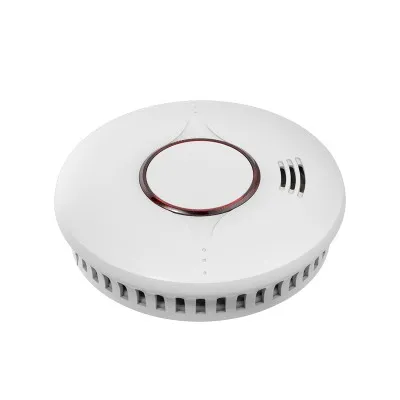
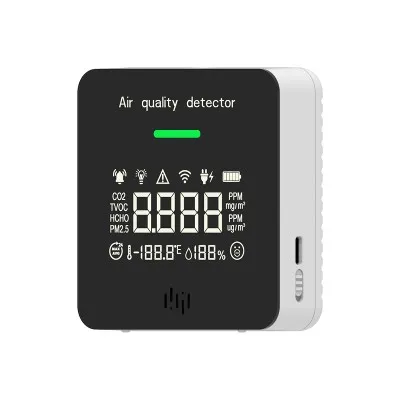
At our company, we offer a wide range of fire proof heat detectors, including the Portable Heat Detector, Battery Operated Heat Alarm, and Mains Heat Detector. Our products are engineered to perform reliably in various environmental conditions, including high - humidity environments.
The Portable Heat Detector is a compact and easy - to - use device that can be carried around and placed in different locations as needed. It features a high - quality temperature sensor that is designed to be resistant to the effects of humidity. The sealed enclosure protects the internal components from moisture, ensuring long - term reliability.
The Battery Operated Heat Alarm is an ideal solution for areas where a continuous power supply is not available. It operates on batteries, providing flexibility in installation. The alarm is equipped with advanced moisture - protection technology, which helps to prevent false alarms caused by humidity.
The Mains Heat Detector is a hard - wired device that offers a continuous power source. It is designed for permanent installation in commercial and industrial settings. Our mains - powered detectors are built with robust, moisture - resistant materials and advanced signal processing algorithms to ensure accurate temperature sensing even in high - humidity environments.


Testing and Validation
To ensure the performance of our fire proof heat detectors in high - humidity environments, we conduct rigorous testing. Our products are tested in environmental chambers that can simulate a wide range of humidity levels, from normal indoor conditions to extremely humid environments. During these tests, we monitor the detectors' response times, accuracy, and reliability.
We also perform long - term aging tests to evaluate the durability of our detectors in high - humidity conditions. These tests involve exposing the detectors to high humidity for extended periods, typically several months or even years. By analyzing the data collected from these tests, we can identify any potential issues and make improvements to our products.
Real - World Applications
Our fire proof heat detectors have been successfully deployed in many real - world applications in high - humidity environments. For example, in coastal areas where the air is often saturated with moisture, our detectors have proven to be reliable in providing early fire detection. They are also widely used in industrial facilities such as paper mills, textile factories, and breweries, where high humidity levels are common due to the manufacturing processes.
In addition to commercial and industrial applications, our products are also suitable for residential use in humid regions. Whether it's a beachfront property or a home in a tropical climate, our fire proof heat detectors can provide an extra layer of safety, ensuring that your family and property are protected from the threat of fire.
Conclusion
In conclusion, while high humidity can pose challenges to the performance of fire proof heat detectors, our products are designed to overcome these challenges. Through advanced engineering, rigorous testing, and the use of high - quality materials, we have developed a range of detectors that can operate effectively in high - humidity environments.
If you are looking for reliable fire proof heat detectors for your high - humidity environment, we encourage you to contact us for a detailed discussion about your specific needs. Our team of experts is ready to assist you in selecting the right products and providing you with the best solutions for your fire safety requirements.
References
- National Fire Protection Association (NFPA). NFPA 72: National Fire Alarm and Signaling Code.
- International Electrotechnical Commission (IEC). IEC 60794 - 1 - 41: Optical fibre cables - Part 1 - 41: Generic specification - Sectional specification for optical fibre patchcords for indoor premises.
- Underwriters Laboratories (UL). UL 521: Safety Standard for Heat Detectors for Fire - Protection Service.


