

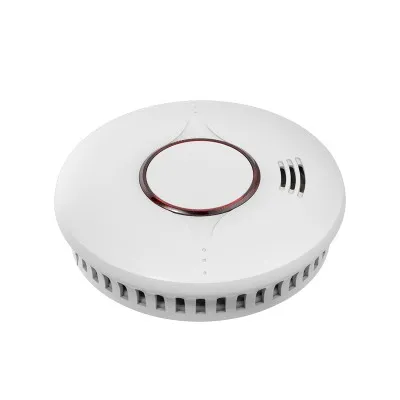




Hey there! If you're like me, running a Smart Smoke Detector supply business, you know that false alarms can be a real pain. False alarms not only annoy users but also erode trust in the product. In this blog, I'll share some tips on how we can reduce false alarms in smart smoke detectors based on our experience as a supplier.
First off, let's understand what causes these false alarms. There are several common culprits. Cooking fumes are a big one. When people are frying or grilling, the smoke and steam can trigger the detector. Steam from a hot shower can also set it off, especially if the detector is installed in a bathroom or near it. Dust and insects can sometimes interfere with the detector's sensors, leading to false readings. And in some cases, electrical interference or a malfunction within the device itself can cause these unwanted alarms.
Now, let's get into the solutions.
1. Enhance Sensor Technology
One of the most effective ways to reduce false alarms is by improving the sensor technology. Our Smart Smoke Detector uses advanced multi - sensor technology. Instead of relying on just one type of sensor, we combine ionization sensors and photoelectric sensors. Ionization sensors are great at detecting fast - flaming fires, while photoelectric sensors are more sensitive to smoldering fires. By having both, we can accurately distinguish between real smoke from a fire and non - fire sources like cooking fumes.
For example, cooking fumes usually produce larger particles, and the photoelectric sensor can be calibrated to be less sensitive to these larger particles while still being highly responsive to the smaller particles produced by actual fires. This way, we can significantly cut down on false alarms caused by cooking.
2. Intelligent Algorithm Design
Our smart smoke detectors are equipped with intelligent algorithms. These algorithms analyze the data collected by the sensors over a period of time. If it detects a sudden spike in smoke levels that is not consistent with the pattern of a real fire, it can suppress the alarm. For instance, if the smoke levels increase gradually and then stay at a relatively low level for a while, which is characteristic of cooking fumes, the algorithm can determine that it's not a fire and prevent the alarm from going off.
The algorithms also take into account environmental factors such as humidity and temperature. High humidity levels can sometimes mimic the presence of smoke, but the algorithm can filter out these false signals by cross - referencing the humidity data with the smoke readings.
3. Proper Installation Guidelines
We provide detailed installation guidelines to our customers. The location of the smoke detector is crucial. For our Smart Home Smoke Detector, we recommend avoiding installing it near kitchens, bathrooms, or areas with high dust levels. In the kitchen, the detector should be installed at least 10 feet away from the cooking area to reduce the chances of false alarms from cooking fumes.
Also, proper mounting height is important. Installing the detector at the right height ensures that it can accurately detect smoke without being affected by drafts or other factors that could cause false readings. We provide clear instructions on where and how to install our detectors to minimize false alarms.


4. Regular Maintenance and Cleaning
We encourage our customers to perform regular maintenance on their smart smoke detectors. Dust can accumulate on the sensors over time, which can cause false alarms. We recommend cleaning the detector at least once a month using a soft, dry cloth. For more thorough cleaning, we provide instructions on how to safely remove the detector from the wall and gently clean the sensors.
We also advise customers to test their detectors regularly to ensure they are working properly. Our Smart Fire Alarm comes with a self - test function that makes it easy for users to check if the detector is functioning correctly. If any issues are detected during the test, we provide prompt customer support to help resolve the problem.
5. User Education
Another important aspect is user education. We provide detailed user manuals and online resources to educate our customers about how to use and maintain their smart smoke detectors. We explain the common causes of false alarms and what they can do to prevent them.
For example, we tell users that if they are going to be cooking or taking a hot shower, they can temporarily disable the detector in a safe way (if the device has such a feature). We also provide tips on how to recognize a real fire alarm versus a false alarm, so users can take appropriate action.
By implementing these strategies, we've seen a significant reduction in the number of false alarms reported by our customers. Our smart smoke detectors are designed to provide reliable protection while minimizing the annoyance of false alarms.
If you're interested in our high - quality smart smoke detectors or have any questions about reducing false alarms, we'd love to hear from you. Whether you're a homeowner looking for a reliable smoke detector or a business in need of a bulk supply, we're here to help. Contact us for more information and let's start a discussion about your specific needs.
References
- Industry research on smart smoke detector technology
- Internal data from our company's product testing and customer feedback


