

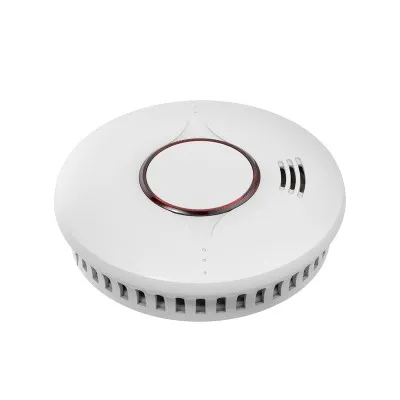


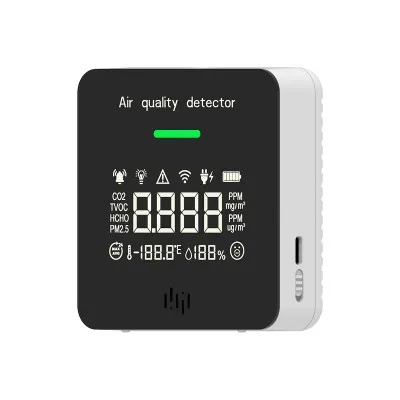


As a supplier of Wireless Heat Detectors, I've witnessed firsthand the critical role these devices play in safeguarding lives and property. In this blog, I'll delve into the fascinating world of how a wireless heat detector detects slow - burning fires, exploring the technology, its advantages, and why it's a smart choice for various applications.
Understanding Slow - Burning Fires
Slow - burning fires are often underestimated but can be extremely dangerous. Unlike fast - spreading flames, slow - burning fires develop gradually, releasing heat and smoke over an extended period. These fires can start from sources such as overloaded electrical circuits, smoldering upholstery, or faulty heating systems. Due to their slow progression, they may go unnoticed for a long time, allowing the fire to grow and cause significant damage before it's detected.
The Basics of Wireless Heat Detectors
Wireless heat detectors are innovative safety devices designed to sense changes in temperature and alert occupants when a fire is detected. Unlike Hard Wired Heat Alarms, which require a physical connection to a power source and a monitoring system, wireless heat detectors operate independently and communicate wirelessly with a central control panel or other connected devices.
How Wireless Heat Detectors Detect Slow - Burning Fires
Temperature Sensing Technology
At the heart of a wireless heat detector is a temperature sensor. There are two main types of temperature sensors commonly used in these devices: fixed - temperature sensors and rate - of - rise sensors.
Fixed - temperature sensors are designed to trigger an alarm when the ambient temperature reaches a pre - set threshold, typically around 57°C (135°F) or 74°C (165°F). In the case of a slow - burning fire, as the fire gradually heats the surrounding air, the temperature will eventually reach the set point of the fixed - temperature sensor. Once this happens, the detector sends a signal to the control panel, which then activates an alarm to alert the occupants.


Rate - of - rise sensors, on the other hand, measure the rate at which the temperature is increasing. They are more sensitive to sudden changes in temperature. In a slow - burning fire, although the temperature increase is gradual, if the rate of rise exceeds a certain level, the rate - of - rise sensor will detect it and trigger an alarm. This type of sensor is useful for detecting fires that may not reach the fixed - temperature threshold quickly but are still spreading and causing a significant increase in temperature over time.
Wireless Communication
Once the temperature sensor detects a potentially dangerous temperature change, the wireless heat detector needs to communicate this information to the control panel or other connected devices. Most wireless heat detectors use radio frequency (RF) technology to transmit signals. The detector sends a coded signal to the control panel, which then interprets the signal and activates the appropriate alarm response.
The advantage of wireless communication is that it allows for easy installation and flexibility. Wireless heat detectors can be placed in hard - to - reach areas or areas where running wires would be difficult or expensive. They can also be easily integrated into existing security systems, providing an additional layer of protection.
Self - Testing and Monitoring
To ensure reliable operation, wireless heat detectors are equipped with self - testing and monitoring features. These features regularly check the functionality of the temperature sensor, the wireless communication module, and the battery (if it's a battery - powered device). If any faults are detected, the detector will send a signal to the control panel, indicating that maintenance or replacement is required.
Advantages of Wireless Heat Detectors for Detecting Slow - Burning Fires
Easy Installation
One of the biggest advantages of wireless heat detectors is their ease of installation. Unlike hard - wired systems, which require professional installation and may involve drilling holes and running wires, wireless heat detectors can be installed by anyone with basic DIY skills. This makes them a cost - effective solution for both residential and commercial applications.
Flexibility
Wireless heat detectors offer greater flexibility in terms of placement. They can be easily moved or repositioned as needed, allowing for optimal coverage of the area to be protected. This is particularly useful in areas where the layout may change over time, such as in offices or warehouses.
Compatibility
Wireless heat detectors can be easily integrated into existing security systems, including Intelligent Heat Detector networks and home automation systems. This means that they can work together with other safety devices, such as smoke detectors and carbon monoxide detectors, to provide comprehensive fire protection.
Battery - Powered Operation
Many wireless heat detectors are battery - powered, which means they can continue to operate even during a power outage. This is an important feature, especially in areas prone to power failures or in buildings where a continuous power supply cannot be guaranteed.
Applications of Wireless Heat Detectors
Residential Buildings
In homes, wireless heat detectors can be installed in bedrooms, living rooms, kitchens, and other areas where fires are likely to start. They provide an additional layer of protection, especially in older homes where hard - wired fire alarm systems may not be installed.
Commercial Buildings
Commercial buildings, such as offices, warehouses, and retail stores, can benefit greatly from the use of wireless heat detectors. They can be installed in areas where wiring is difficult or expensive, such as in historical buildings or in areas with sensitive equipment. Wireless heat detectors can also be easily integrated into existing building management systems, providing real - time monitoring and alerts.
Industrial Facilities
Industrial facilities, such as factories and manufacturing plants, are at high risk of fires due to the presence of flammable materials and electrical equipment. Wireless heat detectors can be used to monitor critical areas, such as boiler rooms, electrical panels, and storage areas, and provide early warning of potential fires.
Conclusion
Wireless heat detectors are an essential tool for detecting slow - burning fires. Their advanced temperature sensing technology, wireless communication capabilities, and self - testing features make them reliable and effective in protecting lives and property. Whether you're a homeowner looking to enhance the safety of your home or a business owner in need of a cost - effective fire detection solution, Wireless Heat Detector is a smart choice.
If you're interested in learning more about our wireless heat detectors or would like to discuss your specific fire protection needs, please don't hesitate to contact us. Our team of experts is ready to assist you in finding the right solution for your application.
References
- National Fire Protection Association (NFPA). NFPA 72: National Fire Alarm and Signaling Code.
- Underwriters Laboratories (UL). UL 521: Standard for Heat Detectors.
- International Electrotechnical Commission (IEC). IEC 60730 - 2 - 9: Automatic electrical controls - Part 2 - 9: Particular requirements for temperature sensitive controls for household and similar use.


