





As a supplier of Switched Sockets, I've witnessed firsthand the significance of understanding how heat affects these essential electrical components. Switched Sockets, available at Switched Socket, are ubiquitous in both residential and commercial settings. They provide a convenient way to control the power supply to connected devices, but like all electrical equipment, they are susceptible to the effects of heat.
1. Basics of Heat Generation in Switched Sockets
Heat in a Switched Socket is primarily generated due to electrical resistance. When an electric current passes through the conductive parts of the socket, such as the contacts and wires, the resistance of these materials causes some of the electrical energy to be converted into heat. This is in accordance with Joule's law, which states that the heat generated (H) in a conductor is proportional to the square of the current (I), the resistance (R) of the conductor, and the time (t) for which the current flows, expressed as (H = I^{2}Rt).
In normal operation, a small amount of heat is expected. However, several factors can cause an abnormal increase in heat generation. One common cause is overloading. If a Switched Socket is connected to devices that draw more current than its rated capacity, the current flowing through the socket will be higher than normal. For example, if a socket rated for 10 amps is connected to multiple high - power devices that together draw 15 amps, the excessive current will lead to a significant increase in heat generation according to Joule's law.
Another factor is poor electrical connections. Loose or corroded contacts within the socket can increase the resistance at the connection points. Even a small increase in resistance can result in a substantial rise in heat, as the power dissipated ((P=I^{2}R)) is directly proportional to the resistance when the current is constant.
2. Physical Effects of Heat on Switched Sockets
2.1. Material Degradation
The components of a Switched Socket are made of various materials, and heat can have a detrimental impact on their physical properties. The plastic housing of the socket, which is typically made of materials like polycarbonate or ABS, can start to soften and deform when exposed to high temperatures. This deformation can compromise the structural integrity of the socket, making it less effective at protecting the internal electrical components and increasing the risk of electrical shock.
The metal contacts inside the socket are also affected by heat. Over time, high temperatures can cause the metal to oxidize more rapidly. Oxidation forms a layer of metal oxide on the surface of the contacts, which increases the contact resistance. As the resistance increases, more heat is generated, creating a vicious cycle. For example, copper contacts, which are commonly used in sockets, can form copper oxide when heated, leading to a decrease in conductivity and an increase in power loss.
2.2. Melting and Fire Hazard
In extreme cases, the heat generated in a Switched Socket can reach a point where the materials start to melt. The melting of the plastic housing can expose the live electrical components, increasing the risk of short - circuits. A short - circuit occurs when the live and neutral conductors come into contact, resulting in a sudden and large increase in current flow. This can cause sparks and potentially lead to a fire.
The risk of fire is further exacerbated if there are flammable materials in the vicinity of the socket. For instance, if a socket is installed near curtains or paper, the heat from the overheating socket can ignite these materials, leading to a potentially dangerous situation.
3. Electrical Performance Degradation
3.1. Voltage Drop
Heat can also affect the electrical performance of a Switched Socket. As the temperature rises, the resistance of the conductors within the socket increases. According to Ohm's law ((V = IR)), when the resistance increases and the current remains constant, the voltage drop across the socket will increase. This means that the voltage available to the connected device will be lower than the supply voltage.
For sensitive electronic devices, a significant voltage drop can cause malfunctions. For example, a computer or a smartphone charger may not function properly if the voltage supplied is too low. The device may not charge correctly, or it may experience intermittent shutdowns.
3.2. Contact Resistance Changes
As mentioned earlier, heat can cause changes in the contact resistance. An increase in contact resistance can lead to inconsistent electrical connections. This can result in intermittent power supply to the connected device, causing flickering lights or intermittent operation of electrical appliances. In some cases, the increased contact resistance can also cause electromagnetic interference (EMI), which can affect the performance of nearby electronic devices.
4. Safety Implications
The effects of heat on Switched Sockets pose significant safety risks. As discussed, the potential for fire is a major concern. A fire starting from an overheating socket can quickly spread throughout a building, endangering lives and causing extensive property damage.
In addition to the fire hazard, the risk of electrical shock is also increased. When the plastic housing of the socket deforms due to heat, it may expose the live electrical parts. If a person comes into contact with these exposed parts, they can receive a serious electrical shock.

Moreover, the degradation of the electrical performance of the socket can lead to damage to the connected devices. Sensitive electronic equipment may be particularly vulnerable to the effects of voltage drop and intermittent power supply, resulting in costly repairs or replacements.
5. Mitigating the Effects of Heat
As a Switched Socket supplier, we are committed to providing products that can withstand normal operating temperatures and minimize the risks associated with heat. Our sockets are designed with high - quality materials that have good heat resistance properties. For example, the plastic housing is made of materials that can withstand higher temperatures without significant deformation.
We also recommend proper installation and usage of our Switched Sockets. During installation, it is crucial to ensure that the electrical connections are tight and secure to minimize contact resistance. Users should also be aware of the rated capacity of the socket and avoid overloading it.
Regular inspection and maintenance of Switched Sockets are also essential. Checking for signs of overheating, such as discoloration of the plastic housing or a burning smell, can help identify potential problems early. If any issues are detected, the socket should be replaced immediately.
6. Our Product Offerings
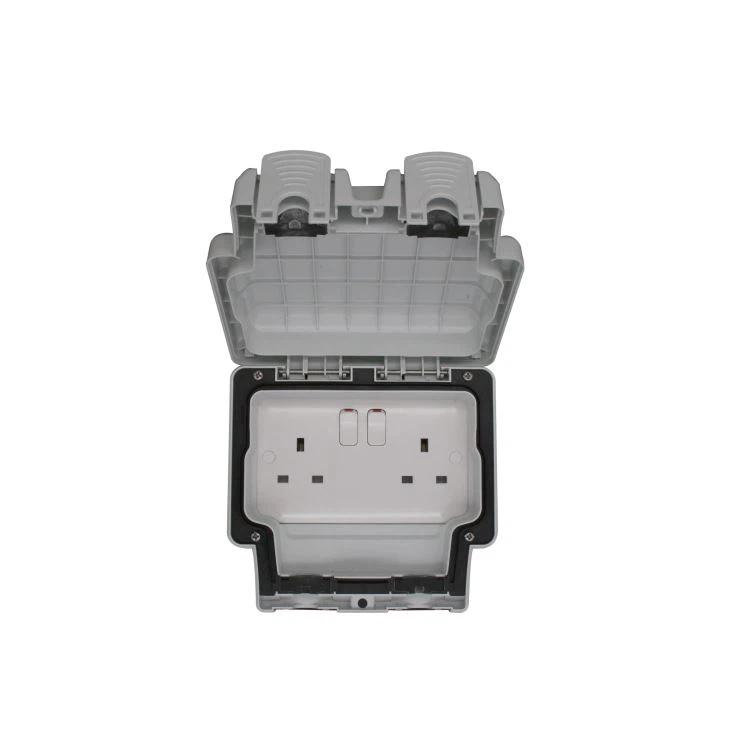
In addition to standard Switched Sockets, we also offer a range of specialized products that are designed to handle different environmental conditions. Our IP66 RCD Weatherproof Wall Socket With 2gang BS Socket Switch is suitable for outdoor use. It is designed to be resistant to dust and water, and it also has built - in residual current devices (RCDs) for enhanced safety.
We also provide Electrical Sockets that are engineered to meet the highest safety and performance standards. These sockets are rigorously tested to ensure that they can operate safely under normal and abnormal conditions, including variations in temperature.
7. Conclusion and Call to Action
Understanding the effects of heat on Switched Sockets is crucial for ensuring the safety and reliability of electrical systems. As a supplier, we are dedicated to providing high - quality products that can withstand the challenges posed by heat and other environmental factors.
If you are in the market for Switched Sockets or other electrical sockets, we invite you to explore our product range. Our team of experts is ready to assist you in selecting the right products for your specific needs. Whether you are a homeowner, a contractor, or a business owner, we can provide you with the solutions that meet your requirements. Contact us today to start a procurement discussion and ensure that your electrical systems are equipped with the best - in - class Switched Sockets.
References
- Grob, Bernard. "Basic Electronics." McGraw - Hill Education, 2007.
- Dorf, Richard C., and Svoboda, James A. "Introduction to Electric Circuits." Wiley, 2014.
- National Fire Protection Association. "National Electrical Code (NEC) Handbook." NFPA, 2020.


