

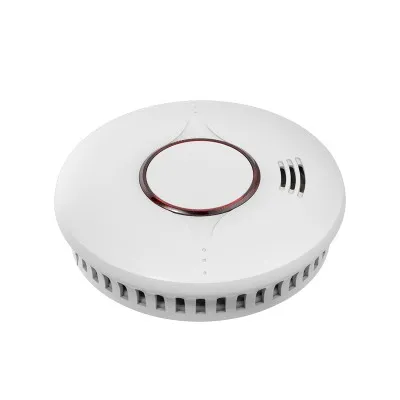




Hey there! As a supplier of Fire Proof Heat Detectors, I often get asked about the difference between fixed - temperature and rate - of - rise fire proof heat detectors. So, I thought I'd write this blog to break it down for you.
Let's start with the fixed - temperature heat detector. This type of detector is pretty straightforward. It's designed to trigger an alarm when the temperature in its surroundings reaches a pre - set fixed value. For example, a common fixed - temperature setting could be 135°F (57°C) or 155°F (68°C). Once the ambient temperature hits that specific number, the detector goes off.
These detectors are great for areas where the temperature doesn't fluctuate too much under normal circumstances. Think of places like storage rooms, basements, or some industrial settings where the temperature is relatively stable. They're reliable in detecting slow - burning fires that gradually heat up the environment. Since they have a set temperature threshold, they're not easily triggered by minor temperature changes. For instance, if there's a bit of sunlight shining through a window and warms up a small area, it's unlikely to set off a fixed - temperature detector as long as the pre - set temperature isn't reached.
On the other hand, rate - of - rise heat detectors work a bit differently. Instead of relying on a specific temperature level, they monitor how quickly the temperature is changing. If the temperature rises at a rapid pace, say, more than 12°F (6.7°C) per minute, the detector will activate the alarm. This makes them excellent for detecting fast - spreading fires. In a kitchen, for example, a grease fire can start and spread very quickly, causing a sudden spike in temperature. A rate - of - rise detector will be able to pick up on this rapid temperature increase and sound the alarm almost immediately.
One of the advantages of rate - of - rise detectors is their ability to respond quickly to emerging fires. They can detect a fire even before the temperature reaches a high enough level to trigger a fixed - temperature detector. However, they can be a bit more sensitive to normal temperature fluctuations. For example, if there's a sudden blast of hot air from an industrial process or a heater being turned on full - blast, it might cause a false alarm.
Now, let's talk about where you might want to use each type. If you're dealing with an area that has a consistent temperature and you're mainly worried about slow - growing fires, a fixed - temperature detector is your best bet. For example, in a wine cellar, you don't want the detector going off every time someone opens the door and a bit of warm air sneaks in. A fixed - temperature detector will stay quiet until there's a real fire situation.
If you're in a place where fires can spread rapidly, like a manufacturing plant with flammable materials or a commercial kitchen, a rate - of - rise detector is more suitable. It can give you an early warning and potentially save lives and property.
At our company, we offer a variety of heat detectors to meet different needs. If you're looking for a reliable Mains Heat Detector, we've got you covered. It's powered by the main electrical supply, so you don't have to worry about battery changes. It's great for long - term, continuous use in buildings.
For those who prefer a Battery Operated Heat Alarm, we also have a selection. These are easy to install and can be used in areas where there's no access to a power outlet. They're perfect for small spaces or temporary setups.
And if you need a detector that you can move around, our Portable Heat Detector is a great option. It's handy for on - site inspections or for use in different locations as needed.
When it comes to choosing between a fixed - temperature and a rate - of - rise detector, it really depends on your specific situation. Consider the environment, the type of fire risks, and your budget. If you're not sure which one is right for you, don't hesitate to reach out. We're here to help you make the best decision for your fire safety needs.


Whether you're a business owner looking to protect your property or a homeowner wanting to keep your family safe, having the right heat detector is crucial. So, if you're interested in purchasing our fire proof heat detectors, we're ready to have a chat with you. We can discuss your requirements, provide you with more detailed information, and help you find the perfect solution for your fire detection needs.
In conclusion, understanding the difference between fixed - temperature and rate - of - rise fire proof heat detectors is essential for effective fire safety. Each type has its own strengths and weaknesses, and by choosing the right one for your situation, you can enhance the protection of your premises. So, don't wait any longer. Contact us today to start the conversation about getting the best fire proof heat detector for you.
References
- National Fire Protection Association (NFPA) standards on heat detectors
- Fire safety research papers on the performance of different heat detector types


